
Idea 1
The Art of Living Wisely
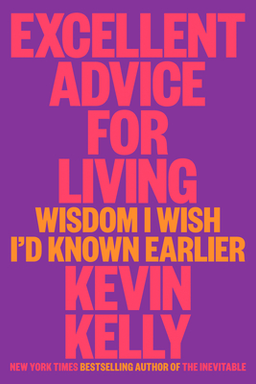
How do you live well in a world overflowing with advice, distractions, and competing values? In Excellent Advice for Living, Kevin Kelly invites readers to rediscover the long-lost craft of living—not through grand philosophies or rigid systems, but through simple truths honed by experience. Kelly, the co-founder of Wired magazine and a lifelong thinker on technology and humanity, distills a lifetime of observations into bite-sized aphorisms designed to make you wiser, kinder, and more curious. The result is a handbook not just for success, but for lasting happiness and purposeful living.
Kelly’s premise is deceptively simple: wisdom is not a rare gift reserved for philosophers or gurus—it’s a muscle everyone can strengthen through reflection, gratitude, experimentation, and connection. Drawing from decades of work in technology, design, travel, and personal growth, he captures how small acts—apologizing well, keeping promises, being curious—can shape an extraordinary life. These insights blend timeless moral principles with modern sensibility, creating a guide that feels as relevant to a twenty-year-old entrepreneur as it does to a seventy-year-old grandparent.
Seeds of Practical Wisdom
Kelly calls his short reflections “seeds,” and that metaphor is telling. Each sentence sprouts into a profound reminder about work, relationships, creativity, and character. You’re encouraged not to memorize these sayings, but to plant them in your own experience and let them grow. For example, he reframes productivity as meaning rather than measurement—arguing that being “busy” is a poor substitute for doing something that matters. He challenges perfectionism (“Done is better than perfect”), explores emotional intelligence (“Be strict with yourself, forgiving of others”), and offers clever shortcuts for navigating everyday life (“You don’t have to attend every argument you’re invited to”).
This approach mirrors the ancient wisdom traditions Kelly channels—from Confucius to Marcus Aurelius—yet it feels distinctly modern. His bite-sized format reflects our digital habits (many of these began as tweets), but the message counters those habits by valuing slowness, honesty, and reflection. It’s an antidote to both cynicism and information overload.
The Playful Seriousness of Good Living
What stands out about Kelly’s “advice to his children” is its playfulness. He believes that living wisely doesn’t mean living solemnly. Curiosity, laughter, and generosity are central virtues. A recurring theme is that small steps—done consistently—outperform grand plans: “Recipe for greatness: become just a teeny bit better than you were last year. Repeat every year.” This faith in incremental growth harmonizes with ideas from James Clear’s Atomic Habits and Buddhist mindfulness doctrines: progress comes not from bursts of effort but from sustained attention.
At the same time, Kelly grounds these positive habits in realism. He reminds you to expect difficulty, confusion, and imperfection, noting that “pain is inevitable; suffering is optional.” He invites you to be humble about what you know because “you are only as young as the last time you changed your mind.” This humility—the willingness to learn, to err, and to keep going—is the engine of his philosophy.
Living for Connection, Not Comparison
A major motif in Excellent Advice for Living is how relationships shape meaning. Kelly insists that friends are better than money, kindness always trumps being right, and you should “treat people as good as you are.” He elevates ordinary interpersonal gestures—asking questions, forgiving first, praising publicly—into acts of transformation. In contrast to the self-centered pursuit of “success,” these habits create a more enduring kind of wealth: trust and gratitude. Kelly argues that gratitude “will unlock all other virtues.” This mirrors the positive psychology insights of researchers like Robert Emmons, who found measurable mental health benefits in daily gratitude journaling—a practice Kelly also endorses as “the cheapest possible therapy.”
The book also dismantles the tyranny of comparison, a theme shared with Mark Manson’s The Subtle Art of Not Giving a F*ck. Kelly cautions that “the greatest killer of happiness is comparison” and urges readers to “compare yourself only to you yesterday.” In a hyperconnected world obsessed with metrics and status updates, that single shift of focus—from competing to growing—becomes revolutionary.
Work, Play, and Legacy
Across hundreds of insights, Kelly returns often to the nature of work. The purpose of work, he insists, is to become—not to acquire. The best kind of career is the one that challenges you to become more fully yourself. “Don’t ever work for someone you don’t want to become,” he warns. “Your job will shape your soul.” At the same time, he celebrates rest and renewal as essential components of excellence: “The best work ethic requires a good rest ethic.” He views sabbaticals, vacations, and “goofing off” not as luxuries, but as moral necessities for creativity.
Kelly’s long view culminates in an idea of legacy that transcends wealth or fame: “Be a good ancestor. Do something a future generation will thank you for.” His final aphorisms expand the horizon of human experience beyond optimizing seconds to nurturing centuries—a deeply optimistic stance that echoes his broader technological worldview from The Inevitable. As he writes, “The good stuff will yield golden memories, and the bad stuff will yield golden lessons.”
Why These Ideas Matter
Each kernel of Kelly’s advice works because it’s both specific and universal. They address the modern struggle to balance ambition with empathy, pace with peace, information with understanding. His tone is conversational, wise but never distant—reminding the reader that wisdom isn’t something you find; it’s something you practice daily. Whether you are choosing a career, navigating a disagreement, raising children, or simply trying to be less distracted, Kelly’s words offer a compass. They turn living itself into an infinite game—where the point is not to win or lose, but to keep playing well, kindly, and curiously.