
Idea 1
The Power of Words to Shape Decisions
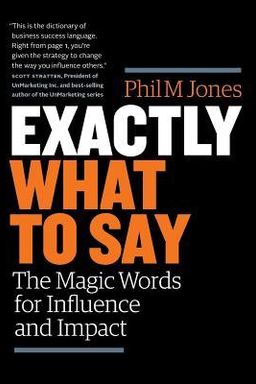
Have you ever walked away from a conversation thinking, “I wish I’d said that differently”? In Exactly What to Say, Phil M. Jones argues that the difference between those who consistently get what they want and those who miss opportunities often comes down to one thing: knowing the right words to use at the right time. Jones contends that spoken communication—especially the words that influence decisions—is both a science and an art. He teaches that carefully chosen language can shift beliefs, guide choices, and open doors, all while sounding authentic and natural.
Jones’s central idea is that success—whether in sales, business, or personal relationships—depends not just on what you say, but on how you make others feel when you say it. Words carry emotional weight, and certain phrases can bypass the analytical brain to appeal directly to the subconscious, where most real decisions are made. His book provides “Magic Words”: short, proven phrases designed to nudge people toward agreement, commitment, or deeper engagement.
The Science of Subconscious Influence
Jones explains that the subconscious mind makes lightning-fast “yes” or “no” decisions, while the conscious mind overanalyzes and stalls. By speaking directly to the subconscious, you guide people toward decisions almost reflexively. For example, the phrase “I’m not sure if it’s for you, but...” instantly reduces pressure, sparks curiosity, and invites engagement without triggering defense mechanisms. It’s how you create a rejection-free conversation.
The beauty of this approach is subtlety. Each phrase—whether “How open-minded are you?” or “What do you know about...?”—gently reframes a moment of hesitation into one of curiosity or confidence. When practiced, they help you avoid conflict while maintaining control of the dialogue. Jones aligns this understanding with behavioral psychology: people want to feel in charge of their decisions even when you’ve subtly guided them toward one choice.
Language as a Competitive Edge
Throughout the book, Jones insists that communication skill is the “winning edge” that separates high performers from average ones. Two salespeople can sell the same product, yet one dramatically outperforms the other. Why? Because one uses language that connects emotionally and triggers action. Understanding and deploying Magic Words in moments that matter—when introducing an idea, overcoming objections, or closing a deal—creates enormous leverage.
In this sense, Exactly What to Say isn’t just for sales professionals. Jones directly tells readers that these principles apply in any area where persuasion or cooperation is needed—team dynamics, parenting, negotiations, or networking. Any time you want someone to think differently, you can borrow these linguistic shortcuts to make your case more compelling.
A Practical Playbook for Persuasion
The book offers 23 of these verbal formulas, each anchored in psychological insight. For instance, “How would you feel if...?” uses emotional projection to motivate people with future outcomes, while “When would be a good time...?” assumes compliance, eliminating “no” from the possible answers. Others, like “Just imagine,” tap into mental imagery to make possibilities feel real.
Jones supports each phrase with examples and everyday scenarios, showing how they can transform even casual encounters. Rather than offering theory, he hands readers usable scripts that make conversations smoother, more productive, and less confrontational. His philosophy aligns with classic persuasion frameworks—like Robert Cialdini’s principles of influence—but focuses on tiny language shifts that you can apply instantly.
Why This Matters Today
Jones makes a compelling case that in an age of digital communication, the ability to speak persuasively is becoming rare—and therefore valuable. Whether pitching a business idea or resolving a family dispute, those who can choose their words with precision dominate those who rely on spontaneity. “The worst time to think about what you’re going to say,” he warns, “is when you’re saying it.” Preparation, not improvisation, creates confidence and success.
Core Premise
The right words, spoken at the right time and in the right way, have the power to change minds, initiate action, and turn uncomfortable conversations into collaborative ones.
In summary, Exactly What to Say is a compact, tactical manual for verbal persuasion. It teaches you to anticipate pivotal moments, use language that resonates subconsciously, and build confidence through preparation. Over time, using these phrases makes you not just a better communicator but also a more intentional thinker—someone who no longer leaves success up to chance but engineers it, one word at a time.