
Idea 1
The Mind Changes the Body: The Core Argument
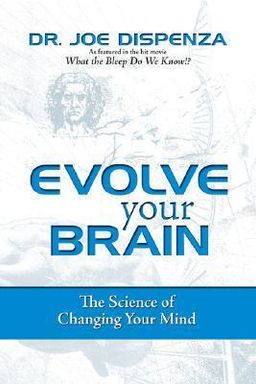
What if your thoughts could literally reshape your body? Joe Dispenza’s central claim is that they can. In his view, the brain is not a fixed organ but a dynamic interface between consciousness and biology. Every thought triggers measurable chemical reactions—neurotransmitters, hormones, and peptides—that alter how your body functions. Through repetition, attention, and emotion, those thoughts eventually sculpt the brain itself, and by extension, the body it governs.
Dispenza, drawing on neuroscience, psychoneuroimmunology, and case studies, argues for a practical psychobiology of transformation. You can learn to change your internal chemistry and neural wiring as deliberately as you might train a muscle. His narrative threads together ideas of neuroplasticity, emotional addiction, mental rehearsal, and the power of attention to present a single message: your mind—if used intentionally—can heal, rewire, and reinvent you.
From Thought to Chemistry to Physiology
When you think a thought, your brain manufactures matching chemistry. Hope and anticipation raise dopamine; resentment reproduces cortisol and adrenaline. The body experiences each thought as a chemical event. Over time, those repeated reactions form a loop—feelings reinforce thoughts, and thoughts sustain feelings—eventually congealing into a personality or a disease pattern. (Note: This concept echoes classical conditioning and the limbic loop mechanisms studied in affective neuroscience.)
Attention and the Frontal Lobe: The Steering Wheel
To alter that chemical feedback loop, you must recruit the frontal lobe—the brain’s executive center. This region holds intent, isolates attention, and suppresses old impulses long enough to build new wiring. The prefrontal cortex, especially the right side, governs novelty and deliberate focus; without it, your limbic brain runs habitual emotional scripts. Phineas Gage’s accident and neuroimaging of meditation practitioners (Richard Davidson’s work) exemplify both the cost of lost frontal control and the benefits of deliberate training. Attention is thus the chisel that sculpts the neural clay.
The Path from Survival to Creation
Much of modern life keeps you in “survival mode.” Chronic stress—cortisol floods, sympathetic activation—turns the adaptive fight-or-flight reflex into a degenerative state. Living in survival locks focus on body, environment, and time, trapping you in reactive loops. Creation mode, by contrast, redirects energy inward, where attention and calm lower stress chemicals and free energy for regeneration. Learning to shift your brain from the midbrain’s threat circuits to the frontal lobe’s creative networks is essential to transformation.
Neuroplasticity: Biology That Learns
Neuroscience backs Dispenza’s optimism. Repeated mental experience builds new synapses—neurons that fire together wire together—and can even generate new neurons in regions like the hippocampus. Studies of piano learners, jugglers, and stroke patients all confirm that focused repetition reshapes brain tissue. The key variable is attention: learning without focus seldom leaves a trace, while vivid mental rehearsal can produce measurable structural change.
Healing and Reinvention as Scientific Practice
The book gathers stories like Dean, who outlived leukemia by imagining his son’s graduation; Sheila, who healed chronic illness by abandoning a mental script of victimhood; and Dispenza himself, who repaired a spinal fracture through visualization. These cases exemplify his “Four Pillars” of transformation: trusting inner intelligence, treating thought as causal, reinventing identity, and sustaining focused attention until the body conforms to the new mind. (Parenthetical note: these parallels align with placebo research and cognitive-behavioral frameworks of self-directed neuroplasticity.)
From Knowledge to Wisdom
You change not by acquiring facts but by converting knowledge into embodied practice. Learning starts with semantic awareness, deepens through episodic emotional experience, and stabilizes through repetition until a new habit forms. The intellectual becomes physical, and you move from thinking, to doing, to being. This is why mental rehearsal and daily rituals—Dispenza’s porch practice, his triathlon training, or morning visualization sessions—are necessary laboratories for transformation.
The Book’s Promise
Dispenza’s grand claim is that consciousness—acting through the brain—can intentionally reprogram biology. Whether you frame it as quantum mind, psychoneuroimmunology, or deliberate neuroplasticity, the principle remains: consistent, emotionally charged attention reshapes neural chemistry and structure. The result is a scientific spirituality in which intention and practice change matter itself—your cells, your mood, your fate.