
Idea 1
Learning to Live in the Beautiful Gray
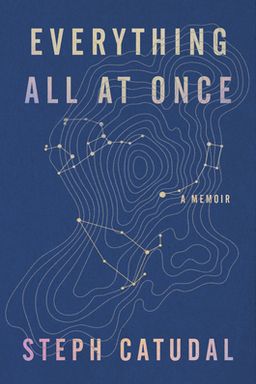
When life forces you to hold joy and terror in the very same breath, what do you do with that overload of feeling? In Everything All at Once, Steph Catudal argues that the only way through is not to choose between light and dark, but to learn to live inside their collision. She contends that love is the one constant roomy enough to hold grief, faith, fear, resilience, and mystery at once—and that healing comes when you allow the full spectrum of experience to move through you.
Catudal’s memoir orbits two defining illnesses: the slow, shattering death of her father from lung cancer when she was thirteen, and the near-death of her husband, elite marathoner Tommy “Rivs” Puzey, from an undiagnosed lung catastrophe in 2020 that was later revealed as NK/T-cell lymphoma. Between those bookends she tells a coming‑of‑age story—raised Mormon on promises of miracles and perfection, she loses her faith when prayer doesn’t save her father; for years she weaponizes anger to outrun sorrow; motherhood forces her to relearn how to feel; psychedelics crack her heart back open; and a global pandemic tests everything she believes about agency, surrender, and the meaning of miracles.
The Core Claim
The book’s core argument is deceptively simple: you do not have to choose between strength and surrender, hope and realism, science and spirit. You can hold (and be held by) all of it. Catudal frames life not as a linear passage from innocence to wisdom, but as a looping round—“time is round,” she writes—where lessons circle back until we are ready to hear them. Her father’s cough becomes her husband’s cough; the hallway between the ICU and the bone marrow unit becomes a private torii (a marker in Shinto tradition) between the mundane and the sacred; and the concept of God dissolves into the texture of love itself.
What You’ll Learn in This Summary
You’ll see how early loss trains a body and a mind to choose anger over sadness—and how to reverse that habit. You’ll follow the technical and human drama of a months‑long ICU fight: oxygen sats in the 70s at home, ECMO cannulas, tracheostomies, a rare lymphoma, and the exacting ballet of caregivers who keep a body alive while a soul decides. You’ll explore how faith can fracture and be reimagined (with a psilocybin journey as a pivot), how motherhood is the art of holding without carrying, and how advocacy, intuition, and community can tilt life’s odds when medicine stalls.
Along the way, Catudal reframes prayer as intention rather than transaction, miracles as harmonies of science and love rather than suspensions of nature, and strength as a willingness to be porous rather than armored. She does this not by preaching, but by story: a strawberry milk carton in a freezing minivan; a nurse named Tara who teaches her to corner doctors with questions; a housekeeper named Fringa who slips a tissue into her hand and rests her head on Steph’s shoulder; an ER transfer director named Craig who builds a cross‑disciplinary team when everyone else says no.
A Line That Holds the Book
“This is not how he dies.” The sentence arrives like a tuning fork in the night and becomes an ethic: trust your deepest knowing, and then act on it.
Why It Matters Now
If the last several years have taught you anything, it’s that uncertainty is not a temporary condition. Catudal models a way to metabolize it without hardening: feel your feelings in real time; ask for precise help; accept that “meaning” is something you make, not something meted out by fate; and let love’s very ordinariness—coffee, a head scratch, a scratched‑out note on the fridge—be the miracle. As in Joan Didion’s The Year of Magical Thinking, the memoir becomes a manual for surviving the unimaginable; as in Paul Kalanithi’s When Breath Becomes Air, the ICU is a classroom; as in Michael Pollan’s How to Change Your Mind, altered states expand what counts as “real.”
How This Summary Is Structured
We begin with grief’s apprenticeship and the cost of perfection. Then we turn to the body—Tommy’s athlete’s heart, his collapse, the choreography of machines and human hands—and to the reweaving of faith into love. We’ll look at motherhood as boundary and balm; advocacy and intuition as twin engines; and how to make meaning without invoking cosmic scorekeeping. Finally, we’ll translate Catudal’s lessons into practices you can use when life asks you to live everything all at once.