
Idea 1
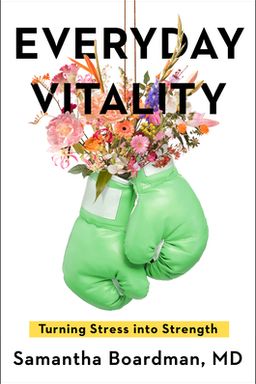
Everyday Vitality: Turning Stress into Strength
Why do so many of us feel drained and disconnected—despite seemingly having it all together? In Everyday Vitality, psychiatrist Dr. Samantha Boardman argues that the real antidote to exhaustion and stagnation isn’t more self-care or escape from stress—it’s vital engagement with life. Boardman, a clinical psychiatrist with a background in positive psychology, challenges the dominant cultural narrative that happiness comes from looking inward and eliminating discomfort. Instead, she contends that vitality—the sense of aliveness, strength, and energy—is built not through retreat but through deliberate participation in the world around us.
This is not a book about achieving constant bliss or eliminating pain. Boardman insists that negative emotions are not enemies to be vanquished. Stress, frustration, and uncertainty are inevitable, and trying to eliminate them only leaves us fragile. What matters is how we turn them into strength. Drawing from positive psychology research and her clinical experiences, she offers a framework built around three wellsprings of vitality: connecting meaningfully with others, engaging in experiences that challenge and expand you, and contributing to something beyond yourself.
From Draining Days to Engaged Living
Boardman’s patients often arrived feeling what she calls “air-quote fine”—not clinically ill but depleted, disengaged, and unfulfilled. They juggled work, relationships, and responsibilities, but life felt like an endless series of checkboxes. Many, like her patient Claire, came to therapy only to dwell on everything that was wrong. Claire’s complaint—that their sessions made her feel worse—sparked a crisis for Boardman herself. Realizing she was trained to diagnose pathology, not strengthen well-being, Boardman returned to school to study positive psychology under Martin Seligman, the founder of the “flourishing” movement. There she discovered that the absence of illness isn’t the same as the presence of health.
The exploration changed her practice—and philosophy. She began focusing not on “undoing” pain but on building psychological resources that fuel strength and joy. As Seligman once wrote, “The opposite of depression is not happiness, but vitality.” That insight now underlies Boardman’s approach: well-being isn’t about feeling good all the time, but about having enough internal and external energy to meet the demands of life.
Vitality as Deliberate Action
Crucially, vitality isn’t an inborn trait or a fleeting mood—it’s a skill and a practice. Boardman reframes vitality as “a verb, not a state”. It’s something you generate through what she calls “deliberate vitality.” That means taking small, regular, intentional actions that connect, challenge, and contribute. Whether it’s reaching out to a friend, learning a new skill, or helping someone else, vitality grows through engagement rather than introspection. She contrasts this approach with the self-immersion encouraged by the wellness industry—retreats, detoxes, inward searching—which often deepen disengagement instead of curing it.
Why This Matters
Boardman wrote much of Everyday Vitality in the shadow of the pandemic, a time when disconnection and anxiety eroded even the most resilient spirits. She argues that cultivating everyday vitality is essential not only for our individual mental health but for contributing to society in times of collective crisis. In her words, vitality gives us “the strength and energy to activate long-overdue social change.”
Throughout the book, she translates years of clinical insight and psychological research into pragmatic strategies for real life. She dissects how stress really works—the small “pebbles” that chip away at us—then flips the script on resilience, showing that it’s most effective when expressed in daily life, not only after trauma. She encourages readers to redefine authenticity, reimagine their capacity for change, and challenge the corrosive myths that self-focus leads to happiness. In her view, vitality doesn’t come from protecting ourselves against life—it comes from showing up for it fully.
“Vitality doesn’t come from disengaging from the world while you ‘find yourself.’ It comes from living well within it.” — Dr. Samantha Boardman
If you often feel drained, distracted, or “meh,” Boardman’s message is both scientific and deeply human: you don’t need a radical reinvention or a stress-free life to feel whole. You need connection, contribution, and challenge—woven consciously into the fabric of your ordinary days. Everyday Vitality provides both the science and stories to show you how.