
Idea 1
Ubuntu: The Art of Living Better Together
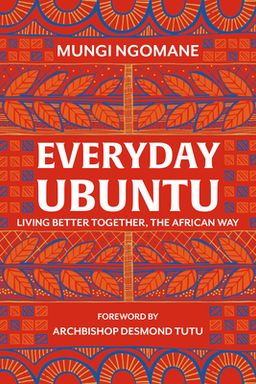
Have you ever stopped to wonder how your life might change if you truly saw yourself reflected in other people? In Everyday Ubuntu: Living Better Together, the African Way, Mungi Ngomane—granddaughter of Archbishop Desmond Tutu—argues that humanity flourishes not through competition or isolation but through deep interconnection. She contends that the African philosophy of ubuntu—the idea that ‘I am because we are’—holds the key to healing personal, social, and even global divisions.
Ubuntu, as Ngomane presents it, isn’t just a moral ideal or cultural relic—it’s a practical way of living that reveals our shared humanity. It invites you to look outward as much as inward, emphasizing that our well-being and success depend on recognizing the worth in every person. The book’s fourteen lessons are ethical guideposts for empathy, forgiveness, humility, and unity, articulated through real stories from the author’s family, community projects, and historical events that shaped modern South Africa.
Rediscovering the Value of Connection
Ngomane opens by reminding us that the myth of the 'self-made' person is exactly that—a myth. Just as her grandfather learned during his Nobel Peace Prize ceremony that his achievements were a collective effort, we too are products of the people who shaped us. Ubuntu dismantles the illusion of independence and redefines success as something achieved together. When we practice ubuntu, we begin to see that kindness to others is kindness to ourselves, because our humanity is intertwined.
In the West, self-care and self-reliance have often meant focusing inward, sometimes at the cost of empathy. Ngomane reframes self-care as the foundation for care of others. You can’t 'pour from an empty cup,' she reminds readers—echoing wisdom from activist Betty Williams, who refused to rush before an important speech because “there’s always time to care for yourself.” Ubuntu is balance: self-respect that fuels respect for neighbors, coworkers, and even strangers.
Ubuntu as an Answer to Fear and Division
At the heart of Ngomane’s argument lies a question that speaks to our times: how do we coexist peacefully in a diverse world? With over 6,500 languages and countless cultures, difference can sting with unfamiliarity. The author warns that fear of the unknown often breeds judgement. We regard others’ foods, morals, or music as strange—and in doing so, push away the richness that diversity offers. Through stories like the Desmond Tutu HIV Foundation Youth Centre near Cape Town—where young interns learn about Nigerian dance and Zimbabwean food—the author shows how shared curiosity transforms prejudice into connection. The lesson is simple: judging wastes energy; learning nourishes us both.
Ngomane brings these principles to life through examples such as her grandfather’s role in the Truth and Reconciliation Commission of South Africa, which sought to heal communities wounded by apartheid through listening and forgiveness rather than punishment. This process exemplifies ubuntu on a national scale: acknowledging pain, walking in others’ shoes, and building unity out of empathy—an idea echoed later in Rwanda through projects like Cows for Peace, which helped survivors and perpetrators reconcile after genocide. (Other peace scholars, like Bryan Stevenson in Just Mercy, similarly describe compassion as the bridge to justice.)
A Global Philosophy of Humanity
Ubuntu, for Ngomane, transcends geography. It’s Africa’s gift to the world—a practical ethic for interconnected living. This worldview asks you to notice how communities thrive through cooperation, how empathy fuels healing, and how humility unlocks wisdom. From Mandela’s hope-filled leadership to grassroots initiatives like Global Citizen, ubuntu surfaces wherever people work together for peace and equality. Science, too, echoes its truth: empathy triggers the same brain regions as personal pain, reinforcing that we are biologically wired to care.
In this sense, Everyday Ubuntu serves as both a call to action and a mirror. It inspires you to see the humanity in everyone—from the friend who needs forgiveness to the stranger who challenges your perspective. Each chapter unfolds as a modern parable about humility, respect, and the quiet strength that emerges when we lift others up instead of tearing them down. “Knowledge is like a baobab tree,” one African proverb reminds us, “no one individual’s arms can reach around it.” We need each other to fully understand the world.
Why It Matters Today
Ngomane’s work feels urgent in an age of polarization and loneliness. Despite the explosion of digital connectivity, isolation is rampant. Ubuntu offers a corrective: it’s not about losing yourself in the group but discovering yourself through it. You thrive when everyone thrives. Whether you’re dealing with colleagues, healing from past hurts, or navigating cultural tensions, ubuntu reminds you that compassion isn’t weakness—it’s strength. In this philosophy lies the power to rebuild trust in homes, workplaces, and nations torn by division.
By the book’s end, you realize ubuntu is less a lesson to be learned than a way of being reclaimed. It teaches that life’s deepest fulfillment comes not from victory or status, but from human connection. Mungi Ngomane’s call is clear: if we choose to see ourselves in others, celebrate our diversity, and act with humility, we can finally live better—together.