
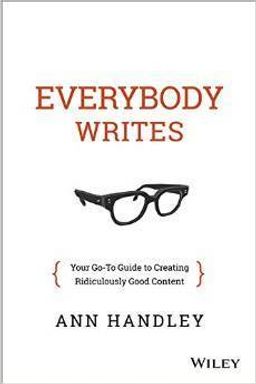
Everybody Writes cover

Everybody Writes

by Ann Handley

Everybody Writes by Ann Handley empowers you with essential skills to craft exceptional content. From compelling posts to engaging emails, this guide reveals simple rules for effective communication that captivates audiences and strengthens customer relationships in a digital world.

Writing as a Habit and a Superpower Everyone Can Learn

How can you write in a way that captivates, convinces, and connects — even if you don’t think of yourself as a writer? In Everybody Writes, Ann Handley argues that great writing isn’t a mysterious art reserved for novelists or poets; it’s a practical skill—and one that everyone in business must master. She contends that in our fast-paced digital age, where every tweet, blog, or email shapes how people see your brand, words are your most powerful tool. Whether you’re drafting a sales email or a social media post, you are, in Handley’s view, already a writer—and it’s time to start acting like one.

Handley’s central claim is deceptively simple: the ability to write well is a habit, not an innate talent. She encourages readers to shed their high school grammar trauma, embrace writing as an everyday practice, and view publishing as a privilege. The book is part motivational guide and part content manual—teaching you not just how to write clearly, but also how to build trust with readers through authenticity, empathy, and usefulness.

The New Reality: Everybody Is a Publisher

Handley opens with a fundamental truth: in the digital age, everyone with a smartphone and Wi-Fi connection is a publisher. If you have a website, LinkedIn profile, or Instagram feed, you are communicating—and everything you share tells people something about you. Your writing is your emissary, Handley says; it speaks for you long before you arrive in the room. This democratization of publishing is both an opportunity and a responsibility. It gives individuals the chance to share ideas widely, but it also means that careless words or jargon-laden gibberish can destroy credibility fast.

To succeed amid this flood of information, your writing must stand out for being helpful, inspired, and human. Content that simply fills space or parrots trends is what Handley calls “content crap.” Great writing, by contrast, is useful, empathetic, and inspiring—what she summarizes with her now-famous formula: Utility × Inspiration × Empathy = Quality Content.

Why Writing Matters More Than Ever

Although people often value design, video, or Instagram aesthetics, Handley insists that words are the foundation of all communication. Even a YouTube video or a TikTok starts with a script. What’s more, good writing forces clear thinking. Quoting Amazon’s Jeff Bezos and cognitive scientist Steven Pinker, she explains that learning to write well is learning to think well. Writing is the act of discovering what you believe and how best to express it.

She also calls writing a pathological act of empathy. You write not to display your intelligence, but to help your reader—by solving a problem, clarifying a complexity, or making their life a little easier. The heart of writing, then, is generosity. Handley pleads with marketers to stop centering themselves and focus instead on reader needs: the reader, not your boss or brand, signs your paycheck.

From Fear to Habit

Many people fear writing like they fear public speaking. They freeze at the blank screen, haunted by grammar ghosts and high-school papers marked in red ink. Handley normalizes that fear, calling it “writer’s evasion” rather than “writer’s block.” Her cure? Create a habit of writing daily, even badly. She calls the first step The Ugly First Draft (TUFD)—recognizing that great writing is born from terrible first attempts. This process demystifies writing, turning it from a mystical talent into a muscle you strengthen with repetition. “Write badly,” she insists, “because bad writing precedes good writing.”

Borrowing from authors like Stephen King and Ben Franklin, Handley contends that writing thrives under routine. King compared it to exercise; Ben Franklin’s “daily scheme” balanced work, reading, and reflection. Writing, Handley reminds readers, isn’t inspiration—it’s discipline. Show up, write something every day, and edit later. Like a gym routine, “even writing junk reps” builds endurance. Over time, you’ll find your voice—and it will sound like your best self on the page.

The Architecture of Great Content

Throughout the book, Handley lays out a blueprint for what she calls “ridiculously good content,” blending writing craft with marketing strategy. She teaches how to create logical structure (the GPS of writing), craft vivid sentences, develop a personable brand voice, and apply journalistic rigor—fact-checking, citing sources, and ethical curation. The later chapters, framed as “13 Things Marketers Write,” apply these lessons to practical formats—emails, blogs, landing pages, and social updates.

Ultimately, Everybody Writes is more than a writing manual; it’s a manifesto for modern communication. It’s a call to arm yourself with clarity and empathy in a noisy world, where attention is scarce but thoughtful words can still cut through. Whether you’re composing a corporate memo or an Instagram caption, Handley invites you to write with purpose, polish, and personality. Because if everybody writes, only the ones who care enough to do it well truly stand out.


Building a Daily Writing Habit

For Ann Handley, writing is not an act of genius—it’s a ritual. She compares mastering writing to learning to do a single push-up: one small act of persistence that grows into strength. The difference between those who write well and those who don’t isn’t talent, she argues; it’s habit. The most prolific authors—Maya Angelou, Charles Dickens, Ben Franklin—didn’t wait for inspiration. They built schedules. Likewise, if you want to write better emails or blog posts, you must carve out daily writing time and stick to it.

Writing as Practice, Not Performance

Handley reframes writing as practice rather than performance. You don’t have to strike brilliance every day. You just need to show up. “Write like crap,” she says, “but write every day.” Regular repetition creates fluency, just as scales do for musicians. The more you write, the more naturally words flow, and the less fearful you become.

(This approach mirrors James Clear’s philosophy in Atomic Habits: small consistent actions compound over time. Handley applies this behavioral insight directly to creativity.)

Fighting Writer’s Evasion

Most people don’t actually face “writer’s block,” she says—they face avoidance. We procrastinate because writing feels intimidating. Handley jokes that before writing, she suddenly feels the urge to polish cutlery, organize closets, and descale her coffee maker. Her solution: eliminate rituals and romantic notions of the “perfect time” or “divine muse.” Instead, lower the bar. Start with what she calls a Writing GPS—a 12-step map that includes setting a purpose, understanding the reader, gathering data, and crafting your “Ugly First Draft.”

Making Writing Manageable

Break your projects into bite-sized steps. Outline ideas with Post-it notes, voice memos, or apps like Evernote and Scrivener. Handley suggests focusing less on time and more on output: measure by word count, not hours. Even 250 words per day—roughly one email—adds up over time. When you stop worrying about being perfect, you start producing more. Handley quotes Stephen King: “Bad writing precedes good writing.”

Ultimately, building a writing habit means embracing imperfection as progress. Each messy draft is evidence that you showed up to practice. Over time, that steady engagement transforms you from someone who dreads writing into someone who writes naturally, skillfully, and even joyfully.


Empathy: The Core of Good Writing

If there’s one word that defines Handley’s philosophy, it’s empathy. To write well, you have to feel what your reader feels. She calls this “pathological empathy”—the obsessive effort to see the world through your reader’s eyes. Without it, your content risks being tone-deaf or self-centered. With it, everything you write becomes relevant, trustworthy, and human.

Stepping into the Reader’s Shoes

Handley insists that good writing serves the reader, not the writer or the boss. Quoting journalist Donald Murray, she reminds us: “The reader doesn’t turn the page because of a hunger to applaud.” This means swapping places with your reader during editing—asking, “What questions might they have? Where might they get confused? Why should they care?”

She challenges marketers to practice empathy by talking with customers directly, not hiding behind data dashboards. Go where your audience lives—read their complaints, hang out in their forums, listen to customer service calls. Only then can you write in a way that resonates instead of lectures.

Reader-First Language

One of Handley’s most practical empathy hacks is to replace every instance of “we” with “you.” This linguistic shift changes your perspective—and changes the reader’s experience from spectator to participant. For example: “We offer cutting-edge solutions” becomes “You’ll get faster results.” It’s a small switch with powerful impact. “Your writing,” she says, “should sound like a friendly guide, not a corporate robot.”

Empathy is also what turns data into storytelling. Facts earn trust, but feelings create connection. When you write with empathy, you stop sounding like a marketer and start sounding like someone who cares. That’s when your content stops shouting and starts speaking directly to your reader’s heart.


The Ugly First Draft: Freedom to Fail

One of Handley’s most liberating ideas is the Ugly First Draft (TUFD). This is “where you show up and throw up.” It’s the step that frees you from perfectionism. Rather than waiting for Athena to leap fully formed from your head, write badly on purpose. TUFD means putting your thoughts down without self-judgment, knowing you’ll fix it later. Professional writers, Handley says, aren’t better at writing—they’re better at rewriting.

This stage is about permission: to write incomplete sentences, to babble, to rant. The only rule is that you can’t criticize your work while creating it. As Mark Twain once said, “Writing is easy—all you have to do is cross out the wrong words.” TUFD gives you something to cross out.

Walking Away, Then Rewriting

After vomiting words onto the page, Handley recommends walking away. Get distance. Sleep on it. When you return, you’ll see what’s worth keeping and what needs surgery. Revision, she says, is what separates amateurs from professionals. The first draft is the scaffolding; editing is the art. She draws a distinction between two kinds of editing: chainsaw editing (big structural changes) and scalpel editing (word choice, rhythm, and flow).

By embracing TUFD, you stop treating writing as performance and start treating it as process. It’s not about getting it right the first time; it’s about getting to right. That shift in mindset—toward iteration and imperfection—liberates creativity and builds confidence. The beauty of the Ugly First Draft is that once it exists, you’re no longer staring at a blank page. And that’s when real writing begins.


Storytelling That Means Something

Stories aren’t just for novelists. In marketing, stories show how your product exists in the world and why it matters. Handley defines modern storytelling as telling true stories well—not spinning fairy tales. Your story should reveal your company’s personality, values, and purpose, not just your products.

Truth Over Hype

To tell stories that connect, Handley says, start with truth. She praises brands like Chipotle for its “Scarecrow” film that addressed food ethics, and Skype’s “Born Friends” campaign about two girls connecting across the world. These stories weren’t about product features; they were about values—connection, responsibility, authenticity. Their power lay in showing—not telling—what the brand stood for.

Structure and Specificity

Every good story has structure: beginning, challenge, and resolution. In business writing, that structure might look like problem, insight, and outcome. But Handley warns against generic “solutions” talk. Instead, use specific examples: real people, real stakes. She references Cisco’s video featuring Grupo Modelo’s CIO talking about selling more beer through smarter IT—transforming dull technology talk into human narrative.

Stories like these work because they embody empathy and credibility. They remind readers that behind every brand are humans solving problems for other humans. The best stories aren’t sales pitches; they’re proof that you understand your customers’ world.


Publish Like a Journalist

Handley believes brands must act like publishers—with discipline, integrity, and curiosity. The key question every marketer should ask is: “Would anyone trust or enjoy this if it weren’t tied to my brand?” To answer yes, you must adopt journalistic principles: honesty, research, attribution, and fact-checking. Credibility, she says, is at the root of every shareable, respected piece of content.

Brand Journalism in Action

Brand journalism is the marriage of marketing and reporting. Companies like GE, Intel, and Adobe have adopted newsroom models, hiring journalists to craft data-driven, narrative-rich stories. For example, GE Reports covers technology and innovation just like Popular Science, focusing on real topics rather than commercials. It’s biased, but balanced—transparent about its perspective while grounded in fact. Handley quotes HubSpot’s Dan Lyons: “We were expected to have an opinion and defend it—but to fight fair.”

Trust as Currency

Trust is the new marketing currency. That means citing sources correctly, respecting copyright, and grounding bold claims in data. Handley urges ethical curation—adding insight rather than copy-pasting—and reminds brands to “seek permission, not forgiveness.” A single act of sloppy or stolen content can destroy credibility faster than any typo.

When companies tell transparent, informed stories, they elevate content marketing to thought leadership. When they don’t, they look like amateurs. Acting like a journalist isn’t just ethics—it’s strategy. It’s how you ensure your audience believes your words are worth reading and sharing.


Write for the Platforms People Actually Use

After teaching you how to think and write well, Handley shows how to adapt those skills across business platforms—blogs, emails, social media, landing pages, and websites. Her golden rule: form follows function. Each medium has its rhythm and expectations, and good writing honors that context. “You can’t write a tweet like a white paper,” she jokes.

Writing for Social Media

On Twitter, she says, think dialogue, not monologue. You’re not broadcasting; you’re conversing. Tweets under 120 characters perform best because they leave room for replies and retweets. On Facebook, shorter posts (100–140 characters) with images get far more engagement. And on LinkedIn, you should “always be helping”—offering professional insights, not self-promotion. In Handley’s world, social media isn’t marketing—it’s human connection at scale.

Email and Landing Pages

Email, she insists, is intimate—it lands in someone’s private inbox. So skip corporate jargon. Be personal and clear. The subject line’s job is to earn the open; the first line’s job is to keep it. And landing pages? Less is more. Avoid what she calls “arcade syndrome”—pages overloaded with buttons, colors, and noise. A great landing page delivers one message, one offer, and one clear call to action.

Across every platform, the guiding principle is the same: clarity and empathy. Whether your reader is scrolling, clicking, or searching, meet them where they are. Speak like a person, not a press release. And never forget Handley’s first commandment: make it about them, not you.

Dig Deeper

Get personalized prompts to apply these lessons to your life and deepen your understanding.

Go Deeper

Get the Full Experience

Download Insight Books for AI-powered reflections, quizzes, and more.