
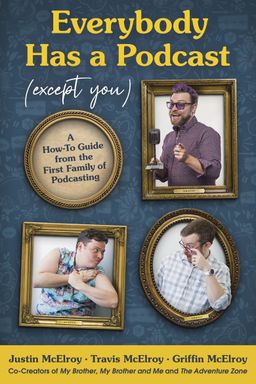
Everybody Has a Podcast (Except You) cover

Everybody Has a Podcast (Except You)

by Justin, Travis, and Griffin McElroy

Everybody Has a Podcast (Except You) is a hands-on guide for aspiring podcasters. Learn how to choose a topic, build an audience, and overcome technical challenges. Even with limited resources, you can create a successful podcast with persistence and creativity.

Turning Conversations Into Creations: The McElroy Approach to Podcasting

Have you ever wondered why some people seem to effortlessly turn their random conversations with friends into creative success stories that reach thousands—even millions—of listeners? In Everybody Has a Podcast (Except You), Justin, Travis, and Griffin McElroy argue that the secret to great podcasting isn’t technical expertise or fame, but curiosity, consistency, and heart. Their central claim: anyone can make a podcast worth hearing if they bring genuine enthusiasm, commit to learning by doing, and treat their listeners with respect.

The McElroys are proof that creativity thrives in imperfection. Known for the hit shows My Brother, My Brother and Me and The Adventure Zone, they’ve built a podcasting empire from humble beginnings—a $15 Walmart microphone and a shared sense of humor. Across more than a decade of mistakes, growth, and laughter, they’ve learned one thing: podcasting is easy to start but hard to sustain with excellence. This book is their hands-on guide to doing both.

Podcasting Is Easier Than You Think—But Also More Work

In the introduction, Justin McElroy confesses, “As much as it pains us to admit it, podcasting is easy.” All you really need is a microphone, an idea, and the courage to hit record. But doing it well—creating something listeners want to come back to—requires many hats: host, writer, editor, promoter, sound engineer, and often, part-time comedian. They reassure beginners that each of these skills can be learned one at a time (and, they joke, “if we can do it, you definitely can”).

From Goofy Beginnings to Practical Wisdom

The McElroys’ storytelling style is informal, self-deprecating, and accessible. They weave their advice through the origin story of their own shows. In 2010, they started My Brother, My Brother and Me (MBMBaM), an “advice show for the modern era” that was, as they describe it, basically “three brothers giving bad advice, but it’s funny.” There was no grand strategy, no equipment, not even a consistent audience. What sustained them wasn’t fame—it was the joy of conversation, the thrill of trying something creative, and the potential to get a little better each week.

Through that goofy case study, the McElroys illustrate a pattern familiar to creators across arts and business: start messy, learn publicly, iterate constantly. They even structure this book around that process—preproduction, recording, editing, publishing, promoting, and eventually monetizing. Their tone balances comedy with pragmatism, providing both insight and confidence to readers who are scared to begin. (In that sense, their approach resembles Austin Kleon’s Show Your Work! or Anne Lamott’s Bird by Bird—creative manifestos that celebrate progress over perfection.)

The McElroy Formula: Enthusiasm Meets Empathy

What makes this book stand out from other podcast manuals is how heart-centered it is. The McElroys don’t just want your podcast to sound professional—they want it to feel kind. Good podcasts, they argue, are built as “a love letter to your listeners.” The brothers model that principle through humor and humility. Their recurring message: people will forgive low-budget sound or offbeat jokes, but they won’t forgive apathy. The McElroys stress that authentic enthusiasm is your best equipment.

In their world, a successful podcast isn’t about viral fame or sleek branding. It’s about genuine connection: having fun with your cohosts, learning in public, and making a space where listeners feel welcome. They often remind readers that your obsession—whatever weird, specific thing you love—is someone else’s obsession too. And the internet ensures you can find those people, whether you’re talking about medical history, etiquette, cereal, or even “workplace training videos.”

Creating for People, Not Algorithms

Throughout the book, the McElroys push back against the tendency to chase trends or analytics. “If you fake enthusiasm,” they warn, “your audience will hear it immediately.” Instead, choose a niche that excites you deeply enough to sustain hundreds of episodes. Then, record like one of your twenty listeners is the most important person in the world—because they are. This audience-first mindset echoes Dale Carnegie’s timeless idea of loving your audience, which the brothers directly quote and embody.

Their ethos turns podcasting into something personal: part art, part service. By demystifying the process, they empower anyone—artists, educators, professionals, or goofballs—to share ideas publicly. In their words, once you’ve recorded your first honest conversation and uploaded it online, you’re not “an aspiring podcaster” anymore. You’re just a podcaster.

Why These Ideas Matter

In a world where “everybody has a podcast,” this book reminds us that yours can still mean something. It doesn’t matter that the landscape is crowded; your perspective—especially your humor, kindness, and curiosity—is unique. As the McElroys show through ten years of trial and joyful error, what matters most isn’t getting it perfect, but hitting Record. The rest, they promise, can be learned, edited, and improved. It’s part guidebook, part pep talk, and part comedy show—the ultimate reminder that creative expression is not reserved for experts but for anyone who’s willing to make a fool of themselves on the mic and love doing it.


Finding Your Idea and Audience

Justin McElroy begins by asking a deceptively simple question: what’s your podcast about—and why do you want to make it? In podcasting’s early days, a vague idea might have been enough, but now, with over 850,000 shows competing for attention, clarity and passion are essential. The brothers call this first phase preproduction—a creative self-audit about what will keep you excited and your audience engaged.

Crafting a One-Sentence Pitch

The McElroys describe the heart of any show as its “big sentence.” Can you describe your podcast in a single compelling line—something so clear that a listener can explain it to someone else? They cite examples like Anna Faris Is Unqualified (“Not-great relationship advice from completely unqualified Hollywood types”) to illustrate how a strong pitch communicates humor, focus, and personality all at once. When they test this logic on their own show—“three brothers give bad advice, but it’s funny”—they immediately critique it: who says it’s funny? The lesson is humility and precision. If an outsider can’t tell what the show promises in one sentence, you’re not done developing the concept yet.

Following Your Genuine Obsession

After establishing the need for focus, Justin adds a more personal criterion: talk about what you obsess over. What’s the topic you can’t stop researching, even when no one cares to listen? What are you weirdly fixated on? For Justin, it’s old workplace training videos; for his cohost Dan Goubert, it’s breakfast cereal. Together they built The Empty Bowl, a “meditative podcast about cereal” that has a small but deeply loyal audience. The takeaway is profound: contentment and authenticity often matter more than reach.

Understanding Competition Without Fear

One common fear for beginners is that someone has already made the podcast they want to make. The McElroys answer with optimism: that’s a gift, not a problem. Studying existing shows—especially in your niche—helps you refine your angle. For instance, when Justin analyzes the crowded “Survivor” recap genre, he finds dozens of variations, from ex-contestant commentaries to long-form histories. Instead of copying, you find the facet of the subject that only you can bring—a skill borrowed directly from business and storytelling strategy alike.

Designing an Angle Only You Can Do

The way forward, the brothers advise, is to identify your “way in.” Tim Batt and Guy Montgomery’s The Worst Idea of All Time—watching the same bad movie weekly for a year—worked because it took a crowded topic (film podcasts) and twisted the format into absurdism. The McElroys did the same with Sawbones, blending medicine and comedy through Sydnee McElroy’s expertise and Justin’s curiosity. Listeners aren’t just drawn to topics—they’re drawn to unique chemistry and perspective.

Balancing Passion with Realism

The McElroys caution creators against two traps: apathy and burnout. Don’t chase trends you secretly dislike, and don’t record topics that bore you; pretending enthusiasm never works. But also, don’t expect overnight success. Podcasting is a marathon of incremental growth. The earliest fans might be just twenty people—but if those twenty care deeply, you’ve succeeded. The brothers remind us that success isn’t a number; it’s the joy of making something meaningful. That belief lays the emotional foundation for everything that follows in the book.


Building Chemistry with Cohosts and Guests

Travis McElroy’s chapter on cohosts turns podcasting from solitary project into shared performance. His mantra is simple: “talk about something you like talking about with someone you like talking to.” Chemistry, not credentials, is what gives a podcast its rhythm. The McElroys’ family dynamic exemplifies this rule—each brother offers a different energy that keeps conversations playful and unpredictable.

Balancing Voices and Roles

The right team depends on the format. A tightly scripted storytelling podcast might only need one narrator, but for conversational shows, multiple voices prevent monotony. Travis explains that the ideal number is two to three hosts—enough variety for banter, but not so many that no one can finish a sentence. Each host should understand their role: expert and novice, questioner and comedian, straight man and wildcard. In Shmanners, for instance, Travis and his wife, etiquette expert Teresa, embody this balance—one informative, one illustrative.

Diversity and Perspective

Travis stresses the importance of including varied perspectives, not just for representation but for richer storytelling. When he and cohost Brent Black found recurring blind spots in their social commentary show Trends Like These, they invited Courtney Enlow to join. As a woman, she brought new insight and humor to conversations the original hosts couldn’t authentically address. The result was not just political correctness—it was a better show.

Managing Co-Creator Relationships

Working creatively with friends or family can be both rewarding and delicate. Travis admits that communication is essential, especially when creative differences arise. The McElroys themselves joke about “trying to kick Griffin off MBMBaM” but use humor to defuse tension. They recommend clarifying work expectations—schedules, responsibilities, credit—early in the process. A cohost who constantly cancels or lacks enthusiasm can derail even the best idea.

Inviting Guests Effectively

Adding guests can energize a show, but they shouldn’t be used as marketing bait. Travis warns that “big-name” guests will only draw limited spikes in traffic—and only if they promote the episode themselves. Far more valuable are guests who match the show’s tone and chemistry. The goal isn’t celebrity, but comfort. His recommended outreach message is charmingly simple: a polite, concise email explaining your podcast and linking to a good episode. No hard sell, no begging—just professionalism and respect.

The deeper message is that podcasting is communal art. When everyone involved feels included, understood, and entertained, listeners feel that warmth too. Like any great conversation, the energy between podcasters radiates outward. As Travis says, “Having someone to talk to keeps it from feeling like work.”


Designing Structure and Flow

Griffin McElroy’s contribution focuses on transforming ideas into structure—the bones of your show. A good podcast feels spontaneous, but behind the jokes and tangents lies invisible architecture. Structure builds trust: it tells your audience what to expect and gives hosts a rhythm to follow. Griffin compares unstructured shows to “building the plane while you’re flying it”—fun at first, exhausting over time.

Scripted or Unscripted?

One of the first choices you’ll make is whether your show is scripted. Scripted podcasts, like Welcome to Night Vale or Serial, demand strong writing and precise timing but offer narrative control. Unscripted podcasts, such as MBMBaM or Wonderful!, rely on chemistry, improvisation, and editing. Griffin admits he avoids scripts because spontaneous conversation plays to his strengths—but he also acknowledges the chaos that can bring. The rule: choose what you can sustain with quality.

Finding the Ideal Length

How long should an episode be? “I dunno, probably an hour,” Griffin jokes, before unpacking data showing most successful podcasts run 51–60 minutes. But he insists that numbers aren’t gospel. The right length depends on your format and energy. The Memory Palace thrives at 15 minutes; Hardcore History succeeds at five hours. The rule is simple: end when it stops being entertaining. Respect your listeners’ time, and they’ll reward you with loyalty.

Balancing Consistency and Flexibility

Consistency helps listeners build habits—many tune in during commutes or workouts. But that doesn’t mean your format must stay static. The McElroys evolved MBMBaM from 45 minutes to a full hour as new segments (“Farm Wisdom,” “Sad Libs”) emerged. The adventure-based RPG format of The Adventure Zone fluctuates wildly in length and tone depending on storytelling need. The message: create clear expectations and occasionally bend them when creativity calls.

Composing Segments with Intent

Every episode needs a beginning, middle, and end. The introduction establishes tone and stakes, the body carries the main conversation, and the outro provides closure. Griffin advises using repeated segments or formats—listener questions, recurring jokes, thematic music—to make each episode feel cohesive. When parts drag, transitions or “reset” segments keep energy fresh. Even ads can serve as rhythm breaks when handled creatively.

In short, well-designed structure doesn’t kill spontaneity—it enables it. The more predictable your skeleton, the more freely you can improvise muscle over it. As Griffin summarizes, “Structure builds trust, and trust builds an audience.”


Research with Honesty and Wonder

Not all podcasts are pure riffing. For shows like Sawbones or Shmanners, research is key. In a standout collaborative section, Dr. Sydnee McElroy, Teresa McElroy, and Rachel McElroy guide readers through the art of credible, engaging research. Their approach blends curiosity with humility: you don’t need to be a scholar—you just have to respect your subject and your audience enough to get things right.

Defining Your Purpose

Before diving into sources, the McElroy wives urge you to define your mission. Are you entertaining, educating, or a mix of both? Sawbones aims to amuse first and inform second—it’s “a comedy show about medical history,” not a lecture. Clarifying your goal sets the tone: if you promise laughs, don’t bury listeners in technical detail; if you promise facts, double-check every claim.

Doing the Work Without Drowning

The hosts offer practical research habits for non-academics. Start with a broad summary (Wikipedia is fine as a launchpad, not a destination), follow its citations into scholarly sources, and focus more on accuracy than exhaustiveness. If a topic feels too narrow or depressing, pivot—it’s better to skip than deliver halfhearted work. Sydnee admits she’s abandoned topics after realizing they lacked story or joy. This flexibility keeps research sustainable.

Finding the Story

Their golden rule: find the story. Facts alone bore, but stories stick. Whether it’s the tragic evolution of bloodletting or the quirky life of an 18th-century doctor, the narrative arc makes learning addictive. Identify a human element—a moment of discovery, hubris, or humor—that ties facts together. As Sydnee writes, “Until you find the story, your research is just a pile of facts.”

Owning Mistakes and Building Trust

One hallmark of the McElroys’ transparency is how they handle errors. When proven wrong, they correct themselves publicly, often with humor. Doing so builds listener trust—the same principle reflects journalistic integrity in miniature. They also recommend crediting sources and keeping a simple bibliography for each episode. It’s not just good ethics; it’s also a long-term time-saver when revisiting old work.

Ultimately, this section reframes research as a playful form of curiosity. Rachel sums it up best: “You don’t have to be an expert on something to do a podcast about it. You do have to be enthusiastic, though.”


The Technical Side Made Simple

While the McElroys treat creativity as the soul of podcasting, they also demystify its hardware and software. Travis handles the physical tools—microphones, stands, cables—while Griffin explains digital audio workstations (DAWs). Their tone stays welcoming, never intimidating. “Try not to fall asleep,” Travis jokes before explaining microphone types, but by the end he’s turned gear talk into something exciting.

Hardware: What You Need and Why

Travis divides microphones into three main types—dynamic, condenser, and ribbon—and compares their strengths in down-to-earth terms. Dynamic mics (like the Shure SM58) are reliable and affordable; condenser mics offer sensitivity and detail; ribbons provide warmth. USB models are easiest for beginners, while XLR setups offer more control for those ready to invest. He champions the Zoom H6 recorder as an all-in-one studio. His golden rule: buy a decent mic, but remember enthusiasm matters more than equipment.

Software: Your Digital Studio

Griffin’s section on software revolves around one key tool: a DAW, or digital audio workstation. He advocates for Audacity—a free, open-source program he’s used for years—despite his brothers’ playful protests. DAWs handle recording, editing, and mixing in one place. Griffin breaks down the interface step by step, decoding terms like mono vs. stereo and explaining why voice podcasts should always record in mono for clarity. His approach reduces tech anxiety by emphasizing play: “Record some garbage and mess with it—you’ll learn faster that way.”

Recording Space and Comfort

Justin rounds out the technical guidance with an unexpectedly funny essay on recording environments. Ideally, record in a closet full of clothes—that’s natural soundproofing. If not, improvise with rugs or heavy blankets to absorb echo. He teaches readers to listen critically to a room before recording, identifying humming fans or squeaky chairs that ruin takes. Comfort also matters: “You can’t make art if your chair wants you dead.”

Practical Wisdom over Perfectionism

The brothers repeatedly stress progress over perfection. Don’t overbuild your studio before you’ve recorded a pilot. Learn cable management after you’ve spoken into the mic a few times. Technical knowledge grows through necessity. The point isn’t to sound flawless—it’s to start creating sound you’re proud of. Their philosophy aligns with DIY cultures in art and tech alike: simplicity empowers experimentation.


Recording Like a Pro (Without Feeling Like One)

Chapter 3, “Let’s Record,” turns from preparation to performance. The brothers call it the art phase—the messy, human part that manuals can’t fully script. Here they blend practical and psychological lessons: get in the right headspace, maintain focus, and embrace performance energy. As Justin jokes, “We can’t show you how to fly; we can only whisper inspiration and push you off the tallest branch.”

Mindset and Focus

Before hitting record, do a “head check.” Are you tired, anxious, or distracted? Listeners hear your mood. Sometimes, recording can lift your spirits; other times, you’re better off rescheduling. Griffin adds a practical ritual: close unnecessary browser tabs, silence your phone, and give full attention to your cohosts. “Focus is a superpower,” he writes, “and the internet wants to steal it.”

Remember Your Audience

Every word you record is for someone who chose to spend their life-minutes listening to you. To stay grounded, Griffin imagines listeners as silent third participants in each conversation. If a bit feels awkward to you, it’ll sound worse to them. This practice creates empathy-driven editing instincts even during recording.

Performance and Energy

Travis reframes podcasting as acting. “Even if you’re just being yourself,” he says, “you’re performing.” That doesn’t mean fakery; it means amplifying the best parts of your natural energy. Hosts should aim not just to talk, but to fascinate—to make listeners feel included. His theater background informs his advice: pick an objective (“to entertain,” “to inspire,” “to connect”) before each recording session, and play toward it.

Technical Habits That Save You

They also cover physical techniques: avoid eating into the mic (unless your show is about eating), hydrate constantly, angle the microphone slightly off-center to avoid “plosives,” and record multiple takes or pauses knowing you can edit later. Always mark mistakes with a dog-clicker sound so they’re easy to find during editing—a surprisingly brilliant hack.

Finally, they remind you of podcasting’s greatest secret weapon: editing. Don’t fear mistakes or silences—you can cut anything. Perfection is built later. Recording should feel like play, not performance anxiety. The worst-case scenario? You delete it and try again tomorrow. That freedom, they say, is what keeps podcasting joyful.


Editing, Feedback, and Growth

Once the recording’s done, the real craft begins. Chapter 4, “Now Let’s Make It Listenable,” walks you through editing—not just the technical cleanup, but shaping your show into a cohesive experience. Justin likens editing to sculpture: first you carve away obvious rough edges, then refine, then polish. With each pass, the raw conversation transforms into something intentional.

Editing in Passes

The McElroys recommend at least three passes. Pass one: delete unusable bits—bathroom breaks, off-topic rambles, private jokes. Pass two: refine content flow—keep the strong sections, cut what’s flat, rearrange segments if needed. Pass three: polish—smooth transitions, trim awkward pauses, and blend audio levels. The goal isn’t to erase humanity, but to ensure clarity. “Editing out the boring stuff,” Justin writes, “is a moral act.” You’re protecting your listeners’ time.

Music and Mood

In his section on music, Griffin discusses sourcing legal, ethical tracks—preferably Creative Commons or original compositions. A good theme song should reflect energy without overpowering. Music fades smooth transitions between topics or ads. He breaks down “fair use” with comic exasperation (“I’m not a lawyer, but Coldplay will still sue you”). His advice: if you wouldn’t play it confidently for a copyright lawyer, don’t use it.

Getting and Using Feedback

Travis closes with a compassionate guide to feedback. Don’t seek validation; seek insight. Ask specific questions (“How was the pacing?”) instead of vague ones (“Did you like it?”). Choose three to five trusted listeners who understand your goals. Then decide which notes align with your vision and which to ignore. Aim to improve, not please everyone. Overreacting to criticism, he warns, can make you “chase perfection down a creativity-killing spiral.”

Together, these lessons turn editing into self-discovery. With each revision, you hear your voice more clearly—both literally and artistically. Editing stops being the chore after art and becomes part of the art itself.


Reaching Listeners and Sustaining a Community

With the show polished, Chapter 5 and beyond address its next life: publishing, marketing, and connection. The McElroys treat audience-building as a moral relationship, not a marketing tactic. “If somebody gives you their life minutes,” Justin writes, “you owe them your best.”

Hosting and Visibility

Getting your podcast onto platforms like Apple Podcasts or Spotify requires an audio host—a digital “house” for your files. The brothers demystify RSS feeds, explain differences between hosts (Libsyn, Anchor, Simplecast), and share the pain of switching later. Griffin contributes an entertaining walkthrough of submitting to Apple Podcasts and climbing charts: categories matter, metadata must be spotless, and “chart luck” depends on growth, not total downloads. Their realism makes the tech world approachable, not arcane.

Loving Your Audience

One of the book’s most heartfelt sections reconnects to Dale Carnegie’s advice: “Love your audience.” The McElroys treat fan emails, tweets, and meetups not as chores but as sacred chances to say thank you. They email fans personally, read listener messages on-air, and even hosted early “listening parties” to celebrate small groups of listeners. Gratitude, not marketing, built their community. Their rule online: always respond with kindness or silence—never argue publicly.

Social Media Without Selling Out

Travis’s “Obligatory Social Media Chapter” proves both hysterical and useful. His advice: create separate social accounts for your show, use consistent branding, and post often without spamming. Share behind-the-scenes glimpses, fan art, polls, and short clips to keep followers engaged. And—crucially—don’t make your own fan discussion groups; they’re exhausting to manage and blur boundaries. Instead, trust that communities will form organically if your show resonates.

Through all of this, the McElroys remind creators that audience interaction is part of the art form. Listeners aren’t customers—they’re collaborators in an ongoing conversation. Treat them well, and they’ll carry your message farther than any ad campaign could.


Making Money Without Losing Heart

In later chapters, the McElroys confront monetization with characteristic humor and honesty. Yes, you can make money podcasting—but probably not right away, and not without integrity. Their philosophy: earn sustainably, not cynically.

Merchandise as Connection

Justin opens the section by teasing readers: “Finally, we can sell some T-shirts!” Then he subverts the joke: merch should deepen connection, not exploit it. He encourages creators to wait until listeners ask for merch before producing it, to prioritize quality over quantity, and to view items as symbols of belonging—a T-shirt that says, “I’m part of this joke.” With stories about failed early merchandise attempts and improvements through DFTBA partnerships, he models growth through trial and error.

Crowdfunding with Integrity

Travis treats crowdfunding as the “purest” form of podcast income because it rewards devotion over scale. Patreon or Kickstarter supporters—he calls them “audience capitalists”—don’t just give money; they give trust. Success comes from transparency: do what you promised, communicate often, and avoid overcommitting to expensive rewards. Virtual bonuses like bonus episodes or live streams create value without draining time.

Advertising with Respect

Griffin closes with an inside look at podcast advertising, from ad reads to dynamic insertion. His rule: never endorse something you wouldn’t genuinely recommend. Authenticity sells better than hype. They turn ads into entertainment by treating them like part of the show—creative mini-skits often remembered as fondly as the content itself. “Keep it funny, keep it short, and don’t sell your soul for mouthwash money.”

Together, these monetization chapters outline a balanced path: build trust first, sustain it with transparency, and let income follow from enthusiasm, not desperation. The reward isn’t just profit—it’s longevity grounded in goodwill.


Start Now, Learn Later

The final “Outroduction” ends with a joyful challenge: stop waiting for the perfect setup and just hit record. After hundreds of pages of advice, Griffin brings the message full circle. The only way to make a podcast is to make one. Don’t let fear of doing it wrong stop you from doing it at all. Record something silly, record it badly, and record again. As he writes: “Make something, and then make it better.”

Learning by Doing

The McElroys reject perfectionism as the enemy of creativity. Experience, not preparation, teaches mastery. They even provide a playful exercise: open any voice memo app, talk about something that fascinates you, and hit stop. Congratulations—you’ve just made a podcast. Saving that file is the symbolic act that separates dreamers from doers.

Creative Resilience

Failure isn’t embarrassing; it’s educational. The brothers’ career proves this—early episodes were messy, microphones cheap, edits awkward—but persistence turned those mistakes into charm. Their philosophy echoes creative thinkers like Ira Glass and Elizabeth Gilbert: you can’t skip the awkward phase. You can only record through it.

The Larger Message

Ultimately, this book is about creative courage, not just podcasting. Its structure mirrors the creative journey of any medium—find your passion, connect with people, build craft through repetition, and stay kind. Whether you’re hosting, writing, or simply sharing your story, the lesson remains: start, learn, and keep showing up. In a crowded world of noise, sincerity still cuts through.

Dig Deeper

Get personalized prompts to apply these lessons to your life and deepen your understanding.

Go Deeper

Get the Full Experience

Download Insight Books for AI-powered reflections, quizzes, and more.