
Idea 1
Becoming Love in a World That’s Hard to Love
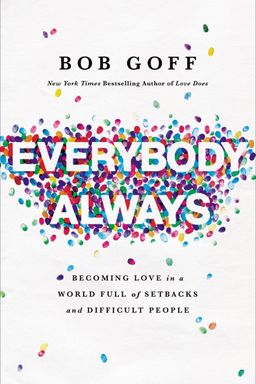
What would happen if you stopped merely talking about love and started becoming it? In Everybody, Always, Bob Goff argues that faith is not about agreeing with what Jesus said—it’s about doing what He did. The book’s central claim is that God’s grand design for humanity isn’t to have all the right beliefs or behaviors, but to become love itself—for everybody, always. And that transformation happens not through perfection, but through availability, courage, and grace.
Goff invites readers into story after story where love shows up in unlikely places: a dying neighbor named Carol, a courageous boy named Charlie who survived a witch doctor attack, a TSA officer named Adrian who taught Bob how to find his identity in love, and even witch doctors who become students in Bob’s “witch doctor school.” These stories aren’t simply feel-good anecdotes; they are models for a way of living that turns theology into action.
Love Is a Verb, Not a Feeling
According to Goff, love is not something we fall into—it’s something we become. Drawing from Jesus’ command to “love your neighbor as yourself,” he argues that love demands proximity, not perfection. Whether it’s stopping for a stranger or forgiving an enemy, love requires interrupting our schedules, preferences, and even our fears. Goff’s own life of surprise encounters reflects this kind of radical hospitality—from giving away his cell phone number to readers (yes, really) to befriending prison inmates who call him at $9.95 a minute.
In each story, Goff demonstrates that the essence of Christian spirituality is not about information but transformation. “People don’t need information,” he says. “They need examples.” Instead of announcing faith on a microphone, Goff embodies it in the way he loves people three minutes or thirty seconds at a time.
Faith, Fear, and Action
A recurring theme is courage—the kind that steps into discomfort rather than waiting for perfect conditions. Goff tells of his skydiving lessons with his son and how the experience helped him see faith as thirty-second acts of obedience, rather than lifelong promises we can’t always keep. Each story underlines a central insight: you grow not when you plan love, but when you practice it. When we take risks to love those we least understand, we mirror God’s courage in stepping toward humanity through Jesus.
This courage goes hand in hand with grace. Goff’s life-changing encounters with people who failed big—like prisoners, enemies, and doubters—show that grace is messy, impractical, and miraculous. He reframes faith as less about rule-following and more about restoration, echoing the perspectives of writers like Henri Nouwen (The Return of the Prodigal Son) and Philip Yancey (What’s So Amazing About Grace?).
Purpose as Presence, Not Performance
At its heart, Everybody, Always dismantles the illusion that following Jesus means performing perfectly or achieving great things for God. For Goff, the greatest measure of success isn’t what you build or know—it’s how available you are to love. Through stories like befriending Adrian, the TSA agent who treated every traveler as beloved, or welcoming refugees with his friend Walter, he reminds readers that being love means showing up without agenda. “People don’t follow vision; they follow availability,” he writes.
For Goff, heaven’s ultimate conversation won’t be about accomplishments or awards, but about the people we loved well. Did we feed the hungry, forgive our enemies, wash feet rather than judge behavior? These small, often overlooked acts of presence become the eternal fingerprints of divine love.
Why Becoming Love Matters
Goff’s book matters because it translates lofty theology into something fiercely practical. In an age dominated by opinion, tribalism, and argument, his stories remind us that love is louder than rightness. The book invites you to stop perfecting your faith and start practicing it—to love people without sorting, labeling, or waiting for permission. It’s an invitation to build bridges instead of castles, to be fearless in grace, and to see everyone—yes, even the ones who creep you out—as neighbors worth loving.
Ultimately, Everybody, Always is both a manifesto and a mirror. It challenges you to ask: Who am I avoiding? What would unconditional love look like right here? It’s not a manual on how to fix the world, but a field guide on how to change yourself, one courageous act of love at a time.