
Idea 1
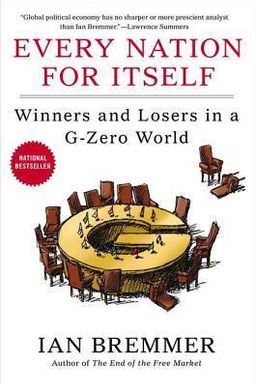
Every Nation for Itself: Surviving a Leaderless World
When you look at today’s headlines—geopolitical crises, economic shocks, climate disasters—do you ever wonder who’s actually running the world? In Every Nation for Itself, political analyst Ian Bremmer argues that for the first time since World War II, no one really is. The world has entered what he calls the G-Zero—an era where no single country, alliance, or institution possesses the influence or will to lead globally. This shift affects everything from how governments manage crises to how you navigate your own work and investments within an increasingly unpredictable environment.
Bremmer contends that the old system of global cooperation, built after 1945 under U.S. dominance and sustained by Western-led institutions like the IMF, World Bank, and UN, has eroded. The rise of emerging powers—China, India, Brazil, Turkey, among others—has fragmented international leadership. Meanwhile, the West faces internal debt crises and political paralysis. The result? Every nation must fend for itself in a world without clear rules or referees. This leaderless era ushers in uncertainty but also opportunity—for nimble states, businesses, and individuals able to adapt to shifting power dynamics.
Why the G-Zero Exists
The book traces how we got here. After World War II, America built the Bretton Woods system, establishing institutions to stabilize the global economy and promote free-market democracy. For decades, this system delivered growth and relative peace. The Cold War reinforced clear lines of power between the U.S.-led capitalist bloc and the Soviet-led communist bloc. But when the Berlin Wall fell and globalization took off, many assumed the world had arrived at harmonious U.S.-led liberal capitalism. Then came the shocks—the 9/11 attacks, the Iraq War, the 2008 financial crisis, and the rise of China—that exposed fractures in the very order America had created.
As Bremmer explains, these crises revealed that the United States can no longer afford (or justify) the cost of global leadership. Entitlement expenses, military overstretch, and public disillusionment make it impossible to act as the world’s policeman. Europe is too divided and financially strained, while Japan is stuck in long-term stagnation. Emerging powers, on the other hand, are too focused on domestic growth to take on global burdens—and their values differ sharply from the Western model. Thus, global challenges like climate change, cyber warfare, and pandemics go unmanaged. The G-Zero is born of both declining will and rising complexity.
Why It Matters to You
If no country can—or wants to—lead, what does that mean for your world? Bremmer notes that problems once solved through multinational cooperation now demand self-reliance and strategic adaptability. Nations will make decisions based primarily on national interest, sometimes at the expense of global progress. Business leaders will face fragmented markets and shifting standards. Citizens will experience both instability and opportunity in a system without clear rules.
For example, during the Copenhagen climate summit in 2009, the failure to form a global consensus wasn’t just about differing policy goals—it revealed the deeper inability of states to compromise. No one had enough leverage to enforce cooperation. The same dynamic applies to financial crises, cybersecurity, and resource distribution. Countries will act unilaterally or in small regional blocs, changing alliances as interests evolve. For individuals, this means living in a world defined less by stability and more by rapid transitions and local competition.
The Promise and Peril of a Leaderless Era
Bremmer’s narrative is not purely pessimistic. The G-Zero also creates space for creative diplomacy and innovation. Just as Darwin taught that survival favors adaptability, Bremmer suggests that “pivot states” and “adapters”—countries and companies flexible enough to build diverse relationships—will thrive. Brazil, Turkey, Singapore, and corporations like Tata or Petrobras demonstrate how agility, independence, and pragmatism can turn uncertainty into advantage.
Yet the risks are real: resource wars, cyberattacks, regional conflict, and economic fragmentation could intensify. Without an anchor for global governance, crises can spiral faster. Bremmer warns that the world might not return to a stable order until it experiences a major shock—perhaps environmental catastrophe or systemic financial collapse—that forces cooperation anew (much like WWII birthed Bretton Woods). Until then, the G-Zero demands states and citizens become smarter, quicker, and more self-sufficient.
Core Message
Global leadership isn’t dead—it’s just decentralized. In Bremmer’s view, the 21st century won’t be controlled by empires or alliances but by adaptability itself. Understanding the G-Zero isn’t about predicting collapse; it’s about learning to navigate the world’s new fluid order.