
Idea 1
Building an Evergreen Business: The Power of Lasting Customer Loyalty
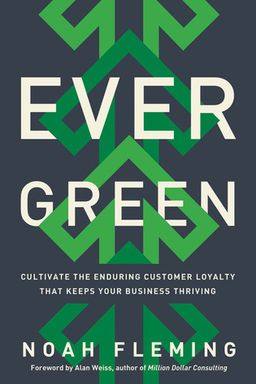
What if your business could grow stronger every year—without burning more money chasing new customers? That is the central question at the heart of Noah Fleming’s Evergreen: Cultivate the Enduring Customer Loyalty That Keeps Your Business Thriving. Fleming argues that most companies are behaving like deciduous trees—constantly shedding their leaves (customers) and exhausting themselves regrowing them each season. In contrast, he believes the healthiest companies act like evergreens: they remain vibrant year-round because they continually nurture deep, lasting relationships with their customers.
Fleming contends that our obsession with acquiring new customers—he calls it our “sex addiction”—is not only misguided but deeply destructive. Businesses chase the thrill of new sales while neglecting the long-term relationships that actually generate sustainable profits. In place of this short-term, adrenaline-fueled model, Fleming introduces the concept of the Evergreen organization: a company that deliberately balances the energy spent on getting new customers with equal or greater attention to retaining existing ones. This balance, which he visualizes as the Evergreen Marketing Equilibrium, becomes the foundation for enduring growth.
The Three Cs Framework: A New Growth Blueprint
At the core of Fleming’s system are The Three Cs—Character, Community, and Content. These pillars define what it means to be Evergreen. Character is the real personality and story of your organization—the authenticity that attracts and keeps loyal customers. Community is the sense of belonging and connection your brand creates among customers (and between customers themselves). And Content, broadly defined, is what you provide: the products, services, and experiences you deliver and how you deliver them.
A true Evergreen company orchestrates all three in harmony. As Fleming puts it, “If you have great content and character but no community, you may seem like a relic of the 1980s.” He uses examples such as GoldieBlox, Chipotle, and CrossFit to demonstrate how modern companies achieve enduring loyalty by syncing their story, values, and customer experience into one unified ecosystem. This ecosystem produces not just buyers but believers—people emotionally invested in your brand’s success.
A Shift from Transactions to Relationships
Fleming contrasts what he calls “transactional businesses” with “relationship businesses.” In the transactional model, a sale is the end goal; in a relationship business, it’s the beginning. “You don’t close a sale,” he says. “You open a relationship.” This subtle shift in mindset has dramatic implications. It means loyalty isn’t created after a purchase—it begins long before, in how customers perceive your integrity and how you fulfill promises afterward. Companies like Amazon, Apple, and Zappos exemplify this principle. Their marketing doesn’t scream at customers with discounts—it establishes trust by reliably delivering on every interaction, creating a loop of confidence and satisfaction.
The Consequences of Neglect
Fleming opens with cautionary tales that expose what happens when companies fall for the lure of quick wins. The story of Rachel Brown’s bakery Need a Cake is a perfect example. Her Groupon promotion drew 8,500 new customers overnight—and nearly destroyed her business. Quality collapsed, profits evaporated, and her reputation suffered; the influx of new buyers couldn’t replace the loyal customers she’d alienated. This parable captures the Evergreen thesis: chasing quantity at the expense of quality growth leads to burnout, not prosperity.
Why Evergreen Thinking Matters Now
Today’s marketplace rewards companies that foster authentic relationships. Fleming aligns his ideas with thought leaders like Peter Drucker and Simon Sinek—both of whom emphasize the importance of purpose and customer-centric strategy. He reinforces that becoming Evergreen isn’t about gimmicks or loyalty cards; it’s about understanding human behavior. Your customers crave connection, recognition, and reliability. Give them that, and they become advocates who return over and over.
In this summary, you’ll explore how to build your own Evergreen enterprise by mastering the Three Cs. You’ll learn how character shapes your brand story, how community multiplies your impact, and how content creates meaningful engagement. You’ll see why retention generates larger profits than new acquisition, how to design loyalty programs that actually work, and how to fire toxic customers without guilt. Lastly, you’ll learn the tactical tools—like onboarding systems, data-driven reactivation strategies, and a balanced marketing approach—that keep your business green and growing year-round. The end result is not just a thriving company, but one that customers love to support and never want to leave.