
Idea 1
The Female Body as Evolution’s Blueprint
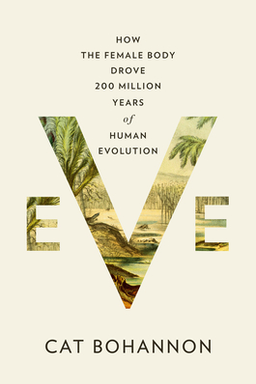
What if humanity’s greatest invention wasn’t fire or the wheel, but gynecology—the collective toolkit that keeps mothers and infants alive? In her sweeping narrative, Cat Bohannon reframes human evolution as a story written through female anatomy. Rather than treating the male body as the scientific ‘default,’ she argues the female body tells us how the species survived: through milk, fat, cooperation, and fertility management. Every stage of evolution, from ancient mammals to modern medicine, reflects how female physiology shaped human intelligence, social systems, and survival.
The male norm and its blind spots
For centuries, science assumed male bodies were standard and female ones deviations. Bohannon calls this habit the ‘male norm.’ Animal studies, clinical trials, and drug approvals excluded women, creating generations of data that hide sex differences. Painkillers, anesthetics, and sleep aids (like zolpidem) were dosed using male averages, despite women metabolizing many drugs differently. The consequence isn’t abstract—it’s biological harm, proving how intellectual and regulatory shortcuts shape real suffering.
Evolutionary storytelling through tissue
The book follows the lineage of female traits: gluteofemoral fat that nourishes babies’ brains, milk that seeds infant microbiomes and emotional behavior, and the placenta as an organ of both collaboration and conflict. Bohannon uses vivid ancestral archetypes—Morgie (Morganucodon), Donna (Protungulatum donnae), and Ardi (Ardipithecus ramidus)—to trace how mammalian mothers evolved complex internal systems for reproduction. You learn that fat isn’t vanity; it’s evolutionary currency reserved for neural development. Milk isn’t food but an immune-microbial signaling system. Even menstruation becomes strategic defense against invasive embryonic tissue.
Gynecology and social survival
Across time, managing birth and fertility mattered as much as crafting tools. Early midwifery, birth spacing, and parasitic disease defense created ‘womb triumphalism’—women’s mastery of reproduction as survival technology. Migratory bands of Homo erectus couldn’t have endured without reproductive control; founder effects and mortality rates demanded midwives and contraceptive knowledge more urgently than weapons. In modern terms, pregnancy remains an immunological battlefield: malaria, Zika, and placental pathogens turn motherhood into an epidemiological risk. Public health succeeds when gynecology is central—when birth control becomes disease control and maternal safety becomes social stability.
Brains, senses, and social memory
From primate perception to language and menopause, the female body holds evolution’s data. Women’s auditory and olfactory edges connect to infant care; female tetrachromatic vision expands the color world; and hormones tune voices differently across life stages. Long childhoods allow humans to learn through social bonds—especially through ‘motherese,’ the tonal and emotional exchange that seeds language itself. Even menopause becomes adaptive: elders extending their social memory amplify the survival chances of descendants, transforming aging women into repositories of cultural resilience.
Central argument
Human success rests not just on big brains or stone tools but on female physiology and shared reproductive knowledge. Science must stop seeing the female body as deviation and start seeing it as the blueprint for life itself.
Across species and centuries, Bohannon’s thesis turns the lens from male-centered evolution to female-driven survival. If you want to understand why humans thrive—how culture, language, and health exist—you must read the female body as the missing manual for the human story.