
Idea 1
The Disciplined Pursuit of Less
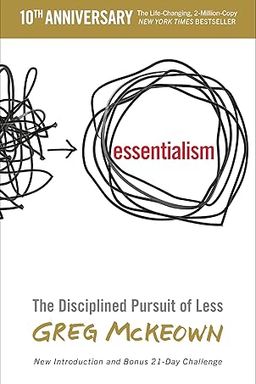
Have you ever felt overworked and underutilized—busy but not productive? Greg McKeown’s Essentialism: The Disciplined Pursuit of Less begins with that universal question. In an era of constant alerts, endless choices, and frenetic multitasking, McKeown argues that success doesn’t come from doing more; it comes from doing less, but better. The book contends that true productivity and satisfaction arise only when you focus your time and energy on what is truly essential and intentionally eliminate the trivial.
At its heart, McKeown’s thesis is radical but deceptively simple: life is choice. You cannot do everything; you shouldn’t even try. Instead, you must consciously choose where to invest your energy. Essentialism is not merely another productivity tactic—it’s a philosophy of living. It asks you to pause before reacting to every request, to discern between the many good options and the few vital ones, and to live according to deliberate design instead of by default. McKeown invites readers to transition from being a ‘Nonessentialist’—always saying yes, always stretched too thin—to becoming an ‘Essentialist,’ one who chooses wisely, operates with clarity, and ultimately experiences joy in the journey.
From Doing It All to Doing What Matters
Throughout the book, McKeown contrasts the Nonessentialist habit of trying to fit it all in with the Essentialist’s discipline of focusing on the vital few. He argues that most of us major in minor activities—spreading our energy across countless pursuits that bring little meaningful progress. Dieter Rams’s design principle “Weniger aber besser”—“less but better”—serves as the perfect metaphor. Just as Rams cleared away clutter to reveal beauty and function, McKeown urges readers to clear the clutter from their schedules and minds to reveal meaningful work and relationships.
To make this shift, McKeown introduces a practical framework of three steps: Explore, Eliminate, and Execute. First, you discern what truly moves the needle—what is essential. Second, you eliminate everything that does not. Third, you make doing the essential things as effortless as possible by creating systems and buffers. Underlying this process is a mindset—an understanding that choice is an invincible power, that most things are noise, and that trade-offs are inevitable. You can choose anything, but not everything.
Why It Matters in a World of More
McKeown situates his philosophy within a culture that celebrates being busy as a badge of honor. He calls this paradox the “undisciplined pursuit of more.” Success, perversely, breeds failure: the more successful you become, the more opportunities arise, and the more diffused your energy becomes. Without discernment, you lose the clarity that created success in the first place. Companies and individuals alike are victims of this cycle. In Jim Collins’s How the Mighty Fall, the same pattern explains corporate decline: success leads to excess, which leads to distraction. McKeown brings the lesson home to each reader—you are the CEO of your own life; without clarity, your internal company collapses under the weight of too many priorities.
The Promise of Living by Design
Essentialism offers freedom through discipline. By embracing the reality of trade-offs, you stop living reactively to others’ demands and instead design a life that reflects what truly matters to you. McKeown illustrates this with moving stories—from a Silicon Valley executive who reclaimed his family life by saying no to countless meetings, to McKeown himself, who once missed being with his newborn daughter because he succumbed to workplace pressure. Experiencing that failure taught him the book’s defining lesson: If you don’t prioritize your life, someone else will.
McKeown’s vision is ultimately hopeful. He imagines a world where people, teams, and societies honor space for reflection rather than endless doing—where schools prioritize meaningful learning over busywork, and where businesses replace needless meetings with creative time. The question he leaves us with is timeless yet urgent: given one wild and precious life, what will you choose to do with it? Through Essentialism, he offers not just an answer but a way of living it.