
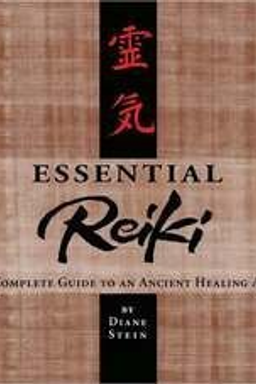
Essential Reiki cover

Essential Reiki

by Diane Stein

Essential Reiki explores the profound connection between intuitive touch and healing. By channeling universal energy, this book guides readers through the ancient art of Reiki, emphasizing holistic health and spiritual growth without religious constraints. Perfect for anyone seeking to enhance personal or communal well-being.

Becoming a Reiki Healer and Teacher in a Changing World

Have you ever wondered if your touch, presence, or energy could truly heal another person—or perhaps even yourself? In Essential Reiki Teaching Manual: A Companion Guide for Reiki Healers, Diane Stein argues that not only can you heal, but you can also teach others to heal. She insists that Reiki—the ancient, universal system of energy healing—is humanity’s birthright, a method of reawakening natural abilities suppressed by centuries of fear, secrecy, and exclusion. Stein’s mission is clear: to make Reiki accessible, practical, and ethical for anyone called to healing.

Stein contends that Reiki isn’t a rare gift reserved for spiritual elites or expensive gurus. Rather, it’s a universal force awaiting rediscovery within every individual. Through her extensive teaching experience—spanning thousands of students since 1990—she provides a structured, empowering, and feminist guide to mastering Reiki and passing it on. Her focus is less on mystical ideology and more on integrity, practicality, and empowerment; she offers both emotional grounding and detailed logistical advice for becoming an authentic Reiki teacher.

The Need for Healing in a Broken World

Stein situates Reiki in our contemporary world of ecological collapse, social upheaval, and spiritual disconnection. She asserts that society’s obsession with technology and rationalism has silenced traditional modes of wisdom—especially women’s intuitive healing arts suppressed since the witch trials and Inquisition. Modern culture, she argues, leaves both people and the planet energetically wounded. Reiki, as she envisions it, is not merely a self-care trend but a pathway to global transformation. It connects the personal with the planetary, offering a spiritual counterweight to modern crises.

For Stein, when you heal yourself, you participate in healing the Earth itself. Every Reiki practitioner contributes to a rising “critical mass” of consciousness that she believes will advance human evolution, leading society toward universal compassion and possibly even planetary ascension. This metaphysical optimism anchors her teaching philosophy: every new Reiki teacher is a spark in a long chain of lightworkers needed to restore balance to Earth’s energy field.

Making Teaching Accessible

A major thrust of Stein’s work is to democratize Reiki. At the time she first wrote Essential Reiki in 1995, becoming a Reiki Master could cost up to $10,000 and required secretive apprenticeships controlled by gatekeeping “masters.” Stein dismantles this hierarchy. She believes that Reiki knowledge should be shared openly, that secrecy and inflated pricing contradict the spirit of healing. In her model, a complete course—Reiki I, II, and III—is taught in a weekend retreat of about fifteen hours, with students leaving empowered to teach others. Affordability, ethical pricing, and accessibility are key principles because healing should be “universal, not for the privileged few.”

This is also a gendered stance. Stein deliberately focuses her teaching on women, arguing that patriarchal culture has long discouraged female empowerment. Becoming a Reiki teacher means claiming what she calls “power-within”—the spiritual energy of empowerment rather than domination. Unlike “power-over,” which seeks control, “power-within” fosters compassion and responsibility. For Stein, empowering women to teach Reiki rekindles an ancient matrilineal chain of healers broken by centuries of persecution.

Reclaiming Power Through Teaching

Stein’s method is profoundly experiential. She urges students not just to memorize techniques but to heal, teach, and practice daily. “You learn Reiki by doing Reiki,” she repeats. Teaching, likewise, becomes its own teacher: every attunement—each ritual that passes Reiki energy from master to student—heals the teacher as much as the learner. This equal exchange honors Reiki’s ethic of mutual empowerment. A Reiki Master, Stein insists, “is not a guru or savior”—she is simply a teacher passing light forward.

She rejects spiritual elitism and warns against commercial exploitation of Reiki seen online—such as $5 eBay attunements or “be a master in 48 hours” scams. These degrade a sacred system, she argues, by divorcing energy from integrity. Reiki training must be done in person, hand-to-hand, because the transmission of energy cannot be commodified. Authentic Reiki involves legitimate attunements, not internet downloads. “You cannot buy enlightenment,” she insists. Instead, Stein calls for a sacred professionalism—teachers who combine spiritual authenticity with ethical boundaries and clear teaching methods.

Reiki's Structure and Purpose

The book’s structure mirrors the student’s journey from self-healing to mastery. It covers eight chapters and an appendix of workshop materials:

  • Preparing to Be a Healer – cultivating self-care, ethics, legality, and protection.
  • Preparing to Teach – transforming experience into teachable confidence.
  • Creating Teaching Spaces – handling logistics, advertising, and student interactions.
  • Passing Attunements – the heart of Reiki’s energy transmission process.
  • Teaching Reiki I, II, III – progressively guiding students from healing self to becoming teachers.
  • Taking Care of Yourself – avoiding burnout through rest, boundaries, and joy.

Each section functions as both a manual and a philosophical reflection. What distinguishes Stein’s work from ordinary how-to guides is her holistic integration of spiritual ethics, feminist empowerment, and practical logistics. Teaching Reiki, in her view, is both a sacred art and a grounded livelihood. She teaches you how to arrange pillows, handle cancellations, manage emotional releases, and design certificates—concrete details that bridge spirituality and daily life.

Why These Ideas Matter

In a world where healing professions often demand years of study and financial sacrifice, Stein’s Reiki teaching model gives ordinary people a means to reclaim agency and wholeness. Her emphasis on ethics—permission, nonviolence, affordability, self-care—distinguishes Reiki from exploitative or authoritarian spiritual practices. The deeper message is that empowerment and spiritual authority are inseparable from compassion. By activating your inner healer and sharing it, you participate in humanity’s evolutionary awakening.

Ultimately, Stein’s vision goes beyond Reiki itself. She invites readers to imagine a planet where communities, families, and even children exchange healing openly. Her book is both a curriculum and a call to action: to spread light in dark times by remembering what we already are—channels of universal energy, capable of transformation once we choose to teach it forward.


Reiki as a Feminine Path of Empowerment

Diane Stein views Reiki not just as an energy system but as a way to reclaim suppressed feminine spiritual authority. In patriarchal societies, women have historically been persecuted for practicing healing, intuition, and herbal medicine. Stein draws a line from the medieval Inquisition—where millions of women were executed for being healers—to today's lack of female confidence in spiritual leadership. When women learn to teach Reiki, they do more than pass on energy; they reclaim ancestral power lost through oppression.

Healing the Healer

Stein emphasizes self-healing as the foundation of empowerment. Daily self-Reiki not only clears energetic blockages but restores self-worth. Many of Stein’s female students initially shy away from teaching, believing they “aren’t good enough.” Yet as they practice self-healing, they regain confidence. “If there’s one thing Reiki heals,” she writes, “it’s women’s self-confidence.” Empowerment here means power-within: the ability to transform oneself without dominating others.

This concept resonates with authors like Clarissa Pinkola Estés (Women Who Run with the Wolves), who argue that feminine power is regenerative and collaborative. Reiki, as Stein teaches it, becomes a lived form of feminist spirituality—one that heals both physical and psychological wounds of disempowerment.

Rejecting Secrecy and Elitism

Traditional Reiki Masters maintained secrecy around symbols and charged inflated fees, reinforcing hierarchical power structures. Stein’s radical transparency—printing symbols publicly for the first time—was controversial but necessary. Without openness, she warns, Reiki risked extinction through confusion and misinformation. Now, she worries about the opposite problem: dilution and commodification through hundreds of “new” Reikis sold online. For her, truth lies in clarity, not secrecy. Authentic empowerment arises when knowledge is freely shared and responsibly taught.

Teaching Without Ego

A Reiki Master, Stein explains, is simply a teacher—not a master over others. True empowerment involves teaching your students to surpass you. She warns that “posing as a guru or savior” contradicts Reiki’s essence. Authentic leadership is humble, service-oriented, and based on guiding others into self-trust. For Stein, teaching women to claim teaching roles without shame contributes to healing collective trauma. Each female teacher she trains becomes an antidote to centuries of silencing.

“To become a teacher means to accept empowerment. Accepting empowerment means to heal every part of your life.”

In Stein’s vision, Reiki becomes a circle rather than a pyramid—a lineage of equals, not a hierarchy of masters. Each healer who heals herself naturally ripples that empowerment outward. Teaching Reiki is thus an act of liberation as much as it is an act of healing.


Preparing to Be a Reiki Healer

Before you can teach Reiki, Stein insists, you must first live it. Being a healer isn’t about starting a business; it’s about embodying compassion, discipline, and ethics. The first step is self-healing—daily, intentional, and honest. Reiki I focuses almost entirely on healing yourself before serving others. By clearing your own aura and grounding your emotions, you protect both yourself and those you wish to help.

Ethics and Legality in Healing

Stein offers unusually practical advice for spiritual healers navigating modern law. Since Western medicine and spiritual healing can sometimes collide, she reminds healers: Reiki is not medicine. Never diagnose or promise cures. Avoid language like “cure” or “prescribe,” which may be legally protected terms. A healer can say Reiki “helps reduce stress and promotes relaxation,” which is both true and legally acceptable. She also warns that licensing laws vary by state—some require massage or nursing certification to touch clients. Understanding and respecting such rules is part of ethical grounding.

Setting Boundaries in Client Relationships

Beyond legality, Stein stresses emotional boundaries. Reiki healing deeply affects both giver and receiver, and without boundaries, compassion fatigue can occur. She teaches clear “don’ts”: don’t let clients cling emotionally, don’t overstep intimacy, and never tolerate inappropriate contact. She also sets strict guidelines for professional integrity—confidentiality, respect for free will, and nonjudgment. The healer’s job isn’t to rescue others but to facilitate their self-rescue. “You can’t heal anyone who doesn’t choose healing,” she cautions.

Creating a Healing Space

Physical environments matter. She describes the ideal healing space: clean, warm, softly lit, and inviting but uncluttered. Equipment includes a massage table, pillows, warm blankets, soothing colors, and the quiet presence of crystals or music if desired. It’s about safety, not theatrics. The space should be both sacred and professional—a bridge between the mundane and the mystical.

For Stein, practical details—sheet changes, soft lighting, grounded demeanor—are all manifestations of love-in-action. Through organization and clarity, you make your presence trustworthy. That trust, she notes, is the first and most powerful healing energy there is.


Preparing to Teach Reiki

Teaching Reiki is not a casual endeavor—it requires readiness, confidence, and practice. In Essential Reiki Teaching Manual, Stein outlines a path from student to teacher with patience and realism. She reassures new teachers that readiness isn’t perfection; it’s willingness plus experience. You become ready by doing Reiki consistently—daily self-healings, regular sessions for others, and routine practice of attunements.

Readiness Comes from Practice

Stein advises graduating through each Reiki degree step-by-step. After Reiki I, focus on hands-on healing. After Reiki II, deepen your work with symbols and distance healing. For Reiki III, learn to give attunements—the process that transforms students into healers. She often has trainees practice on teddy bears before moving to real people. “You learn to teach by teaching,” she says. Her students who feared teaching often overcame anxiety only after passing their first attunement.

Motivation Matters

Stein draws a hard line between authentic motivation and ego. You should teach Reiki because you love it and wish to serve, not because you crave status or wealth. Those motivated by greed, she observes, rarely succeed; the energy of Reiki responds only to sincerity. When done correctly, teaching yields “abundance,” but not necessarily riches. Abundance, for Stein, includes love, health, and purpose—a holistic prosperity echoing spiritual law (“what you send out returns threefold”).

Adapting Teaching to Special Needs

One of Stein’s most compassionate sections describes adapting Reiki instruction for diverse students—children, the disabled, or trauma survivors. She recounts modifying techniques: using tactile aids for a blind student to learn symbols, adjusting energy practices for women who survived sexual abuse, and collaborating creatively with wheelchair users. Her inclusivity reflects Reiki’s philosophy: energy flows where it’s needed, regardless of circumstance. If the student’s intent is pure, the energy will find its path.

By demystifying teaching and normalizing imperfection, Stein encourages teachers to begin. “You’ll never feel completely ready,” she admits, “but Reiki never fails.” The courage to teach is itself an initiation into mastery.


Passing the Attunements: The Heart of Reiki

If Reiki has a sacred core, it is the attunement ritual—where a teacher transmits the healing frequency that awakens a student’s capacity to heal. For Stein, this process is both mystical and learnable. She translates esoteric hand movements, breathing techniques, and visualization into a clear, accessible sequence so any dedicated student can perform them with reverence.

Understanding the Power of Attunement

Stein compares the attunement to Tibetan Buddhist empowerments, which use a combination of breath, symbols, and palm movements to open spiritual channels. Each attunement corresponds to one degree of Reiki and progressively expands energy capacity—from physical, to emotional, to spiritual. “No one can explain why it works,” Stein writes, “only that it does.” She describes the mystery not as supernatural but as a sacred law: energy passed with intention transforms both giver and receiver.

Overcoming the Fear of Power

Many students hesitate to perform their first attunement because they fear its power—and their own. Stein identifies this as a cultural wound: we’ve been taught to fear empowerment, mistaking it for dominance. To address this, she reframes power as responsibility and connection. “Power-over” controls others; “power-within” uplifts them. By passing an attunement, you aren’t claiming superiority—you’re extending permission for another soul to awaken. Once students perform their first attunement, their fear dissolves into joy.

The Modern Method

Stein’s modern method simplifies traditional processes. Instead of multiple, symbol-specific attunements, she combines them into one sequence for each Reiki level using the Hui Yin breath (a Ch’i Kung technique connecting energy circuits). She emphasizes precision but reassures that “the Goddess fixes any honest mistakes.” Practice, breath control, and grounded intention are what make attunement flow. She also encourages trying attunements on pets, crystals, and plants—the same universal life energy animates all.

Ultimately, Stein portrays attunement as a sacrament of shared evolution. Every successful attunement not only makes a healer but strengthens the collective light of the world.


How to Teach Reiki I, II, and III

Stein dedicates much of her manual to walking new teachers through the logistics of instruction. Her classes are equal parts sacred circle and practical seminar: she covers energy theory and anatomy right alongside snacks, room setup, and how to handle late arrivals. Reiki, she reminds teachers, should feel joyful and grounded—“a party with purpose.”

Reiki I: Discovering Healing

This first degree focuses on self-healing and hands-on practice. Teachers introduce what Reiki is, share healing stories, demonstrate hand positions, and pass the first attunement. Students practice on each other while learning ethics: seek permission, maintain boundaries, and trust intuition. Emotional releases—crying, laughing, or trembling—are natural signs of energy clearing. Stein encourages celebratory support, not clinical detachment. By the end, each student experiences tangible warmth or tingling in their hands—the first evidence of connection.

Reiki II: Expanding Energy Through Symbols

The second level shifts from physical to psychic healing using sacred symbols. Students learn three key symbols: Cho-Ku-Rei (to amplify energy), Sei-He-Ki (to heal emotions), and Hon-Sha-Ze-Sho-Nen (to transcend time and distance). Distance healing is introduced through creative exercises—imagining tiny people in your palms, visualizing sending light, or using teddy bears as surrogates. Stein stresses ethics here, too: always get consent psychically or set the intent “only if accepted by free will.”

Reiki III: Teaching and the Joy of Mastery

The final degree is both culmination and celebration. Students learn to pass attunements, explore the Master’s symbols—the Dai-Ko-Myo (divine light) and the Raku (lightning bolt)—and discuss professional ethics. The tone is festive: classes share food, laughter, and reflections. Yet behind the party lies profound transformation. Students realize they are now lineage-bearers in an ancient tradition. Stein closes with Buddhist parallels, describing Reiki as a modern version of the “Path to Enlightenment,” a journey through purification, awakening, and service.

Through these degrees, every healer evolves—from self-care to care for others to teaching others to care. That, Stein says, is the full circle of Reiki.


The Ethics and Energy of Money

Money, for Diane Stein, is both a practical and spiritual issue. Because Reiki was once hoarded behind financial barriers, she makes ethical pricing one of Reiki III’s major “ethics.” Teachers are responsible for keeping Reiki affordable so it can reach all who need it. Yet, she warns against working for free so often that burnout ensues. Just as energy must flow, so must fair exchange.

Charging with Integrity

Stein compares money flow to Reiki energy: it functions best when respectful, balanced, and moving. Charging fair prices creates mutual respect between teacher and student. Historically, she notes, Dr. Chujiro Hayashi set prices for Hawayo Takata to protect her from exploitation. But over time, those prices became inflated into elitism. Stein reduces them to accessible levels ($100 for Reiki I, $500 for all three degrees combined). This structure allows sustainability without greed.

Scholarships and Abundance

Every healer should offer scholarships or barter for those in true need. Stein suggests one scholarship per ten paying students, ensuring abundance without depletion. Reciprocity, she argues, prevents energetic imbalance: if you only give, the “cup” empties; if you only take, it stagnates. By honoring exchange, you remain in harmony with Reiki’s flow. Abundance then extends beyond money—into joy, time, friendship, and gratitude. She even practices financial tithing, donating one-tenth of excess income as a spiritual offering.

By reframing money as sacred energy, Stein redefines spiritual economics. In Reiki, generosity and sustainability aren’t opposites; they are two ends of the same healing current.


Preventing Burnout and Sustaining Joy

Stein closes her manual with a crucial reminder: healers and teachers must heal themselves continuously to keep serving others. Psychic exhaustion, or burnout, is one of the greatest hazards of a healer’s life. Teaching Reiki or doing multiple sessions daily can leave you depleted, resentful, or ill. Her guidance blends energy hygiene, self-care, and spiritual common sense.

Pacing and Boundaries

Know your limits. She advises doing no more than two healings per day or two workshops per month. Overwork, she warns, extinguishes the joy that attracts people to Reiki in the first place. Teaching too many classes or doing sessions without rest makes even the kindest healer cynical. Instead, alternate effort with rest, and allow yourself recovery days after workshops. She calls this cycle “honoring the rhythm of the Light.”

Physical and Emotional Self-Care

Stein’s self-care checklist is refreshingly practical: eat nourishing food, hydrate with pure water, supplement with vitamins, rest whenever possible, and have fun—dance, garden, go shopping, or hug your pet. Emotional regulation is equally vital: avoid savior complexes, detach from clients’ problems, and reset boundaries compassionately. When teachers become overly entangled, she notes, they drain both themselves and their students.

Keeping the Flame Alive

Ultimately, preventing burnout is about remembering why you began. Healing is love in motion. The purpose isn’t perfection or recognition but joy itself. “Burnout begins when the work isn’t fun anymore,” Stein writes bluntly. The solution? Restore joy. Schedule vacations, seek healing from others, and re-engage with life’s beauty. The healer’s energy—like Reiki itself—flows effortlessly when balanced by delight.

By caring for yourself as devotedly as you care for your students, you sustain the infinite loop of giving and receiving that defines Reiki. Self-care, in Stein’s teaching, isn’t selfish; it’s sacred maintenance of the light you’ve vowed to carry.

Dig Deeper

Get personalized prompts to apply these lessons to your life and deepen your understanding.

Go Deeper

Get the Full Experience

Download Insight Books for AI-powered reflections, quizzes, and more.