
Idea 1
Eradication, Control, and the Pursuit of Perfection
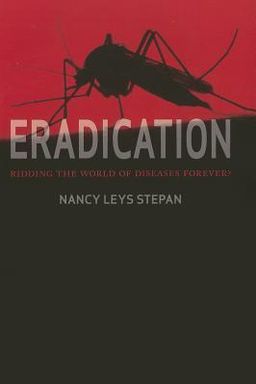
Why do societies chase disease eradication instead of steady control? Nancy Leys Stepan's Eradication examines this enduring tension between the absolutist zeal for zero and the realistic pursuit of public health improvement. You watch an idea evolve—from the Rockefeller Foundation’s early technical optimism to WHO’s postwar global campaigns, and finally to the uneasy balance between vertical disease eradication and horizontal primary care systems.
The absolutist promise
Eradication, Stepan explains, is defined as a reduction of disease incidence worldwide to zero. Its logic is moral and administrative: final victory, permanent savings, and proof of modern science’s power. Fred L. Soper took this doctrine literally—his maxim was that anything above zero had to be explained. The eradicationist worldview transformed disease work into a perfectionist contest: every lingering case represented failure. (Compare this to the incremental logic of control that seeks steady reductions and sustained systems rather than extinction.)
From optimism to institutions
Stepan traces the movement’s institutional roots in the Rockefeller Foundation. The RF believed eradicating disease was the path to societal uplift. It pioneered field operations—hookworm, yellow fever, malaria—built around meticulous administration and standardized techniques. Its technocratic faith in universality bred successes but also blind spots: re‑infection, ecological complexity, and neglect of poverty or sanitation. That model would inspire postwar field generals like Soper and shape WHO’s later eradication ethos.
Soper and the science of discipline
Fred L. Soper becomes Stepan’s moral centerpiece. He transformed public health into disciplined administration: numbered houses, inspector brigades, legal ordinances, and daily supervision. To Soper, administration was the essence of eradication. His campaigns against Aedes aegypti and Anopheles gambiae achieved dramatic results through coercive thoroughness—from Brazil to Egypt—but his disdain for ecology and politics revealed eradication’s fragility. He embodied the paradox Stepan explores: disciplined willpower can achieve technical miracles yet fail to address complex realities.
Yellow fever as parable of complexity
Yellow fever illustrates how scientific breakthroughs and bureaucratic hubris collide. Reed and Gorgas proved mosquito transmission, prompting successful urban control. But the Rockefeller Foundation’s belief in simple eradication collapsed when jungle reservoirs and complex transmission cycles were discovered in the 1930s. Soper’s response—eradicate the vector instead of the virus—created a new doctrine: species eradication. Yet this shift, elegant in logic, revealed the problem of ecological blind spots that haunt eradication projects even today.
Postwar technocracy and the DDT moment
World War II and DDT transformed eradication into global policy. The chemical’s residual efficacy fueled dreams of universal control. WHO’s 1955 Malaria Eradication Programme (MEP) embodied mid‑century technocratic faith—structured phases, universal schedules, and fixed timelines. Initially triumphant, it soon crashed against biological diversity, insecticide resistance, and weak local institutions. The MEP’s story taught that technical power alone cannot guarantee social permanence.
Learning from failure and success
After malaria and yaws faltered, smallpox succeeded—almost miraculously. Its biology made it uniquely eradicable (no animal reservoir, visible symptoms, effective vaccine). More importantly, its final phase showed adaptive intelligence: surveillance‑containment, flexibility, and multinational cooperation under Henderson and Foege. Success was contingent, not inevitable. The triumph proved eradication possible but underscored that such success depends on biology, politics, and the ability to adapt methods midstream.
From zeal to reform
Stepan closes with the philosophical shift from absolutism to pragmatism. WHO’s embrace of Primary Health Care at Alma‑Ata (1978) and PAHO’s evolution under Horwitz expressed frustration with vertical programs that ignore social determinants. Later campaigns—polio and Guinea Worm—illustrate nuanced models: complex vaccine logistics versus community-based behavioral change. And twenty‑first‑century philanthropy (Gates, Carter Center) revived eradication funds but raised new governance and equity questions. Stepan invites you to consider when perfectionism becomes pathology—and when persistence yields lasting justice.
Core reflection
Eradication is never just about germs—it is about human ambition, organization, and morality. The history shows you how the pursuit of zero shapes science, governance, and conscience alike, leaving us to ask whether perfection or durability should be the ultimate health ideal.