
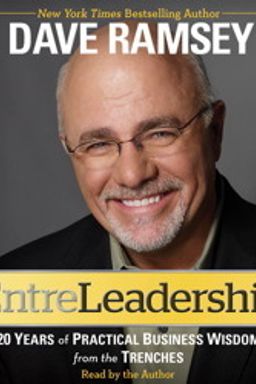
EntreLeadership cover

EntreLeadership

by Dave Ramsey

EntreLeadership by Dave Ramsey reveals how combining entrepreneurial flair with leadership skills can transform your business. Drawn from 20 years of experience, this guide offers practical insights into finance management, marketing, team motivation, and strategic planning to grow a successful company.

The EntreLeader’s Mindset: Blending Courage, Character, and Commerce

What happens when you combine the vision and drive of an entrepreneur with the discipline and integrity of a leader? That is the question Dave Ramsey answers through his concept of EntreLeadership. He defines it as the process of leading to cause a venture to grow and prosper—by merging the creativity of entrepreneurship with the influence of leadership. You don’t just chase profits; you build people and culture so your business becomes sustainable and meaningful over time.

Ramsey’s philosophy grew out of his own story. After losing his real-estate fortune and filing bankruptcy in his twenties, he rebuilt from scratch—first with a card table in his living room, then with a handful of team members, and finally with hundreds of employees teaching millions about financial peace. That journey forced him to become not just an entrepreneur but a leader of people. This transformation underpins the whole book: growth comes when you evolve from doing everything yourself to building others who can grow with you.

EntreLeadership in Practice

Ramsey rejects the word “employee.” He calls everyone a team member, signaling that business is a shared mission, not a hierarchy. EntreLeaders are persuasive rather than positional—they pull instead of push. They take disciplined risks, focus on measurable goals, and set ethical examples rooted in personal integrity. In practice, that means hiring for attitude and potential, mentoring people intentionally, and codifying culture so growth doesn’t dilute it. (Note: John Maxwell’s Law of the Lid mirrors this—your leadership capacity determines your organization’s growth potential.)

From Dream to Traction

Ramsey connects the EntreLeadership mindset to a structured path: begin with a dream, refine it into a clear vision, articulate a mission, and establish measurable goals. Dreams provide fuel, vision adds direction, mission defines identity, and goals create traction. His process ensures entrepreneurs bridge imagination and execution. For example, his own mission—offering “biblically based, commonsense education and empowerment that gives hope”—kept Lampo Group (his company) focused when many tempting side opportunities appeared.

Character-Centered Leadership

Central to Ramsey’s leadership philosophy is character, particularly integrity and humility. He believes companies reflect their leaders’ hearts. You must model discipline—showing up early, paying suppliers timely, and communicating clearly—because trust and consistency create cultural gravity. Ramsey’s principles echo long-standing servant-leadership theories: when leaders serve, they gain moral authority, and when they violate trust, unity collapses.

Building People Before Profit

EntreLeadership isn’t about working harder; it’s about building systems and people so the venture can thrive without you. Ramsey often cites his turning point—mentoring three emerging leaders who could act as his extensions. The key is multiplication: mentorship, playbooks, and shared training yield exponential growth compared to controlling every detail yourself. This people-first philosophy influences his approach to hiring, communication, recognition, and even firing.

Faith and Common Sense

While Ramsey’s foundation is faith-driven, his lessons are practical regardless of belief: work hard, serve others, act with fairness, and manage money wisely. His message is timeless capitalism anchored in conscience. The EntreLeader’s calling is to balance bold risk with grounded stewardship—to be as courageous as an entrepreneur and as selfless as a servant-leader. Do so and your venture will not just make money—it will mean something.


From Dream to Measurable Results

Dreams are where every business begins, but Ramsey insists that dreams alone are fantasy without conversion into vision, mission, and goals. He likens this process to moving from the clouds to a calendar—taking what you imagine and mapping it into action that fits on your to-do list.

Dreams and Vision

Dreams fuel your emotional energy. Ramsey was inspired by mentors like Zig Ziglar and Earl Nightingale, who taught him to envision better possibilities. But to prevent those dreams from evaporating, you refine them into a vision—a vivid picture of your future success. Vision gives direction (“where there is no vision, the people perish”) and protects you from chasing shiny distractions.

Crafting a Mission

The mission statement converts vision into identity. Dave and his cofounder spent a month refining Lampo Group’s mission, centering on one keyword: HOPE. Every program, hire, and decision had to connect back to that North Star. A strong mission differentiates you, keeps your team aligned, and prevents opportunity drift. (Compare: Jim Collins’ “hedgehog concept”—do one thing uniquely well and stay disciplined about it.)

Goals: Work Clothes for Dreams

Goals transform intention into productivity. Ramsey’s five rules: make goals specific, measurable, time-limited, personally owned, and in writing. “Make $100,000” is actionable; “make more money” is not. When a young salesman said he wanted $100K, Ramsey broke the math down into weekly sales activity—revealing that success is predictable when effort is structured. Shared goals also bond teams, turning individual ambition into collective victory, much like players driving toward the same goal line.

By layering dreams, vision, mission, and goals, you build a ladder of execution—ensuring your business doesn’t just inspire people but coordinates them toward measurable success every day.


Time, Focus, and Execution

Ramsey’s view of time management is blunt: time is money, and wasted time means lost traction. His metaphor of “A1 Steak Sauce” defines the day’s single most important task—the one thing that, if done, gives the day meaning. Focus on A1 before anything else, and you will feel momentum and satisfaction instead of busyness without progress.

Urgent vs. Important

Drawing from Stephen Covey, Ramsey categorizes activities into four quadrants. You must spend most of your time in Quadrant II—important but not urgent—like relationship building, strategic planning, and health. The habit of daily prioritization protects you from reactive leadership. Each morning, list tasks, mark A (today), B (soon), C (later), then number them A1, A2, etc. The “steak sauce” discipline builds clarity and confidence.

Guarding Against Distraction

Interruptions are inevitable. Ramsey trains leaders to ask, “Is this steak sauce?” before responding. If it’s urgent and important, pivot; if not, delegate. The same principle applies to meetings—keep them structured, time-boxed, and results-oriented. His company’s 23-leader meeting lasting only 38 minutes shows the power of stewardship over time. Technology, likewise, is a servant, not a master. Use calendars, synced files, and transparency but resist gadget addiction.

Delegation and Decluttering

A cluttered desk mirrors a cluttered mind. Ramsey admires executives who operate cleanly, anchored by systems rather than chaos. Delegate tasks others can do 80% as well as you. The reward is traction and satisfaction. His 90-day challenge—to rank and execute A1 daily—remains a practical habit that reclaims time, focus, and joy.


Decisiveness and Courage

A leader’s worth shows in their ability to decide. Ramsey’s rule is unequivocal: a spineless leader is an oxymoron. Fear and desire to please stall decision-making, but you can train boldness with structure. Courage isn’t absence of fear; it’s moving forward after naming it. (Dorothy Bernard’s quote, “Courage is fear that has prayed,” captures it perfectly.)

Decision Principles

Ramsey offers a practical checklist: set deadlines, gather options and data, expand choices, and proportion deliberation to the decision’s cost. Ninety percent of good decisions, he argues, depends on accurate information. Teach your team to think by returning every “monkey” (problem) to its owner—team members must present options, not just issues. This creates a culture of initiative rather than dependence.

Values and Guardrails

Guiding values simplify choices. The Golden Rule helps: treat vendors, partners, and competitors as you want to be treated. In money and expansion, Ramsey favors small bites—prototype before scaling, test markets before national rollout. Decisions anchored in principles preserve reputation and prevent costly mistakes.

Being decisive doesn’t mean being reckless. It means being teachable yet firm—resolving fear through information and faith, and modeling for your team what confident leadership looks like in action.


Building and Protecting a Winning Team

Hiring, firing, and nurturing people define your company’s destiny. Ramsey treats these as sacred responsibilities, not administrative chores. His multi-step hiring process aims to eliminate 95% of turnover before it happens, emphasizing cultural and character fit.

Hiring for Character and Fit

The 12-step pipeline includes prayerful clarity, smart recruiting, short screening interviews, personality assessments (DiSC: D-lion, I-otter, S-golden retriever, C-beaver), spousal interviews, and 90-day probation. Ramsey tests not just skills but lifestyle—can the candidate live on the pay, and do they share the mission? His rule of thumb: hire slowly, fire quickly.

Firing with Dignity

When firing becomes necessary, Ramsey insists on dignity and process. Diagnose the failure (leadership, personal issue, or incompetence), document corrections, and if change doesn’t follow, release kindly and clearly. Integrity breaches—like theft or harassment—lead to immediate severance, but even then he advocates generosity. Many former employees, he notes, later expressed gratitude for a clean, respectful release.

Creating Unity and Loyalty

Loyalty comes from consistent care and fairness. Ramsey fights the five enemies of unity—poor communication, lack of purpose, gossip, unresolved conflict, and sanctioned incompetence. He enforces a no-gossip policy, pays fairly, and acts decisively to protect culture. Unity multiplies strength; like two trained horses pulling four times the load, a unified team beats any group of disconnected talents.

Purposeful hiring, ethical firing, and protection of morale make leadership humane and effective. You lead people, not positions.


Communication, Recognition, and Culture

Ramsey likens communication to giving someone a map to the party—without clear directions, even the best team gets lost. Consistent, transparent communication eliminates fear and rumor, creating a culture of ownership.

Systems and Rituals

He builds communication systems: weekly staff meetings, one-page reports (“Why should Dave be glad I work here?”), and predictable management rhythms. Walking the building (Management by Walking Around) keeps him plugged in beyond email. During crises, he over-shares wisely—giving staff truth before rumors can grow. This transparency fuels trust.

Recognition and Inspiration

People hunger for appreciation. Ramsey celebrates “caught in the act” moments—praise in public, handwritten notes, affordable gestures like T-shirts or cakes. Recognition works best in front of those who matter to the recipient: spouses, children, peers. Beyond praise, he inspires through seven methods—vision, fair pay, cause bigger than self, storytelling, predictability, passion, and leading by example. These daily doses of inspiration keep motivation alive (as Zig Ziglar quipped, “like bathing, it must be done daily”).

The result is a workplace that people love—a tribe united by trust, honor, and shared mission rather than fear or control.


Financial Discipline and Smart Systems

Healthy business finances are the backbone of freedom. Ramsey teaches that accounting and discipline—not luck—create peace and resilience. Borrowing is like playing with fire; cash and control are your fireproofing.

Accounting and Budgeting

Keep business money separate. Track every penny, set aside taxes, and use budgets as forecasts. Avoid lifestyle inflation and the “tax deduction” trap that tempts frivolous spending. Cash-basis accounting gives immediate clarity—a check register becomes your profit-and-loss window.

No-Debt Philosophy

Debt multiplies mistakes. Ramsey recounts Bill the plumber’s near-collapse after buying a $52,000 backhoe on credit and his own Space Camp book loss that would have bankrupted him had he borrowed. Instead, he promotes cash reserves, used equipment, and outsourced capacity until ownership is affordable. Cash offers resilience—and opportunity to buy when others panic, as he did buying $300k of office furniture for $21k during the dot-com crash.

Contracts and Vendors

Contracts, vendors, and collections form your operational shield. Write agreements to prevent confusion, not to trap crooks. Choose vendors for integrity, capacity, price, and quality, and handle collections with fairness. If clients break honestly, forgive wisely. Coupled with generosity and tithing, this stewardship model turns business finance into a moral discipline—protecting your mission from both greed and chaos.


Serving Through Selling and Marketing Momentum

Ramsey overturns stereotypes about sales and marketing. He teaches that selling is serving—helping someone make a wise choice—and marketing is momentum, not manipulation.

The Four-Step Sales Process

Every sale involves qualification, rapport, education, and closing. Qualify early—does the prospect have money, time, need, and decision power? Build rapport by matching personalities (D for dominance, I for influencer, etc.). Educate by explaining benefits, not just features, then close smoothly using classy methods like the assumptive or feel–felt–found closes. Honest enthusiasm transfers belief more effectively than pressure—echoing Zig Ziglar’s idea that sales are a transference of feeling.

Marketing Momentum

Marketing, Ramsey explains, follows a formula: Focus + Intensity + Time = Momentum. Passion and activity create critical mass; scarcity and urgency generate demand. Momentum looks like luck but is really focused intensity over years—his “overnight success” moments with 60 Minutes and Oprah came after fifteen years of groundwork. Test everything—ads, wording, visuals—and compress activity during launches to create visible energy.

Serving customers well and sustaining marketing energy converts short-term spikes into long-term trust. That is the ethical engine of EntreLeadership commerce.


Leading Systems That Scale

Ultimately, leadership is about creating systems that multiply your influence. Ramsey connects delegation, compensation, and entrepreneurship as levers that scale without sacrificing integrity.

Delegating with the Rope

Delegation extends freedom gradually. Ramsey’s “rope” metaphor—used with his daughter—illustrates trust: lengthen the rope as integrity and competence grow. Micromanagement early is training; loosening later is delegation. Never assign responsibility without matching authority, or you crush initiative. Start small, verify results, then extend autonomy.

Compensation and Ownership

Pay should reflect both performance and loyalty. Ramsey’s redesigned profit-sharing plan (50% tenure, 33% personal score, 17% department profit) recognizes contribution while reinforcing unity. He uses creative benefits—education reimbursements, family perks, ministry weeks—to show care. Fair pay communicates values more loudly than slogans.

Start Small, Scale Wisely

EntreLeaders start humbly—test markets part-time, validate profit, then scale only when consistent cash flow supports it. From garage startups like Hobby Lobby to home-based microbusinesses, Ramsey’s principle is to protect families, avoid debt, and grow through competence and calling. Passion and purpose sustain enterprises far longer than quick capital ever can.

Dig Deeper

Get personalized prompts to apply these lessons to your life and deepen your understanding.

Go Deeper

Get the Full Experience

Download Insight Books for AI-powered reflections, quizzes, and more.