
Idea 1
Conscience Over Power
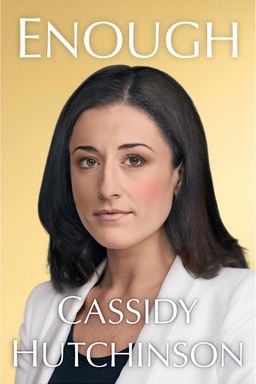
How do you keep your integrity when proximity to power bends rules and tempts silence? In Cassidy Hutchinson’s memoir, a young aide shows how small accommodations to a leader’s demands can corrode institutions—and how one person’s decision to tell the whole truth can begin to repair them. She argues, through lived experience, that the line between loyal service and dangerous enabling is thin, and that crossing back requires courage, counsel, and cost.
Her core claim is simple but urgent: when a culture rewards loyalty over law and optics over safety, norms erode incrementally, not all at once. You often don’t notice until you’re already complicit. Hutchinson takes you from the bright lights of the Cannon Caucus Room on June 28, 2022—moments before she testifies live to the January 6 Committee—back through her ascent on Capitol Hill, her time in the White House Office of Legislative Affairs (OLA) during impeachment, her move to serve as Mark Meadows’s “eyes and ears,” and the chaotic months that culminated in January 6. Along the way, you see why she first withheld information, how she found independent counsel, and what it cost her to correct the record.
The core arc: from apprenticeship to ethical crisis
You watch a classic Washington apprenticeship. Hutchinson builds social capital with flash cards in the House Whip office (Steve Scalise), contrasts the Senate’s slower rhythms (Ted Cruz) with the House’s kinetic pace, and learns the mechanics of whipping, message discipline, and event logistics. That granular training—Excel trackers, face memorization, member dossiers—pays off when she becomes indispensable in OLA during impeachment, mapping Republicans’ positions and flooding inboxes with hourly talking points to prevent defections.
Then the job changes. Meadows recruits her as his shadow, granting access and informal authority without firm boundaries. She coordinates personnel, enforces gatekeeping, and navigates resentment from colleagues (e.g., tensions with OLA’s Amy Swonger, the firing of Mike McKenna). That proximity to the chief of staff amplifies her influence—and her exposure—especially as crises pile up: COVID travel, Lafayette Park, rally logistics, and the president’s COVID diagnosis.
Erosion of norms—and why it accelerates
Hutchinson chronicles how small rule-bending widens into systemic risk. You see Meadows keep a fire lit in his West Wing fireplace and feed documents into it; you see classified-adjacent materials (Crossfire Hurricane binders) handled outside typical SCIF protocols and distributed to allies like John Solomon and Mollie Hemingway; you see “evidence” from Rudy Giuliani, Sidney Powell, and Peter Navarro welcomed, even when unvetted. Each act looks tactical; together they signal a culture that treats law and process as obstacles.
That culture culminates in January 6 planning. Despite intelligence warnings relayed by Tony Ornato about armed attendees—knives, bear spray, body armor—the president urges security to “take the effing mags away” and “let my people in,” and pushes to go to the Capitol. White House lawyers (Pat Cipollone, Eric Herschmann) object; Meadows often reassures the president that “other options” remain. The result is a preventable collision between political objectives and public safety.
The pivot to truth—and its public value
The book’s moral hinge is Hutchinson’s choice to correct prior omissions. Initially represented by Trump-world counsel Stefan Passantino—who urges a narrow “I don’t recall” approach—she later retains Jody Hunt and Bill Jordan (Alston & Bird) to proffer, clarify, and testify live. That change transforms private guilt into public accountability. Live testimony, championed by Liz Cheney, makes her a visible witness rather than an anonymous name in a transcript, giving the country an unignorable narrative about leadership failures.
On conscience and correction
“Before retaining my new lawyers, at times I had told less than the whole truth... My conscience was bothering me, and I came to the decision... to clarify and extend my testimony.”
What you can use
You get a playbook for high-stakes ethics: gather evidence, secure independent counsel, weigh personal risk against public duty, and act even when the price is exile—hotel seclusion, security details, friends drifting away. You also see why logistics and norms matter: magnetometers, travel manifests, record-keeping, and SCIF rules are not bureaucratic trivia; they are the scaffolding that keeps government honest and safe. Break that scaffolding slowly enough, and people will tell you it’s fine—until the roof crashes.
(Note: The arc echoes Alex Butterfield’s choice in Bob Woodward’s The Last of the President’s Men—another aide who decided that fidelity to the Constitution outranks loyalty to a leader.) Hutchinson’s message is not despairing. It’s a reminder that one person, armed with facts and resolve, can still reset the terms inside a runaway institution. If you ever face a similar bind, her story shows the way out—messy, frightening, and worth it.