
Idea 1
Citizens Make the Constitution Work
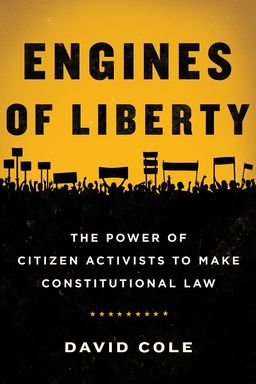
How does constitutional change really happen? In Engines of Liberty, David Cole argues that it is not judges or politicians who make the Constitution live—it is you and other citizens. His central claim is that constitutional law evolves because organized people create new facts, reframe public understanding, and press the courts and government to catch up. The book interweaves stories from three major movements—marriage equality, gun rights, and civil liberties in the war on terror—to show how citizen action drives national legal transformation.
Courts as the End, Not the Beginning
Cole reminds you that the Supreme Court rarely leads social change. Instead, its rulings tend to confirm transitions already underway. He likens a Court decision to a period at the end of a long sentence written by advocates, policymakers, and the public. That means you should see every landmark opinion—Obergefell, Heller, Rasul—not as spontaneous eruptions of judicial insight but as the legal codification of earlier cultural and political shifts forged by citizens.
Through examples as different as Evan Wolfson’s marriage campaign, Marion Hammer’s gun activism, and Michael Ratner’s Guantánamo cases, the book shows that organized civil society continuously reshapes what Americans think their Constitution means.
Multiple Arenas for Change
If you want to move constitutional meaning, you are not limited to filing lawsuits. You can work through state legislatures, ballot initiatives, state courts, academic discourse, journalism, and international institutions. These forums interact: as people shift culture and law at the state level, they alter federal possibilities. Vermont’s civil unions, Florida’s concealed-carry laws, and human‑rights litigation against wartime detention all became building blocks for national rules later ratified by the Supreme Court.
This multichannel approach underlies every case in the book. Freedom to Marry avoided federal lawsuits until public opinion softened; the NRA spent thirty years rewriting state codes before winning at the national level; civil‑liberties groups combined court briefs with FOIA campaigns, retired generals, and foreign allies to restrain the war on terror. The constitutional process, you learn, is polycentric and participatory.
Mobilization and Moral Energy
Judge Learned Hand’s warning—“Liberty lies in the hearts of men and women”—reappears as the book’s refrain. No doctrine can save freedom if citizens stop caring. When people organize, they create the social preconditions that make new rights imaginable. When they disengage, even established rights wither. The stories of citizen movements illustrate this: same‑sex couples spending decades explaining their lives to neighbors, gun owners organizing local clubs and newsletters, and lawyers exposing torture programs despite official hostility. Each example confirms that sustained moral conviction converts ideals into enforceable norms.
The Moral Arc of Citizen Constitution Making
Cole’s broader point is historical. Constitutional meaning in the United States is written not once but continuously. From the abolitionists to modern marriage‑equality advocates, citizens have drafted the real constitutional amendments through persuasion and struggle, long before the judiciary blessed their work. Constitutional law, he insists, is a living conversation rather than a frozen text—and citizens are its principal authors.
When you read Engines of Liberty as a whole, you come away with an empowering message: you are not a spectator of constitutional democracy but one of its engines. Courts finish the stories that movements begin. Law changes most profoundly when civic imagination, strategic coordination, and persistence converge. Whether the issue is marriage, guns, or human rights, the throughline is the same—power flows to those citizens who organize to claim it.