
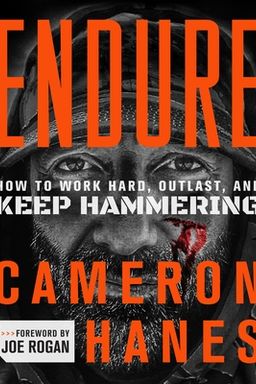
Endure cover

Endure

by Cameron Hanes

Endure reveals Cameron Hanes'' journey of resilience and determination to become the world''s greatest bowhunter. Through personal anecdotes and life philosophies, Hanes inspires readers to push their limits, embrace challenges, and relentlessly pursue their passions for unparalleled success.

Endure: The Power of Obsession, Purpose, and Relentless Work

What does it mean to truly endure? In Endure, Cameron Hanes argues that endurance is not only about surviving hardship but transforming it into purpose. He contends that a life worth living is shaped not by comfort, talent, or luck, but by an unbreakable will to push past mediocrity and live each day with discipline and conviction. Hanes, a bowhunter, ultramarathon runner, and everyday worker, offers his life as proof that an obsessive commitment to hard work can elevate anyone beyond ordinary limits.

Drawing on decades of grueling hunts, 100-mile races, and countless early mornings of training, Hanes weaves a story that is as much about mental toughness as it is about physical grit. From his humble beginnings in small-town Oregon to his friendship with Joe Rogan and David Goggins, Hanes demonstrates that the key to any form of greatness lies in what he calls the "Keep Hammering" mindset—the relentless daily effort that turns pain into progress.

The Core of Endurance: Finding Purpose Through Pain

For Hanes, endurance begins with purpose. “Life is never made unbearable by circumstances,” he quotes Viktor Frankl, “but only by a lack of meaning and purpose.” His entire philosophy stems from this truth: meaning transforms suffering into growth. Each mile he runs in the dark or shot he practices at his bow isn’t just training—it’s his daily act of devotion to what he loves most: bowhunting and self-improvement. Bowhunting, a pursuit requiring absolute focus and respect for nature, becomes a metaphor for life: success is earned only through years of disciplined preparation and the willingness to fail forward.

This approach connects Hanes to a lineage of thinkers and athletes who argue that meaning is forged through suffering—echoing Viktor Frankl, Friedrich Nietzsche, and David Goggins, who each describe adversity as raw material for transformation. In Hanes’s view, life’s obstacles are tests of our willingness to endure, not reasons to quit.

From Mediocrity to Mastery: The Journey of Self-Reliance

Hanes’s journey begins in pain and confusion. Growing up in a broken home, battling alcoholism in his early twenties, and constantly feeling average, he faced all the ingredients that could have led to a wasted life. Instead of succumbing, he discovered bowhunting—a craft that demanded solitude, precision, and humility. That discovery became his "call to adventure," not unlike Joseph Campbell’s hero’s journey. Through hunting, Hanes found meaning, and through meaning, he built endurance. He discovered that suffering, when purposeful, is a blessing in disguise.

When asked how he transformed mediocrity into mastery, Hanes’s answer is deceptively simple: obsession. Whether he’s practicing archery after running twenty miles or training for a 200-mile race, his discipline rests on one hard rule—do the work every day, no matter what. This relentless approach mirrors the ethos of Atomic Habits (James Clear), where success is seen as the compound result of small, consistent daily actions.

The Keep Hammering Ethos: A Philosophy of Action

“Nobody cares, work harder.” This simple, blunt phrase sums up Hanes’s worldview. It’s not cynicism—it’s liberation. He argues that most people waste their energy seeking validation rather than doing the work. The Keep Hammering mindset is about creating your own momentum: doing something difficult every day, pushing the boundary of discomfort until endurance becomes instinct. He reminds readers that great rewards come not from dramatic bursts of effort but from quiet, repetitive grinding—showing up to train or practice even when no one is watching.

For Hanes, every rep in the gym, every mile on the trail, every arrow loosed in the backyard is a metaphor for self-mastery. The mountain doesn’t lie, he says. You can’t fake preparation in the wild, just as you can’t fake discipline in life.

The Role of Brotherhood and Legacy

Endurance is not only personal—it’s relational. Hanes dedicates much of his story to his lifelong friend Roy Roth, a fellow hunter whose death in the Alaskan mountains becomes a symbol of courage and impermanence. Roy represents the kind of man Hanes hopes to be: faithful, humble, and fearless. Their brotherhood, like Hanes’s friendships with Joe Rogan and David Goggins, reinforces that endurance thrives in connection. Goggins, another warrior of suffering, calls Hanes “one of the hardest men on the planet.” Yet Hanes insists that anyone can achieve similar grit if they align passion with purpose and take daily action.

Why Endure?

Ultimately, Endure is more than a memoir of extreme hunting and running—it’s a philosophy for living a meaningful life. It asks readers to stop waiting for inspiration and start building momentum through effort. Hanes believes you don’t have to be gifted, wealthy, or famous; you just have to be relentless. His message challenges modern passivity, reminding us that passion is worthless without endurance, and talk is empty without work. The world doesn’t need more talented people—it needs more everyday individuals willing to hammer away at their purpose.

“Keep Hammering isn’t a slogan. It’s a way of living that replaces excuses with action, and weakness with meaning.”

Through this code, Hanes leaves a call to action: discover what you love so much you’re willing to suffer for it—and then endure.


Transforming Pain into Power

For Cameron Hanes, pain isn’t a pit to fall into—it’s a forge that strengthens you. His childhood was steeped in hardship: divorced parents, addiction, and violence left him angry and insecure. But rather than letting pain consume him, Hanes learned to transmute it into fuel. His first lessons came through physical movement: running around his Oregon hometown, stacking wood, or practicing with a bow taught him that exertion brings clarity. Over time, discipline replaced despair.

Facing the Origins of Suffering

In early chapters, Hanes recounts harsh memories—the drunken fights between his mother and stepfather, the abuse he endured, and the constant instability that colored his youth. Yet in that chaos he found what Viktor Frankl described as “meaning through responsibility.” Running and competing as a child gave him control over something—and control became his first lesson in survival. Every lap he ran and every arrow he shot dulled the noise of dysfunction.

The message he delivers to readers is universal: no matter your trauma, you can redirect it. Pain is neutral—it’s what you do with it that defines who you are. Hanes’s point echoes the philosophies of Stoicism (Marcus Aurelius, Seneca) and modern thinkers like Ryan Holiday, who argues in The Obstacle Is the Way that endurance converts setbacks into strength.

Training for Misery

Hanes doesn’t glorify pain; he trains for it. “I love training and being miserable,” he writes. By running marathons, lifting, and hunting in brutal terrain, he conditions himself to thrive where others give up. Each mile run is a rehearsal for life’s ambushes. This is reminiscent of David Goggins’s “callous the mind” philosophy: suffering on your terms prepares you for the suffering you can’t control.

Through repetition, pain becomes a teacher rather than a tormentor. Hanes reminds readers that comfort is the true enemy. “Easy sucks,” he warns, because what’s easy rarely makes you better. The act of enduring discomfort—be it an uphill climb or personal failure—builds confidence that lasts longer than any fleeting comfort.

The Practical Alchemy of Endurance

The transformation Hanes describes isn’t mystical—it’s methodical. Begin where you are. Run one mile. Shoot one arrow. “Win the day,” he says, and let small victories build momentum. Each act of discipline rewires your relationship to pain, turning adversity into agency. Similar to the philosophy of Atomic Habits, Hanes shows that consistency compounds results—even if it starts with ten minutes of effort a day.

In practical terms, his strategy is simple:

  • Do something difficult every day to build mental calluses.
  • Reflect on pain as progress, not punishment.
  • Never compare your suffering to others—but never run from it.

“Suffering in silence for hours toward the finish line—this is what I love about the journey.”

By enduring hardship willingly, Hanes finds meaning, mastery, and—most importantly—freedom.


Embracing Obsession over Mediocrity

Hanes doesn’t just reject mediocrity—he sees it as spiritual decay. He argues that the greatest tragedy isn’t failure, but settling. In a world addicted to comfort and applause, most people chase distraction rather than purpose. Hanes’s response is obsession: an all-consuming, disciplined fixation on being exceptional at what you love. “If you’re not obsessed,” he declares, “you’re going to be average.”

Obsession as a Moral Code

From his 3 a.m. training sessions before work to his “no rest days” creed, Hanes transforms obsession into what he calls his Beast Mode lifestyle. It’s not about ego—it’s about reverence for potential. Whether it’s running 200 miles or practicing archery until exhaustion, he treats his craft as a sacred calling. This relentless energy mirrors the ethos of professional athletes like Kobe Bryant or Jerry Rice, whom Hanes references as models of endless discipline.

In Hanes’s world, obsession is not unhealthy—it’s alignment. When you find a pursuit that channels every facet of your being—body, mind, and spirit—you arrive at a state of transcendence. Work ceases to be drudgery; it becomes devotion.

Training Until It Hurts

To illustrate the price of mastery, Hanes details extreme regimens: hauling a 130-pound rock up Mount Pisgah, running marathons before work, or lifting to failure eight times a day. To outsiders, this lifestyle looks punishing. To Hanes, it’s freedom. “I love being exhausted,” he says. Fatigue isn’t failure—it’s evidence that he’s alive and moving forward.

His philosophy parallels the Stoic distinction between control and surrender: you can’t control outcomes, but you can control effort. Hanes measures worth not by results but by what you demand of yourself daily—an idea echoed by Cal Newport’s Deep Work and Angela Duckworth’s Grit.

The Discipline Paradox

Ironically, Hanes’s extreme discipline makes his life simpler, not harder. By eliminating the question of whether to train, he frees energy for execution. In quoting James Clear, he notes, “Professionals stick to the schedule; amateurs let life get in the way.” This kind of structure, he insists, isn’t suffocating—it’s liberating. Obsession, when rooted in purpose, frees you from indecision and regret.

Obsess to excel. That’s Hanes’s countercultural gospel in a world that idolizes balance but rarely achieves brilliance.


The Brotherhood of Endurance

Although Hanes’s world is solitary—long mountain trails, silent hunts, and early mornings—it’s sustained by a brotherhood of fellow endurers. His relationships with Joe Rogan, David Goggins, and his late hunting partner Roy Roth demonstrate that endurance is amplified by connection. Shared suffering breeds unbreakable bonds.

A Master and His Mirrors

In Joe Rogan, Hanes finds affirmation. Rogan, who wrote the foreword, extols Hanes as “a modern master of the art of the maximized life.” Through Rogan’s eyes, Hanes becomes a symbol of authenticity in an era of digital fakery. Their friendship blends camaraderie and accountability—Rogan’s platform amplifies Hanes’s message, while Hanes grounds Rogan’s philosophy in action. Together, they prove that greatness is contagious.

Steel Sharpens Steel

With David Goggins, Hanes finds his equal. They challenge each other to transcend limits, from 20-mile mountain runs to brutal gym sessions. Goggins calls Hanes “the only other man who works as hard as I do.” Their friendship blurs the line between rivalry and respect. By training together, they remind each other that toughness is a lifestyle, not an event. This partnership echoes Aristotle’s “virtue friendship”—a bond that drives both toward excellence.

Roy Roth: The Ultimate Comrade

Roy Roth, Hanes’s lifelong hunting partner, embodies the soul of Endure. When Roth dies in a fall during a Dall sheep hunt, Hanes’s stoicism cracks—it’s the book’s emotional center. Yet even in grief, Hanes transforms pain into purpose: “Roy believed that if you can help others reach their potential, you honor God.” Roth becomes Hanes’s North Star, the reminder that endurance is sacred when fueled by love and legacy.

“Our bond was forged through hardship; it will never die.”

Through brotherhood, Hanes redefines masculinity—not as dominance, but as mutual endurance.


Hunting as a Metaphor for Life

To many, bowhunting is an outdated or even controversial pursuit. For Hanes, it’s life distilled to its purest truths: preparation, patience, humility, and respect. Hunting, in Endure, is less about killing and more about reverence—what José Ortega y Gasset called “killing in order to have hunted.” Each expedition into the wilderness becomes a dialogue between hunter and hunted, life and death, purpose and pursuit.

The Discipline of the Hunt

Bowhunting demands more than strength—it requires control under pressure. The difference between a perfect shot and failure is fractions of a second and inches of space. Hanes translates this precision to life itself: success is the result of preparation meeting presence. The wilderness doesn’t care about your Instagram followers or resume. “The mountain never lies,” he says. It exposes whether you’ve done the work.

Respecting the Animal, Respecting Life

Hanes passionately defends ethical hunting against critics, arguing that it fosters deeper respect for animals and nature than detachment ever could. Each kill is both solemn and sacred—a reminder that life sustains life. Before taking an animal’s life, Hanes practices for months so that his shot is quick and merciful. He butchers his own kills, sharing the meat with family and friends, living by his creed: “Train. Hunt. Provide. Honor.”

As he sees it, hunting is humanity’s oldest form of meditation. It demands silence, focus, and reverence—qualities that modern life has eroded. “In the wilderness, there are no shortcuts,” he reminds readers. “You can’t fake preparation.”

The Spiritual Return

Every hunt concludes in gratitude. Whether kneeling beside an elk or returning empty-handed, Hanes recognizes each journey as a pilgrimage toward self-knowledge. Like the hero returning home in myth, he’s scarred, humbled, but renewed. In the hunt, he finds life’s truest rhythm: challenge, respect, and endurance intertwined.


Building a Legacy Through Work

“Work is my edge,” Hanes says. Despite his fame, he keeps a regular nine-to-five as a superintendent for a utility company. Why? Because it keeps him grounded. In an age of influencers and shortcuts, Hanes embodies blue-collar excellence: showing up, doing the work, and never believing you’ve arrived. His philosophy—“Don’t let them outwork you”—is both simple and revolutionary.

No Days Off

For thirty years, Hanes has trained without pause. Running before sunrise, lifting after work, shooting daily—it’s more than physical conditioning. It’s identity reinforcement. “I can’t take a rest day,” he admits, not from pride, but fear—fear of losing the edge that defines him. This ceaseless motion mirrors the ethos of legendary coach John Wooden, who told players: “Be quick, but don’t hurry.” Consistent excellence beats sporadic brilliance.

Discipline as Freedom

Hanes echoes Jocko Willink’s mantra, “Discipline equals freedom.” His rigid schedule liberates him from procrastination and insecurity. When you commit fully to effort, you silence doubt. It’s not about being special—it’s about being consistent. He proves that you can hold a day job, be a parent, and still live like an elite performer if you stop making excuses.

Legacy over Luxury

Hanes measures wealth not in dollars but dependability. When asked why he doesn’t quit his job to hunt full-time, he answers that loyalty and example matter more than financial gain. His sons and daughter, all disciplined achievers, represent his ultimate trophy. “I want them to see that success doesn’t make you quit—it makes you work harder.”

“If you’re not the hardest-working person you know, you’re not working hard enough.”

In the end, Hanes’s legacy isn’t about elk or medals—it’s about proving that consistent, humble effort can change a life, one hard day at a time.

Dig Deeper

Get personalized prompts to apply these lessons to your life and deepen your understanding.

Go Deeper

Get the Full Experience

Download Insight Books for AI-powered reflections, quizzes, and more.