
Idea 1
Enduring the Impossible: Shackleton’s Ordeal and the Human Spirit
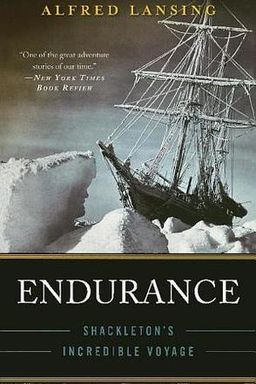
What holds human beings together when everything—machinery, science, and certainty—breaks apart? In Alfred Lansing’s Endurance (and the expedition diaries it draws from), you face the ultimate test of leadership and survival through the 1914–1916 Imperial Trans-Antarctic Expedition led by Ernest Shackleton. When the ship Endurance is crushed by ice in the Weddell Sea, twenty-eight men are stranded more than a thousand miles from help. From that collapse emerges not a story of conquest, but of collective endurance—a psychological, logistical, and moral experiment in survival.
The heart of the story
You start with the slow death of the Endurance. Shackleton’s wooden ship, designed for Antarctic exploration, becomes wedged in the pack ice in early 1915. The ice, a living, grinding force, closes like a vice until the ship splinters. When Shackleton orders, “Abandon ship,” the men step onto a frozen plain that drifts at the mercy of currents. The scientific expedition instantly transforms into a fight for life. No radio, no rescue, and no possibility of return. The loss of the ship means they now live on ice, constructing temporary camps (Ocean Camp, Patience Camp) as the floes drift unpredictably north.
Each stage in the saga pushes new frontiers of human resilience. When the ice finally cracks beneath them, they take to three open boats—the James Caird, Dudley Docker, and Stancomb Wills—and endure monstrous seas to reach the tiny refuge of Elephant Island. Shackleton then selects five companions to sail the Caird nearly 800 miles to South Georgia across the most dangerous ocean on earth, reemerging after sixteen days to climb a mountain range no one had ever crossed to reach help. It ends not with glory but with reunion—the Yelcho rescue ship’s arrival months later, when Shackleton can finally call, “Are you all right?” and hear the reply, “All well.”
A study in extreme leadership
As you piece these events together, a new kind of leadership emerges. Shackleton is ambitious, even self-dramatic, yet when survival replaces ambition, he becomes a practical psychologist. He reads his men as carefully as he reads the weather. He isolates troublemakers near himself, assigns tents based on temperament, and transforms monotony into morale through small rituals—songs, grog, banter, or Hussey’s banjo. Decisions that appear small—like when to launch boats or how to assign ration duties—turn out life-preserving.
He also models sacrifice in action: jettisoning gold coins and keepsakes, rationing himself equally, tending to the weakest (Hudson, Blackboro). Shackleton’s famous optimism—his refusal to imagine death as an option—becomes both a psychological shield and a moral code. You sense that his authority is not rooted in hierarchy, but in presence and trust: men who would never obey orders blindly do so because they believe his decisions, however grim, are final and fair.
Human systems of survival
Around this nucleus of leadership revolves a system of practical genius: how to make clothes, stretch fuel, and engineer shelter in a world where every mistake can kill. McNeish cobbles together sledges from greenheart planks; Green invents a stove out of a drum; Macklin performs surgery on the frostbitten in a hut made of upturned boats. Seal meat becomes fuel and food. Blubber smoke blackens everything, yet it keeps life going. The expedition shows industrial modernity collapsing back into primitive invention. Each man must become carpenter, hunter, and nurse. You realize survival is not heroics—it is logistics, social order, and trust in the midst of entropy.
Themes of endurance and meaning
The deeper structure of the book is moral rather than geographic. The crew endures hunger, cold, monotony, and despair not as isolated individuals but as a collective organism. Every ritual—shared meals, mock ceremonies, humor, and small competitions—serves as psychological insulation against chaos. The physical endurance mirrors emotional resilience. Shackleton’s greatest act is not sailing 800 miles or crossing mountains; it is ensuring that not one of his men dies under his command. In the end, “Endurance” names both the ship that perished and the human capacity that survived.
(Note: As in Viktor Frankl’s Man’s Search for Meaning, the truth here is existential—survival depends as much on meaning and leadership as on calories or shelter.) What this story shows you is that endurance is a social achievement, not an individual one—built from the tiny daily acts of faith that transform 522 days of suffering into one of the most astonishing testaments to will, ingenuity, and shared humanity ever recorded.