
Idea 1
Repairing Aging: An Engineering Revolution
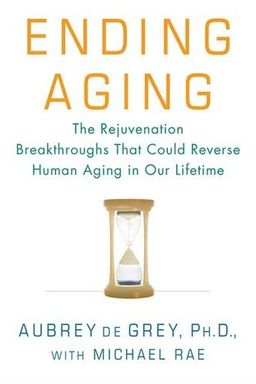
How can you actually stop aging rather than just slow it? Aubrey de Grey’s central claim is that you don’t need to unravel every metabolic mystery behind aging—you just need to repair the limited types of damage that those metabolic processes create. That’s the breakthrough behind SENS (Strategies for Engineered Negligible Senescence), the book’s unifying framework.
Reframing aging as accumulative maintenance failure
Traditional approaches treat aging as an unavoidable biological decline or try to prevent damage formation by tweaking metabolic pathways. But metabolism is too complex—millions of reactions interact unpredictably. De Grey’s engineering mindset asks a different question: what if you could periodically remove or neutralize the damage itself, restoring tissue function without needing to understand every upstream cause?
He describes seven broad categories of aging damage: chromosomal mutations, mitochondrial DNA deletions, intracellular and extracellular aggregates, cross-linked extracellular matrix proteins, cell loss and senescent cells, and certain forms of biochemical misregulation. Each category corresponds to existing or plausible interventions drawn from biomedicine and biotechnology.
The shift from prevention to repair
De Grey contrasts three approaches: gerontology (prevention through metabolic manipulation), geriatrics (treating symptomatic decline), and engineering-style repair (identifying and fixing damage early enough to restore youthfulness). This middle path avoids both theoretical complexity and clinical lateness. It’s essentially maintenance—like keeping a classic car in mint condition by replacing worn parts rather than redesigning combustion chemistry.
An engineering mindset applied to biology
You don’t need perfect information. You need manageable subsystems to repair. Like civil engineers designing bridges under stress limits, biomedical engineers can rebuild molecular infrastructure without controlling every upstream parameter. It’s a pragmatic shift, not a philosophical one—and it opens entire research programs that gerontology never could.
How the book builds its case
Each following section develops one or more of the seven repair strategies. You’ll see how mitochondrial gene relocation solves deletion-driven dysfunction, how microbial enzymes can clean up lysosomal junk, how immunotherapies remove amyloid plaques, and how chemical AGE-breakers restore arterial elasticity. Together they demonstrate that rejuvenation isn’t theoretical—it’s already underway in partial pieces across labs.
Beyond science, De Grey insists the social dimension matters as much as the biology. Culture and funding inertia—the “pro-aging trance”—produce a self-reinforcing delay: governments hesitate because scientists are cautious, scientists are cautious because governments hesitate, and the public doubts rejuvenation because neither appears confident. The proposed solution is proof of Robust Mouse Rejuvenation (RMR)—clearly extending mouse lifespan through multi-damage repair—to trigger belief, investment, and policy transformation.
From repair to escape velocity
The book ends with a futuristic but mathematically coherent idea: Longevity Escape Velocity (LEV). Once rejuvenation treatments improve faster than aging accumulates new damage, you can sustain indefinitely youthful health through recurring maintenance cycles. Each technological advance buys the time needed to develop the next. It’s not immortality by miracle—it’s indefinite longevity by progress.
In essence, De Grey argues that aging is no longer a mysterious curse. It’s a solvable engineering problem composed of definable parts. If you treat aging damage like infrastructure wear—systematically patching leaks, clearing clogs, and replacing broken components—you can restore youthful function, extend life indefinitely, and ultimately defeat aging within decades, provided society breaks its trance and funds the work.