
Idea 1
Nur Jahan and the Reimagining of Sovereignty
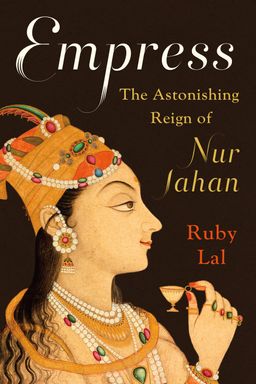
How can a woman in a deeply patriarchal empire master the language of kingship without a throne? In this sweeping narrative of the Mughal seventeenth century, you meet Nur Jahan—born Mihr un‑Nisa, daughter of Persian migrants—who rose from precarious exile to become Padshah Begum, the only Mughal woman to wield visible and institutionalized authority. The book’s central claim is that Nur Jahan did not merely influence the emperor Jahangir; she formally shared sovereignty with him, transforming the instruments, rituals, and aesthetics of rule.
To understand her ascent, you follow three arcs: first, her biography as a migrant turned empress; second, her practical governance through edicts, coinage, and administration; third, her consolidation of power through family alliances, patronage, and art. Together they reveal how gender, politics, and culture intertwined to redefine what rulership could look like in early modern South Asia.
Migration, Formation, and Resilience
Mihr un‑Nisa’s origins shape the book’s thesis on empire as refuge. Her parents—Ghiyas and Asmat Beg—fled Safavid Iran for Mughal India, embodying a wave of Persian literati who enriched the Mughal court’s cosmopolitan bureaucracy. Born near Kandahar in 1577 beneath a comet later mythologized as a celestial omen, Mihr’s childhood was retold through layered legends of survival, signaling her destiny in both Persian and European imaginations. Her life in Bengal as Sher Afgan’s wife trained her in local administration and estate management; widowhood in 1608 returned her to Agra’s harem, where she re‑entered imperial life through cosmopolitan networks that prized intellect as much as lineage.
The Harem as Political School
You learn that the Mughal harem was not pure seclusion but a third space—a mobile, semi‑public network where women advised, traveled, and managed estates. Under Akbar and Jahangir, royal women orchestrated pilgrimages, financial grants, and marriage diplomacy. Within this world, Nur’s education in etiquette, Persian poetry, and fiscal logistics prepared her for later statecraft. When Jahangir’s itinerant court transformed the harem into a movable city of tents, that mobility opened windows for women’s visibility, allowing Nur to turn domestic authority into public power. (Note: this contrasts with Ottoman and Safavid practice, where seclusion stayed doctrinally rigid.)
Partnership and Political Innovation
Jahangir’s personality and habits create the ecosystem of Nur’s power. His love of travel and art, combined with his indulgence in wine and opiates, invited delegation and intimacy. Nur became caregiver, counselor, and administrative deputy. She issued hukms, co‑signed coins, and appeared in the jharokha balcony audiences—acts that made her sovereignty visible. Jahangir’s own memoirs praise her judgment and credit her remedies for saving his life, signaling deliberate partnership rather than puppet mastery. European envoys misread this dynamic through gendered bias, mistaking cooperative rule for manipulation.
From Symbols to Governance
In Nur’s hands, small formalities—signatures, seals, coins—became powerful technologies of legitimacy. Her title Padshah Begum mirrored masculine rulers; her seal proclaimed her light “illumined the world.” Coins struck jointly in Jahangir and Nur’s names circulated from Kabul to Bengal, confirming her as co‑sovereign. She accompanied campaigns, received petitions, and issued orders to rajas and governors. Her authority expanded through patronage networks binding father Ghiyas (as wazir), brother Asaf Khan (at the treasury), and daughter Ladli Begum (through dynastic marriage). Symbol and structure fused: she built institutions and nurtured loyal factions.
Cultural Power and Legacy
Nur redefined femininity in public culture. Her philanthropy—organizing orphan marriages, designing the modest Nur‑Mahali wedding dress, and founding sarais and gardens—merged social welfare with state image. Her architectural programs, especially the Itimad‑ud‑Daula tomb for her parents, established Mughal marble inlay traditions later perfected in the Taj Mahal. Her gardens like the Ram Bagh and Kashmiri Nurafza staged sovereignty through light, water, and geometry: metaphors linking divine radiance to earthly justice. Artistic commissions depicting her hunting with musket or supervising construction challenged conventions, showing power embodied in a woman’s form.
Conflict, Erasure, and Memory
Her political reach provoked backlash. Factional rivalries over succession—between Shah Jahan and Shahryar—culminated in rebellion, accusations of fitna (female discord), and the 1626 Bahat River rescue where Nur commanded troops against Mahabat Khan. Even as she saved Jahangir, later chronicles under Shah Jahan recast her as dangerous and blameworthy. Yet her coins, sarais, and tombs contradict that narrative: they stand as material records of a woman who converted domestic intimacy into governance. In reconstructing her story, this book invites you to see power where history tried most to hide it—within the fabric of gendered empire itself.