
Idea 1
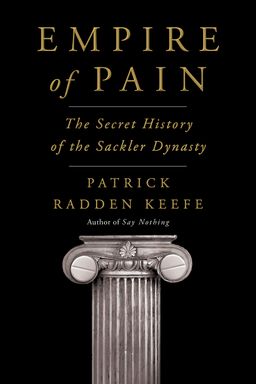
Empire of Pain: How the Sacklers Shaped Modern Medicine and Misery
How does a family of three Brooklyn-born brothers build one of the most influential, wealthy, and ultimately reviled dynasties in medical history? In Empire of Pain, Patrick Radden Keefe argues that the Sackler family transformed both the practice of pharmaceutical marketing and the definition of public health itself. Across generations, the Sacklers blurred the line between medicine and commerce, using their medical titles, publishing platforms, and philanthropy to cultivate prestige while concealing profit. Their story is not simply about OxyContin or the opioid crisis—it is about how legitimate science and regulatory systems can be weaponized to sell relief, reshape pain, and perpetuate dependence.
From Medical Innovation to Marketing Empire
The story begins with Arthur Sackler, the eldest of three brothers and the architect of modern drug marketing. As a psychiatrist who also owned an advertising firm, Arthur discovered the financial potential of combining medical research with persuasion. In campaigns for Pfizer’s Terramycin and later Roche’s Librium and Valium, he pioneered tactics that treated doctors as both scientists and consumers: glossy reprints of journal articles, sponsored symposia, and a sales force of “detail men” who recited data like catechism. The technique—promotion disguised as education—became the template for the entire industry.
Roche’s tranquilizers, marketed as non-addictive aids for the stress of modern life, flourished under this strategy. Arthur’s network blurred the boundary between medicine and commerce, setting precedents that stunned senators at the Kefauver Hearings, where revelations about FDA conflicts and ghostwritten medical publications ignited early reforms. Yet Arthur largely escaped reproach. He had already learned how to use his medical credibility as a shield for marketing ingenuity.
From Laxatives to Opioids
Arthur’s brothers, Raymond and Mortimer, used the modest Purdue Frederick company, which sold products such as Senokot and Betadine, as the family’s entrepreneurial base. Through its British affiliate Napp Laboratories, they developed time-release technology that led to MS Contin—a morphine pill for cancer patients. Richard Sackler, Raymond’s ambitious son, saw in that technology a ticket to a new kind of blockbuster: a controlled-release form of oxycodone. The result was OxyContin, launched in 1996 with marketing scripts that borrowed directly from Arthur’s playbook but on a far more aggressive scale.
Meanwhile, the family’s internal culture mirrored its public methods: secretive, tightly bound by promises, adept at hiding wealth (through offshore entities such as Mundipharma) and manipulating image. Legal agreements among the “three musketeers” ensured that family control would outlive individuals. Philanthropic gifts to Harvard, the Met, and the Smithsonian converted pharmaceutical profits into a veneer of cultural permanence through the repetition of one name—Sackler.
The Mechanisms of Expansion and Denial
As OxyContin spread, Purdue replicated old strategies in new forms. Regulatory phrasing in FDA inserts blurred risk, citing that time-release was “believed to reduce abuse liability.” Sales reps, fed misleading data, told doctors that addiction was “rare.” Bonuses and luxury junkets rewarded top prescription writers. The company’s data systems tracked high-prescribing doctors, ensuring saturation. When abuse and overdose evidence mounted, executives shifted the blame to “abusers” rather than to the drug’s design or the culture of overprescription they had fostered.
Reckoning and Reinvention
Federal prosecutors in Virginia eventually proved Purdue’s misbranding of OxyContin, leading to a 2007 guilty plea and $600 million in fines. Yet the family itself remained untouched. A second wave of litigation, led by Massachusetts Attorney General Maura Healey, made the Sacklers visible, linking their personal decisions to public catastrophe. Meanwhile, artists such as Nan Goldin and her PAIN movement turned cultural shame into activism, compelling museums to sever ties and remove the family’s name from galleries. The same name that once connoted refinement now epitomized corporate deceit.
Why This Story Matters
In tracing the Sacklers’ trajectory from scientific medicine to empire, Keefe constructs an anatomy of influence. You see how medical authority, marketing sophistication, political lobbying, and cultural philanthropy can reinforce one another to produce both progress and devastation. Empire of Pain is not only a family biography—it is a study of systems: how private ambition coopts public trust, and how naming, wealth, and secrecy converge to rewrite the ethics of medicine itself. Understanding this story helps you see the modern pharmaceutical landscape not as an accident but as an inheritance from deliberate strategies born decades ago.