
Idea 1
Empire as Enterprise: Appetite, Violence and Order
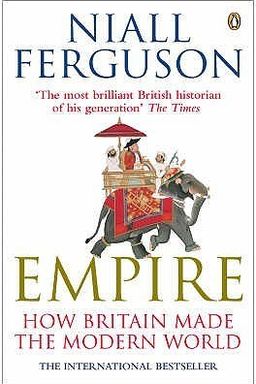
How does a small northern island end up ruling a quarter of the globe? The story told here begins in appetite rather than ideology — in piracy, sugar, and profit. The British Empire’s evolution unfolds as a process in which private greed, military skill, and state adaptation combine to generate the most extensive empire in modern history. You can trace a single thread running from the Caribbean buccaneers of the 1600s to the bureaucratic administrators of the 1900s: the conversion of coercion into commerce and eventually into institutions of order.
The book’s core argument is that empire was less a moral mission than an adaptive system of extraction. It began in violence, matured through financial innovation, spread through migration and technology, stumbled into moral contradictions, and finally collapsed under economic strain and nationalist awakening. Yet every phase left behind administrative, legal, and cultural structures that continue to shape the world.
From Sea Robbers to Sugar Lords
In the seventeenth century, British global ambition germinated through naval predation. The state licensed privateers like Henry Morgan to loot Spanish possessions, transforming piracy into policy. The silver they seized financed plantations, and consumer hunger for sugar, tea, and Indian cotton textiles turned violence into commerce. By the early eighteenth century, British sugar consumption outpaced all rivals, creating a feedback loop between popular taste and imperial expansion. You see here the prototype of ‘globalization with gunboats’ — markets enforced by maritime power.
Credit, Cannon and the Fiscal-Military Machine
After 1688, English merchants absorbed Dutch financial methods to fund sustained warfare. The Bank of England (1694) and public debt markets gave the Crown cheap capital. This fusion of finance and force produced victories like the Seven Years’ War, when William Pitt deployed credit-fed fleets to conquer French territories from Quebec to the Caribbean. The East India Company’s conquest of Bengal at Plassey and Buxar turned private enterprise into territorial sovereignty — the prototype of state-backed capitalism.
Plantations, Migration and Racial Orders
Empire was built as much by bodies as by banks. Millions left the British Isles—settlers, convicts, servants—and millions more were forced migrants: Africans shipped to sugar islands. The empire’s labor systems—indenture, slavery, transportation—matched land, labor, and capital across continents. Where family settlement dominated (New England, Australia), long-term settler societies emerged; where plantations ruled (Caribbean, American South), coercive racial hierarchies hardened.
Morality and the Recasting of Rule
By the nineteenth century, empire’s violence produced its own moral opposition. The Clapham Sect’s evangelical campaigns—Wilberforce’s anti–slave trade bills, Wedgwood’s medallions—converted guilt into global policing. The Royal Navy, once guarding slavers, now intercepted them off West Africa. Abolition became both a moral achievement and a diplomatic instrument, justifying intervention under humanitarian banners and creating mission fields for expansion. Sierra Leone’s Freetown embodied the paradox: philanthropy and paternalism intertwined.
Technology and Mission as Governance
Nineteenth-century technology compressed empire. Steamers, railways, telegraphs, and surveys annihilated distance and knit colonies into one administrative web. Missionaries like David Livingstone redefined spirituality as strategy—‘Christianity, commerce, and civilization.’ Yet idealism met limits: floods, fever, and rapids on the Zambezi frustrated utopian dreams. Later explorers and conquerors, armed with Maxim guns and guided by earlier maps and moral habits, turned mission into conquest. Rhodes’s charters and Leopold’s Congo atrocities trace a direct line from moral rhetoric to mechanized domination.
Contradictions, Crises, and Decline
Across the centuries, empire repeatedly hit the wall of its own logic. Colonists who had imbibed British liberty rebelled in America; Indians who had mastered British law rose in 1857; Anglo elites who despised ‘babus’ provoked nationalism. From the Ilbert Bill through Curzon’s Partition of Bengal, race replaced merit as the foundation of rule. In Africa, economic imperialism through companies (Goldie’s Royal Niger, Rhodes’s BSAC) replaced the older East India model. Wars like the Boer conflict exposed moral fatigue at home and skepticism abroad.
World Wars and Fiscal Exhaustion
Twentieth-century world wars transformed empire into liability. The Great War’s mobilization of colonial soldiers and the Ottoman campaigns expanded British holdings but drained credit. After 1918, mandates in the Middle East masked new colonial forms; after 1945, indebted Britain could no longer afford global garrisons. The Fall of Singapore and the Suez fiasco showed that power had passed to the United States. Decolonization followed with fiscal logic: ruling was more expensive than retreating.
The Chain of Empire
If you follow the narrative from pirates to parliaments, you see a consistent mechanism: appetite creates expansion; expansion demands organization; organization provokes conscience; conscience redresses excess; exhaustion ends the cycle. That pattern, both economic and moral, defines the British imperial story—and reveals how empires everywhere turn private greed into public ideology before dissolving under their own moral and fiscal weight.