
Idea 1
The Universal Language of Emotion
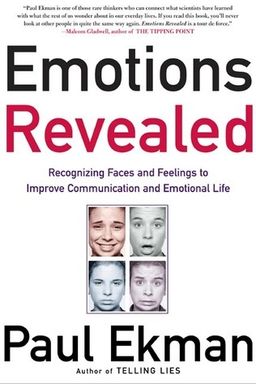
What if your face speaks a biological language that everyone instinctively understands? Paul Ekman’s lifelong work reveals that emotions are both ancient and universal: across cultures, humans share a repertoire of facial expressions that signal anger, fear, joy, sadness, disgust, contempt, and surprise. Yet culture teaches you when and how to show—or hide—those emotions. This core idea reframes emotion not as chaos but as an evolved communication system linking biology, culture, and consciousness.
Emotion as a biological code
Ekman’s early work tested whether facial expressions of emotion were learned or innate. By showing photographs of standardized expressions to people in Chile, Japan, Argentina, the U.S., and illiterate, isolated groups like the Fore in Papua New Guinea, he found cross‑cultural agreement on core emotions. Even the Fore, with minimal exposure to film or Western media, accurately identified facial expressions for happiness, anger, disgust, fear, sadness, and surprise. Karl Heider later replicated these results with the Dani in West Irian. These findings established that facial expressions are species‑typical signals—part of an emotional grammar inscribed by evolution.
Display rules and cultural modulation
Culture doesn’t erase universality—it modifies it. Through learned display rules, people in different societies learn when to amplify, mask, or suppress facial signals. In Japan–U.S. comparisons, Japanese participants smiled to conceal negative emotions in the presence of an authority figure, while Americans showed their feelings openly. Such findings reconcile why travelers see huge cultural variation: the raw signals are universal, but social customs dictate when they appear.
Reading the hidden face
To decode these signals, Ekman and Wallace Friesen built the Facial Action Coding System (FACS), a detailed map of muscle movements that lets trained observers identify each expression with objectivity. From FACS came the discovery of microexpressions—fleeting muscular contractions (as short as 1/25 of a second) that reveal emotions even when someone tries to conceal them. Such leaks have become vital in clinical psychology, law enforcement, and interpersonal communication, though Ekman warns against over‑interpretation: a micro‑flash of anger does not prove lying or malice. The key is curiosity, not accusation.
Why understanding emotions matters
Recognizing this biological foundation transforms how you view yourself and others. Emotions are neither irrational eruptions nor arbitrary moods but adaptive programs—fast responses designed to signal and solve problems of survival and social living. When you grasp that every frown, sigh, or flush in your body is part of a coordinated communication system, you gain compassion and predictive power. You learn to see anger as a protest against interference, fear as a call for protection, sadness as an invitation for comfort, and enjoyment as a bond‑builder.
In the chapters that follow, Ekman reveals how these universal programs are triggered, expressed, regulated, and sometimes transformed. He helps you trace emotion from automatic appraisal to deliberate regulation, showing that self‑awareness—not suppression—is your best route to emotional mastery.