
Idea 1
Emotionally Healthy Spirituality: Deep Change That Lasts
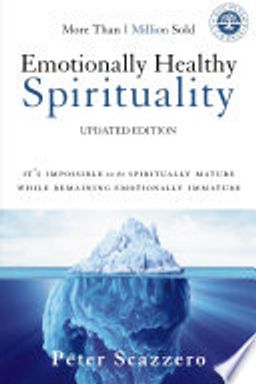
When was the last time your spiritual growth actually changed the way you handle anger, conflict, or grief at home? In Emotionally Healthy Spirituality, Peter Scazzero argues that a vibrant relationship with Jesus cannot outrun our emotional immaturity. He contends that spiritual zeal, ministry activity, and even impressive disciplines become a thin veneer if the 90 percent of our iceberg beneath the surface—our emotions, family-of-origin patterns, griefs, limits, and relational habits—remains untransformed.
Scazzero’s core claim is bold: you cannot be spiritually mature while remaining emotionally immature. To pursue Christ deeply, you must integrate two streams that are often split apart in church life—emotional health and contemplative spirituality (the slow, prayerful presence to God). This book maps eight pathways that move you from a performance-driven spirituality to a life of grounded love—first inside you, then out through your relationships.
What’s Broken—and Why It Matters
If you’ve ever wondered why you (or your church) can pray, serve, lead, and study yet still explode in anger, avoid hard conversations, or live at an unsustainable pace, Scazzero says: you’re not alone. He names ten symptoms of emotionally unhealthy spirituality—from using God to run from God, to spiritualizing away conflict, to living without limits. His own wake-up call came when ministry success masked avoidance, dishonesty, and frantic overfunctioning—until one terrifying afternoon when his three-year-old daughter, Faith, nearly drowned while he entertained guests he didn’t want to host. The incident exposed a gap between the public “pastor Pete” and the private person at home.
Why care? Because, as Ron Sider laments (in The Scandal of the Evangelical Conscience), people inside churches often live with the same divorce rates, racism, and materialism as those outside. And because unresolved emotional immaturity sabotages marriages, families, teams, and witness. Scazzero insists the way forward is not more of the same—more activity, more “try harder”—but an inner renovation that joins honest self-knowledge with ancient, time-tested practices of union with God.
The Journey You’ll Take
In this guide, you’ll discover why knowing yourself (your desires, feelings, shadow, and limits) is inseparable from knowing God. You’ll learn to go back in order to go forward—charting your family genogram to identify patterns you’ve unconsciously carried into the present. You’ll pass through the “Wall,” or dark night, that every mature disciple faces, and learn how it purifies hidden motives and deep attachments. You’ll enlarge your soul through grief and loss, rather than numbing or rushing past pain.
You’ll then adopt two countercultural rhythms—a Daily Office (brief pauses for prayer throughout the day) and a weekly Sabbath—that tether you to God in the blizzard of modern life. Finally, you’ll grow into an emotionally mature adult who loves well by practicing concrete skills—clean conflict, checking assumptions, clarifying expectations, and treating people as a “Thou,” not an “It” (drawing on Martin Buber’s I and Thou). The journey culminates in crafting a “Rule of Life,” a trellis that supports your ongoing growth so love for Christ remains first.
Why This Approach Works
Scazzero is not offering theory; he writes from a multiracial New York City church that grew up practicing this material. His own marriage to Geri almost collapsed until she courageously “quit” his church to force an honest reckoning. Their story mirrors others in the book—Frank and Maria, stuck repeating their families’ scripts; Jessica, a competent manager who avoids direct conversations; Sheila Walsh, a famed Christian communicator who hit the wall and found healing by naming reality.
The book sits within a wider conversation. Like Dallas Willard (Renovation of the Heart), Scazzero insists transformation is interior and slow. Like John of the Cross, he normalizes the dark night as God’s purifying love. Like Thomas Merton, he calls you to a true self hidden in God, stripped of ego props. And like Ignatius of Loyola, he teaches discernment that respects feelings yet tests spirits, pairing affection for God with wise action.
The Big Promise
Scazzero’s promise is not a quick fix but a new center of gravity: a light, easy yoke fitted to your real life (Matthew 11:28–30). As you integrate emotional health and contemplative spirituality, you’ll find a grounded joy, deep patience, and a durable love that endures conflicts, losses, and limits without pretending. In short, you become the kind of person whose interior life with Jesus naturally overflows into wise, loving presence with others.
If you’re hungry for change that touches every room of your life—your marriage, parenting, friendships, work, and leadership—this journey is worth taking. It’s demanding, but it’s also deeply humane. The fruit, Scazzero says, is not merely doing more for God, but becoming a person who is with God—and therefore, finally, someone who can love well.