
Idea 1
The Power of Emotional Intelligence: Why EQ Trumps IQ
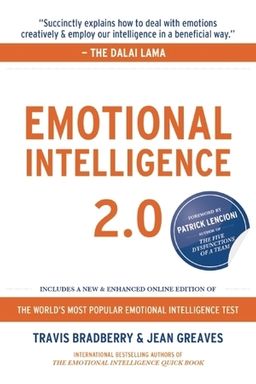
Why do some people with average intelligence soar in their careers and relationships, while others—bright, talented, and well-educated—struggle? In The Emotional Intelligence Quick Book, authors Travis Bradberry and Jean Greaves argue that our success in life depends far less on raw intellect (IQ) and far more on our ability to understand and manage emotions—our own and those of others. They define this ability as emotional intelligence (EQ), a set of learnable skills that shape how we handle ourselves, connect with people, and make wise decisions in the face of stress or conflict.
EQ, they contend, is the hidden ingredient behind effective leadership, meaningful relationships, mental health, and even physical well-being. Unlike IQ or personality—both largely fixed traits—EQ can be developed, practiced, and strengthened over time. This means that anyone, regardless of background, can cultivate the emotional awareness and control necessary for deep personal and professional success.
The Missing Link Between Thought and Feeling
To understand EQ, Bradberry and Greaves take us back to the incredible story of Phineas Gage, the 19th-century railroad worker who survived a horrific accident that sent a metal rod through his skull. Miraculously, Gage’s body and intellect remained intact—but his personality changed entirely. Once disciplined and kind, he became impulsive, crude, and erratic. The authors use his case to illustrate a crucial point: the emotional and rational centers of the brain must work together for sound decision-making. When this connection is broken, as in Gage’s case, emotions run wild and reason collapses.
In everyday life, this same dynamic plays out more subtly: when we let anger dictate our words or allow anxiety to cloud our judgment, we’re momentarily cut off from rational control. EQ is the practice of building a healthy two-way “superhighway” between emotion and logic—recognizing what we feel without being ruled by it.
The Four Core Skills of EQ
The authors break emotional intelligence into four interrelated skills that together fuel what they call personal competence (how you manage yourself) and social competence (how you manage relationships):
- Self-awareness: recognizing your feelings and understanding why you think, act, or react the way you do.
- Self-management: controlling your impulses, adapting to change, and aligning behavior with your values even under pressure.
- Social awareness: reading other people’s emotions accurately and responding with empathy and tact.
- Relationship management: building trust, resolving conflicts, influencing others, and fostering collaboration.
These four skills form the foundation for the book’s central promise: by practicing EQ, you can transform not only your interactions but also the structure of your own brain. Through consistent reflection and new habits, you literally create new neural pathways that make emotionally intelligent behavior more automatic over time. (This idea parallels Daniel Goleman’s work in Emotional Intelligence and Richard Boyatzis’s research on resonant leadership.)
Why EQ Matters More Than Ever
Bradberry and Greaves argue that EQ is no longer optional—it’s a “survival skill” for modern life. Their research across half a million people shows that EQ explains over 60% of job performance across professions. It also predicts physical health, as high-EQ individuals experience lower stress, stronger immune systems, and reduced risk of illness. They highlight studies linking unmanaged emotions to heart disease, cancer progression, and depression—reminding us that ignorance of our emotions literally makes us sick.
In the authors’ view, emotional intelligence is to the 21st century what traditional intelligence was to the 20th: the defining trait of successful people and organizations. Where IQ helps us think, EQ helps us live. It’s what allows a leader to steady a team under pressure, a parent to connect with a child, or a couple to repair a relationship after conflict.
Skill, Not Secret
Perhaps the most empowering message of The Emotional Intelligence Quick Book is that EQ is not a mystical gift—it’s a set of trainable skills. By “leaning into discomfort” rather than repressing feelings, you retrain your brain to handle stress, build empathy, and respond thoughtfully. In this book, you’ll learn exactly how to increase EQ step by step: through awareness practices, habit formation, feedback, and reflection.
“You don’t drown by falling in the water; you drown by staying there,” the authors remind us, quoting Edwin Louis-Cole. The key is not to avoid emotional discomfort but to use it as a signal for growth.
This engaging, research-driven guide offers a practical road map for strengthening your inner world and outer interactions. Its stories—from the reckless foreman Phineas Gage to soulful Ray Charles, from workplace mishaps to emotionally intelligent parenting—reveal how mastering EQ turns ordinary challenges into extraordinary growth. As you continue reading, you’ll explore how to measure your EQ, develop lasting habits of self-awareness, build stronger teams, and apply emotional intelligence everywhere from boardrooms to living rooms.