
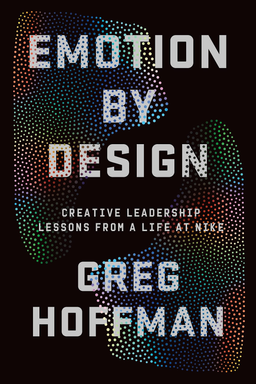
Emotion by Design cover

Emotion by Design

by Greg Hoffman

Emotion by Design offers a masterclass in creative leadership, drawing from Nike''s marketing success. Greg Hoffman shares invaluable lessons on building emotional connections, leveraging brand identity, and telling compelling stories to stand out and thrive in today’s competitive marketplace.

Emotion by Design — Building Legendary Brands Through Human Connection

What makes you feel something when you see a great brand story — the kind that gives you chills, moves you to tears, or leaves you whispering, “Just do it”? In Emotion by Design, Greg Hoffman, former Chief Marketing Officer at Nike, argues that the world’s most powerful brands succeed not because of massive budgets or data-driven precision, but because they connect to us in deep, human ways. He calls this philosophy Emotion by Design—the deliberate art of crafting stories, images, and experiences that help people believe their wildest dreams are possible.

Hoffman contends that creativity in branding is not reserved for a gifted few; it’s a collaborative sport where teams cultivate empathy, curiosity, and courage. Over nearly three decades at Nike, Hoffman learned firsthand that every enduring brand moment—whether Michael Jordan’s outstretched “Wings” poster, Colin Kaepernick’s powerful stand, or Kobe Bryant’s mythic “Mamba” stories—starts with emotion. These feelings can’t be faked or forced; they must be designed with intention, humanity, and imagination.

The Art of Blending Emotion and Design

Hoffman opens by reflecting on a portrait of Colin Kaepernick hanging in his home—shot by photographer Platon—as both art and marketing, activism and storytelling. That campaign, he explains, embodied Nike’s purpose: sport has the power to change the world. The image wasn’t accidental; it was designed to move people. For Hoffman, that’s what “emotion by design” means: crafting experiences that don’t just represent a brand’s values but awaken the same aspirations within the audience. It’s the recognition that emotion isn't the byproduct of design — it is the design.

Creativity as a Team Sport

Hoffman’s leadership philosophy was forged in the creative trenches at Nike, beginning as a design intern in 1992. He tells the story of driving cross-country from Minnesota to Oregon for a summer internship — broke, nervous, sleeping in a van — only to discover a culture that celebrated imagination over hierarchy. Every Nike building, from those named after legendary athletes to its open creative spaces, was designed to inspire creative play.

This collaborative spirit set the tone for Nike’s creative DNA. “Creativity is a team sport,” Hoffman insists, detailing how great ideas emerge from collective chemistry, not lone genius. He likens high-performing creative teams to the Brazilian national football team, whose “Ginga” style emphasized joy, individuality, and shared creativity. A dream team isn’t uniform—it moves and innovates through diversity, empathy, and curiosity.

Risk-Taking, Rebellion, and the Power of Meaning

“Never play it safe,” Hoffman warns, recalling how Nike’s greatest breakthroughs—from grassroots vans bringing sneakers directly to fans, to the five-minute animated epic “The Last Game”—came from daring to be different. Risk-taking, for Nike, is more than strategy; it’s a creative mindset that rewards boldness over certainty. As Hoffman points out, leaders often fear risk when success grows—but playing defense kills innovation.

He contrasts a culture of complacency with one that, like Nike, “plays to win”: designing not just products, but movements. Campaigns like “Find Your Greatness” or “Risk Everything” show that a brand’s true measure isn’t how many people it reaches—it’s how deeply it makes them feel. (This idea echoes Simon Sinek’s Start with Why, where inspiration, not information, leads people to act.)

Designing Identity: The Picture and the Frame

For Hoffman, a brand’s identity is like a picture within a frame. The frame—colors, fonts, design systems—must amplify, not overshadow, the story. Nike’s “Swoosh,” he reminds us, transcended logo status because it became a symbol of aspiration itself. Meanwhile, campaigns like the Michael Jordan “Wings” poster showed how fine art, poetry, and sport could merge to form something timeless. Brands like Apple and Tiffany’s, Hoffman argues, achieve similar depth because every detail—from packaging to whitespace—is designed to trigger emotion and meaning.

From Stories to Movements

Ultimately, Emotion by Design isn’t just about creating profitable brand moments—it’s about building movements that unite people around shared feelings of possibility. Nike’s 2018 “Dream Crazy” campaign, starring Kaepernick, embodied that ethos: “Believe in something, even if it means sacrificing everything.” By amplifying voices that challenged injustice, Hoffman showed how brands can close the distance between commerce and conscience, inspiring social change while staying true to their roots in sport.

The Emotional Playbook

Across his chapters, Hoffman offers a playbook for creative leaders: Foster diversity (“Diversity is oxygen”), honor curiosity (“Bring the outside in”), give people space to make, risk, and fail (“Talent starts the game, chemistry wins it”), and never forget to design for feeling. These lessons apply far beyond marketing: to leadership, innovation, and human connection itself. As he writes, “It’s important for a brand to be human.” Because emotion, he reminds us, is what makes any story—brand or person—worth remembering.


Creativity Is a Team Sport

Imagine assembling a team not of identical thinkers, but of wildly different dreamers. This was Greg Hoffman’s blueprint for building Nike’s creative engine. He argues that every breakthrough—from iconic sneakers to global campaigns—was born from collaboration among diverse minds united by empathy and curiosity. Creativity, he insists, thrives when it's viewed as a team sport.

Empathy: Seeing Through Others’ Eyes

For Hoffman, empathy is the cornerstone of creative leadership. He recalls basketball legend Coach K telling Nike’s brand team: “Your advantage is your eyes—you see what others don’t.” Great marketers, like great athletes, have a vision advantage: the ability to sense what moves people emotionally. At Nike, that meant understanding not just products, but the hopes, fears, and cultural contexts of athletes around the world.

In one story, Hoffman recounts photographing the Brazilian National Football team during Nike’s “Brasil World Tour.” When fans stormed the field to embrace Ronaldo, Hoffman realized that football in Brazil wasn’t just a sport—it was identity, community, and faith. That moment shifted his mindset: Nike’s job wasn’t merely to sell shoes but to celebrate a culture. Empathy turned “a shoot” into a revelation about people’s shared humanity.

Building the Dream Team

When Hoffman became Nike’s VP of Global Brand Creative in 2010, he fused separate teams—advertising, design, digital, and retail—into one “dream team.” Like Brazil’s Ginga style, each member was encouraged to play beautifully, bringing their quirks into harmony. He distilled great team chemistry into three truths:

  • Embrace the Daydreamers: Right-brained risk-takers with disruptive ideas spark innovation when empowered rather than constrained.
  • Let Quiet Voices Speak Loudly: Introverts often carry the visionary ideas that louder voices miss. Give them space to think and contribute.
  • Diversity Is Oxygen: Teams that reflect varied backgrounds, experiences, and perspectives uncover insights others can’t. Homogeneity breeds creative blindness.

These lessons echo psychologist Scott Page’s research in The Diversity Bonus, which shows how diverse teams outperform homogeneous ones because they see more angles of a problem.

Curiosity: The Catalyst for Creativity

One of Nike’s earliest creative rituals was “Design Camp,” an offsite retreat packed with odd speakers—like a self-proclaimed Bigfoot hunter—whose purpose wasn’t education but inspiration. Hoffman later realized this exercise trained curiosity like a muscle. By stepping outside comfort zones, the team learned to find insights in unconventional places. Curiosity, he insists, is what turns artists into innovators and leaders into visionaries.

To cultivate this curiosity across global teams, Hoffman introduced traditions like “Outside In Sessions,” where employees returning from travel shared cultural discoveries, from street art in Tokyo to technology at CES. These sessions democratized inspiration, proving that anyone—not just “creatives”—can fuel ideas when they look beyond their daily worlds.

The Chemistry of Inspiration

Hoffman’s anecdotes—such as team challenges to build chairs from cardboard or transforming cities into creative scavenger hunts—underline the value of making over talking. The point wasn’t to build a chair; it was to stretch perspectives and practice rapid improvisation. True creative teams, he writes, “pass the ball” like Barcelona’s tiki-taka soccer squad—building on each other’s moves to create fluid, unstoppable momentum.

“Talent starts the game. Chemistry wins it.”

Empathy gives teams sight. Curiosity gives them inspiration. Diversity gives them breath. Put together, they form the creative ecosystem that turns ordinary projects into experiences that move the world. By seeing creativity as a team sport—not a solo pursuit—you’ll learn to play beautifully and build ideas bigger than any one person could imagine alone.


Never Play It Safe, Play to Win

If creativity is a sport, playing safe is how you lose. In one of Emotion by Design’s most action-packed chapters, Greg Hoffman shows that innovation demands courage—the willingness to risk failure, experiment relentlessly, and prize imagination over certainty. His stories take us from a grimy van in 1994 to a state-of-the-art content command center in 2014, all proving one thing: greatness favors the bold.

From a Van Named “Stinky” to Brand Revolution

In the mid-90s, Hoffman and a small Nike team were given a $10,000 budget to promote soccer at the 1994 World Cup—pocket change in marketing terms. Their response? Buy an old cargo van named Stinky, splash a chrome Swoosh on its hood, and drive cross-country selling gear and creating pop-up fan experiences. They invented Nike’s first mobile marketing unit, turning limitations into advantages.

By showing up where the fans already were, they built authenticity no billboard could buy. This scrappy grassroots experiment foreshadowed the “movement marketing” playbooks of the 2000s. (As with Seth Godin’s Tribes, Hoffman demonstrates that influence grows from community, not corporate control.)

Retail as Theatre

Hoffman’s next risk took him inside retail—historically one of the least adventurous places for innovation. When he helped design Niketown New York in 1996, he and his mentors John Hoke and Gordon Thompson imagined the store not as a shop, but as “retail theatre.” Shoppers would walk through an old gym façade into a futuristic atrium where sneakers rocketed up five floors through transparent tubes. Every display told a story; every product became a character in Nike’s ongoing drama.

This living museum of sport altered retail forever, inspiring retail storytellers from Apple’s flagship stores to Glossier’s experience hubs. Hoffman’s lesson: your environment must evoke emotion, not just facilitate transaction. (He echoes Joseph Pine’s idea in The Experience Economy: create memories, not just value.)

The Birth of Viral Storytelling

Long before “going viral” was a marketing cliché, Nike’s 2005 “Crossbar” video featuring Ronaldinho became the first commercial to hit a million views on YouTube. Shot like amateur footage with minimal budget, the film looked raw, real, and impossible to fake. Hoffman highlights this as a turning point—proof that authenticity and simple ideas can outshine Hollywood budgets.

The same pattern appears in Kobe Bryant’s sensational “car jump” video in 2008—another tongue-in-cheek spectacle that blurred fact and fiction. Both pieces asked a modern creative question: what moves people more—production polish or belief? For Hoffman, the answer is belief. “It’s better to have less money and more emotion.”

Risk Everything—Literally

The philosophy peaks with the 2014 World Cup campaign “Risk Everything,” which culminated in a five-minute animated masterpiece, The Last Game. In a world overtaken by perfect robotic clones, footballers like Ronaldo and Zlatan risk it all to bring back the human spark of creativity. The film required a year’s production, hundreds of animators, and unprecedented real-time marketing support from Nike’s 200-person global command center.

The result? Over 400 million views, countless fan tributes, and a cultural moment where the line between sport, art, and entertainment vanished. Hoffman’s moral: brand storytelling works best when it reflects the very message it delivers. “You risk everything… to win.”

“You can be cautious or you can be creative. But there’s no such thing as a cautious creative.” —George Lois

Nike’s greatest campaigns thrived by defying logic and permission. Hoffman urges leaders to do the same: make something astonishing, not safe. The lesson isn’t about recklessness—it’s about courage. Because in business, as in sport, the only real risk is playing not to lose.


Game Face for Greatness

What makes a brand unforgettable? Greg Hoffman argues it’s not the logo, tagline, or color palette—it’s the identity that radiates through everything. In his chapter “Game Face for Greatness,” he reveals that a brand’s visual and emotional language functions like an athlete’s game face: it signals confidence, purpose, and readiness for greatness.

The Picture and the Frame

To explain identity, Hoffman returns to the legendary Michael Jordan “Wings” poster—a black-and-white image of Jordan’s outstretched arms accompanied by William Blake’s line, “No bird soars too high if he soars with his own wings.” For millions, it wasn’t just an ad—it was art, a statement of human aspiration. That, Hoffman says, is what a powerful brand image does: it transcends selling and connects emotionally.

The logo, typography, and imagery form the “frame”; the stories and emotions they contain form the “picture.” Both must complement each other. A strong frame—like Apple’s white minimalism or Tiffany’s robin’s-egg blue—immediately evokes a feeling. “Most brands neglect this consistency,” Hoffman warns. “But every element—packaging, storefronts, even emails—should whisper who you are.”

Logos as Symbols of Soul

As Nike’s global head of brand design, Hoffman was tasked with protecting the Swoosh—the world’s most recognizable icon. He recounts its evolution: from the 1994 decision to drop the “Nike” wordmark and let the Swoosh stand alone, inspired by the pure simplicity of Andre Agassi’s Wimbledon cap, to the later “Swoosh Revival” that reaffirmed its sacred status. Every change, he emphasizes, carried risk: “You don’t alter a symbol—it evolves with intent.”

His own design of the Nike Shox logo exemplified this instinct. During early sketches, he drew a springlike “S” between bites of inspiration from Mark Parker’s conversation about the shoe. After hundreds of external designs failed, that original doodle won. The reason? It combined form and story—the S was not just a letter, but a feeling of propulsion. Simplicity, he concludes, is genius disciplined by empathy.

Every Detail Tells the Story

To show how storytelling shapes brand identity, Hoffman points to projects like the U.S. Women’s National Soccer Team campaign and Kobe Bryant’s surreal “Different Animal, Same Beast” art. Each image layers metaphor on athletic truth: victory and vulnerability, humanity and myth. Kobe’s obsession with the samurai concept “sword and sheath” even represented his own brand—a fusion of discipline and artistry. For Hoffman, such layers of meaning invite discovery, pulling audiences deeper over time.

Design Dreams, Not Products

Ultimately, great design expresses dreams. Hoffman contrasts Ralph Lauren’s worlds of nostalgic aspiration with Apple’s clean modernism to show different ways brands build cinematic experiences. His collaboration with Scott Thomas—the designer behind Barack Obama’s 2008 campaign—underscored this truth: every visual element, from logo to color, is a moral act. Done right, design doesn’t just reflect who we are; it shapes who we become.

When your brand steps onto the field, every line, sound, and visual cue must signal your essence. Consumers might forget what you say, but they’ll always remember how you made them feel. In Hoffman’s words: “Your brand identity is your game face. Make it brave. Make it beautiful. Make it mean something.”


Dare to Be Remembered

How do you make work that outlives the moment? For Greg Hoffman, the answer lies in daring to be remembered—to craft stories that transcend campaigns and become cultural landmarks. In this chapter, he explores the anatomy of storytelling through Nike’s greatest films and brand voices, showing that emotion and authenticity—not production glamour—create timeless impact.

The Living Voice of a Brand

Hoffman opens with a career highlight: moderating a panel with Phil Knight, Dan Wieden, and Tom Clarke to mark 25 years of “Just Do It.” As they revisited ads like “Bo Knows” and “Instant Karma,” Knight compared brand storytelling to golf: “Different moments require different shots.” A brand’s consistency lies not in unchanging tone, but in emotional truth—its belief in human potential.

This philosophy guided campaigns like “What Should I Do?”—LeBron James’ soulful 2010 response to critics after leaving Cleveland. Instead of fleeing controversy, Nike let LeBron speak directly to the camera, transforming doubt into defiance. It wasn’t manufacturing redemption; it was showing humanity. Authenticity, Hoffman writes, is the new audience currency: “People can spot artifice faster than ever. But they’ll follow raw honesty anywhere.”

Movies for the Mind and Heart

Nike’s finest stories merge humanity with performance. Campaigns like “Find Your Greatness” (2012 London Olympics) redefined athletic perfection: greatness wasn’t limited to Olympians—it lived in ordinary people running in towns named London across the globe. A chubby 12-year-old jogger from Ohio became an icon for every dreamer who ever started small. The emotion, not the event, made the ad unforgettable.

Even humorous pieces, like Kobe Bryant’s self-parodying “Kobe System,” taught the same lesson: expand your brand’s edges by revealing unexpected dimensions of humanity—humor, humility, contradiction. “Stories live longest,” Hoffman explains, “when they show every side of who you are.”

Timing and Purpose

In marketing, timing equals meaning. When the Chicago Cubs finally won the World Series after 108 years, Nike’s “Someday” ad (shot the previous year) captured the childhood faith of every Cubs fan. The spot’s simple tagline—“Goodbye, Someday”—reminded viewers that belief pays off not in one victory, but across generations. For Hoffman, great brands “win before the moment”—they anticipate emotion before it happens.

Emotional Universality

From Lennon lyrics to gospel piano, Hoffman traces how music, movement, and metaphor trigger emotions deeper than language. A strong brand, like a composer, knows its themes—hope, courage, defiance—and remixes them endlessly. He compares Nike’s storytelling evolution to what Pixar achieves in film: endlessly fresh stories, all built from the same human questions. “Do I belong? Can I be great?”

To dare to be remembered, you must create not for the campaign, but for history. You’re not just selling to customers—you’re shaping culture. As Hoffman writes, “Our goal isn’t to craft ads that people like; it’s to build stories people live inside.”


Don’t Chase Cool

Every brand dreams of being cool—but Greg Hoffman warns that chasing cool is the fastest way to lose authenticity. Instead, focus on cultivating meaning and letting cool come to you. Through the saga of Nike’s Air Force 1 sneaker, Hoffman shows how true icons emerge not from hype, but from humility, collaboration, and respect for culture.

Respect the Legacy

When Nike launched the Air Force 1 in 1982, designer Bruce Kilgore wasn’t following trends; he was solving problems. Inspired by hiking boots, he engineered a basketball shoe that balanced flexibility and support. The result was history’s first “Air” basketball sneaker and, unexpectedly, an emblem of urban identity. The AF1 spread organically—from NBA courts to New York City streets—without a single commercial. Culture adopted it before the company could claim credit.

By the mid-2000s, the Air Force 1 had become a totem of style, memorialized in hip-hop (notably Nelly’s “Air Force Ones”) and streetwear. When Hoffman led its 25th-anniversary revival, the question was: how do you celebrate something legendary without exploiting it? His answer: make the product—and its community—the hero.

1 Night Only: The Art of Celebration

The culmination of the AF1’s tribute was “1NightOnly,” a 2006 New York event headlined by Rakim, Nas, Kanye West, and KRS-One—four rap icons performing for 500 fans inside a venue transformed into a glowing shrine lined with 1,700 pairs of Air Force 1s. The night wasn’t about selling shoes; it was about community, artistry, and shared reverence. Guests entered through a giant shoebox and left with Polaroids of their sneakers—a love letter to those who kept the culture alive.

The event’s success reflected Nike’s restraint. As Hoffman notes, “The Air Force One no longer belonged to us—it belonged to the people.” Nike’s job was to honor, not own, that connection.

Art, Culture, and Customization

Hoffman’s story threads into innovations like the “Energy Centers”—intimate art spaces in Venice and New York where Nike used shoes as canvases for storytelling. From Mark Smith’s laser-etched sneakers displayed like sculpture to the bespoke NikeiD studios inspired by Savile Row tailors, these experiments democratized design, inviting fans to co-create their own icons. “When customers joined the creative process,” Hoffman writes, “we stopped dictating culture and started participating in it.”

Air Max Day, an annual “holiday” invented by Nike fans, became the perfect example of brand and community synergy. From Tokyo’s Air Max gardens to virtual releases voted on by the public, the movement proved that control-minded branding is obsolete. Real power flows when brands empower their believers.

The takeaway is timeless: coolness is not an aesthetic; it’s authenticity expressed at scale. As Hoffman puts it, “Brands don’t decide what becomes iconic—people do.” Don’t chase cool; earn it by leading with truth, craft, and respect.


Spark a Movement

Can a product start a movement? Greg Hoffman insists it can—when creativity meets purpose. From Kevin Hart’s impromptu “run clubs” to global digital phenomena like Nike+, Hoffman shows how brands can transform inspiration into collective action. The secret lies in designing experiences that make people feel part of something larger than themselves.

The Catalyst: Kevin Hart Chooses GO

In 2018, comedian Kevin Hart became the unlikely face of Nike’s “Choose GO” campaign, built around the launch of the Nike React running shoe. Known for making people laugh, Hart also happened to be an obsessive runner who inspired thousands to jog with him across U.S. cities. Hoffman calls Hart a “movement about movement”—a relatable motivator who turned fitness into fun. When Hart jogged inside a moving glass truck to break LA’s traffic monotony, his message was simple: stop waiting, start going.

Authenticity, once again, made the difference. Hart wasn’t acting; he was living the behavior the brand promoted. That, Hoffman says, is how ambassadors ignite mass participation: not by selling, but by embodying the mission.

Nike+, FuelBand, and the Power of Shared Progress

Long before wearables became mainstream, Nike+ (created with Apple in 2006) turned running into a connected social experience. For the first time, ordinary runners could track miles, sync playlists, and share results with friends. Hoffman led the brand design, coining the “+” to signify enhancement and community. Six years later, the Nike+ FuelBand extended the concept to everyday movement, merging game mechanics, storytelling, and sleek design.

The campaign’s rally cry—“Make It Count”—became a global manifesto. Filmmaker Casey Neistat famously spent the entire marketing budget traveling the world instead of filming a scripted ad, producing a viral film about seizing life itself. As digital strategist David Schriber framed it: recruit, rally, and roar. Empower your first followers, fuel momentum, then celebrate participation as victory.

Turning Consumers into Communities

Hoffman’s blueprint for movement-making blends psychology and design. Each movement needs:

  • An audacious vision: a dream ambitious enough to rally people—a “Fastest Day Ever” or a “Race for Humanity.”
  • A human catalyst: a leader people admire and relate to (like Kevin Hart or Ronaldo).
  • Tools for empowerment: products that make participation easy and rewarding.
  • Moments to unite: events, physical or digital, that turn shared action into identity.

This formula transformed Nike’s technologies into ecosystems of belonging. From one comedian running through traffic to a million runners circling the globe, Hoffman’s lesson is clear: if you want to lead culture, don’t build fans—build participants.


Close the Distance

“The ball should bounce the same for everyone.” With that line, Greg Hoffman captures his proudest chapter at Nike: championing social equality through storytelling. In “Close the Distance,” he shows how brands can connect empathy to action—using creativity to shrink the gap between what is and what should be.

Writing with Empathy

Hoffman recalls the powerful 2016 ESPY Awards, when LeBron James, Dwyane Wade, Chris Paul, and Carmelo Anthony urged athletes to use their platforms for justice. As Nike’s new CMO, he felt “urgency and courage” to answer the call. But as always, the question was how to respond authentically through sport. The result was a series of creative revolutions—from “Stand Up, Speak Up,” fighting racism in European football, to “Equality,” Nike’s most ambitious cultural statement since “Just Do It.”

Equality: Creativity with Conscience

Nike’s “Equality” campaign, launched during the 2017 Grammys, paired Alicia Keys’ rendition of Sam Cooke’s “A Change Is Gonna Come” with black-and-white portraits of Serena Williams, LeBron James, and Megan Rapinoe. The message voiced by Michael B. Jordan was simple and searing: “Here you’re defined by your actions, not your looks or beliefs. If we can be equals here, we can be equals everywhere.”

The campaign began as art, but evolved into activism. From jerseys embroidered with “Equality” to LeBron’s mismatched black-and-white sneakers, it gave athletes and fans tangible symbols of unity. Hoffman calls such work “empathy in action”—design that turns values into touchable experiences.

The Long Arc of Courage

From earlier anti-racism efforts like Thierry Henry’s “Stand Up, Speak Up” to 2018’s Colin Kaepernick “Dream Crazy,” Hoffman situates Nike within a lineage of moral storytelling. He recalls meeting Kaepernick in person—alone, humble, laser-focused on justice. “He didn’t want it to be about him,” Hoffman writes. “He wanted it to be about the cause.” The campaign’s line—“Believe in something, even if it means sacrificing everything”—became a generational mantra for courage.

For Hoffman, designing emotion means designing with ethics. True creativity, he argues, must see the lives behind the data. Whether in towns like Soweto, where Nike built safe play centers, or in launches like the lightweight Nike Pro Hijab empowering Muslim women athletes, empathy guided innovation as much as technology.

Empathy as Legacy

“Close the Distance” ends where it began—with empathy as the designer’s highest discipline. Brands, Hoffman insists, must not merely reflect the world’s divides; they must bridge them. Creativity’s ultimate measure is not how much attention it earns, but how much connection it builds. Or, in Hoffman’s words, “Indifference isn’t an option.”


Leave a Legacy, Not Just a Memory

The book closes not with a marketing case study but with a meditation on purpose, family, and art. In “Leave a Legacy, Not Just a Memory,” Greg Hoffman turns inward, linking his personal story to his philosophy of creativity. He argues that the purpose of design—and life—is to leave behind emotion that outlasts us.

Full Circle Through Art and Family

Returning to Minneapolis, Hoffman revisits a mural of George Floyd made by local artists. Standing beside his daughter Ayla, he reflects on how creativity channels pain into progress. “This wasn’t museum art,” he writes, “it was art where it was meant to be—tied to a moment and timeless.” His story of discovering his biological parents through 23andMe—learning that his mother was an artist and his father a sports lover—brings his life’s theme full circle: emotion and design are both inherited and nurtured.

Teaching the Next Generation

After retiring from Nike, Hoffman founded Modern Arena, advising startups that blend profit with purpose—from air-filtering tech to outdoor adventure apps. Later, as a branding instructor at the University of Oregon, he began teaching students what Nike had taught him: brands, like people, must be human. “It’s not algorithms that move people,” he tells his students, “it’s stories.”

He urges tomorrow’s creators to design legacies of empathy, curiosity, and courage. Whether through shaping cultures, mentoring talent, or sparking change, leaders extend their influence by making others feel seen. As he puts it, “We humans may forget the words, but we never forget the feeling.”

From Memory to Legacy

Hoffman’s final message resonates beyond business: creativity is humanity’s power to heal, connect, and dream forward. Every act of design—whether a logo, a campaign, or a class lesson—is an opportunity to stir emotion and leave the world richer in feeling than when we found it. “Be human. Design emotion. Leave your legacy,” he concludes—a simple, unforgettable call to turn imagination into immortality.

Dig Deeper

Get personalized prompts to apply these lessons to your life and deepen your understanding.

Go Deeper

Get the Full Experience

Download Insight Books for AI-powered reflections, quizzes, and more.