
Idea 1
Elon Musk’s Furnace of Vision
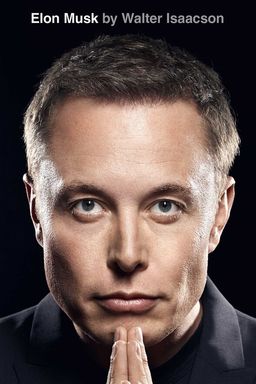
What does it take to turn impossible dreams into industries? In Elon Musk, Walter Isaacson portrays a man forged by early brutality, driven by cosmic-scale ambitions, and governed by a mind that fuses physics, psychology, and obsession. Musk’s life moves from a bruised boyhood in South Africa to the corridors of Silicon Valley, through rockets in the Pacific and factory tents in Fremont, to his turbulent conquest of Twitter. At each stage, the same governing narrative recurs: suffering transforms into drive, and drive transforms into systems that reorder entire sectors.
Forged in pain
Isaacson begins with the crucible. Musk’s childhood—abuse at school, a tyrannical father, a survival camp designed to break boys—produces a stoic armor. Pain becomes an organizing idea: if you can endure the brutal veld, you can endure a launch failure. You see how this childhood wiring yields an adult who welcomes pressure, preferring environments of near-collapse where most people would quit. Musk’s father Errol serves as a dark template—both engineer and emotional oppressor—teaching young Elon that control equals safety. That wound later manifests as “demon mode,” an alter ego of cold rationality mixed with fury.
The pattern of creation
Musk’s companies follow a recurrent pattern: find a domain bound by high cost and inertia, re-derive its principles from physics, build iteratively, and vertically integrate until you own the stack. Whether it’s NASA-era rocketry or the century-old car industry, he looks for fat interfaces where complacency lives. His success—Falcon 1, Model S, Starlink—follows not romantic creativity but applied systems thinking. Failures and volatility are not exceptions but part of a learning algorithm shaped by trauma and first-principles logic. When SpaceX rockets explode or Tesla verges on bankruptcy, Musk doubles down rather than retreats. Crisis is the stimulant that brings clarity.
First principles, not convention
At the core of Musk’s cognitive style lies “first-principles thinking.” He breaks problems down to physics and cost of materials, rejecting the industry’s inherited dogmas. You see it when he calculates the raw material cost of a rocket mid-flight after being quoted millions, realizing the disparity—what he calls the “idiot index.” You see it when he questions every manufacturing requirement: “Who wrote it, and is it still valid?” That mental model—shared by scientific revolutionaries from Feynman to Jobs—becomes the foundation of his innovation system.
The algorithm of production
In Tesla’s Gigafactory and Fremont lines, Musk operationalizes his instinct into a compressed sequence called “the algorithm”: question every requirement, delete what doesn’t need to exist, simplify what remains, accelerate it, then automate. It reverses normal industrial logic. Instead of assuming automation eliminates waste, he argues you must delete waste first or you’ll automate stupidity. The result is tangible—simpler robot designs, less capital burnt, faster throughput—and also cultural: a worldview that rewards problem destroyers over process managers.
The cost of intensity
Musk’s relentless intensity, however, exacts a toll. Employees describe “hardcore” cultures where nights blur into dawns, engineers sleep under desks, and crises become identity. Isaacson captures both triumphs and casualties: the Falcon 1 salvation came after crushing failures; Tesla’s survival in 2008 nearly bankrupted Musk personally. His style delivers breakthroughs but drains human reserves. As with Steve Jobs or Jeff Bezos, Musk’s temperament divides observers: tyrant or visionary? Isaacson’s answer is both—and necessarily so, given the speeds at which Musk demands the future be built.
Personal wounds and public theater
The book also reveals how personal chaos intertwines with corporate destiny. Marriages, losses, and bouts of near-collapse mirror company thresholds. During Tesla’s darkest months, Musk slept in the factory; during Twitter’s chaos, he relived childhood bullying on a global stage. His relationships—Justine Wilson, Talulah Riley, Amber Heard, Grimes—reflect cycles of union and estrangement that eerily parallel product crises. Emotional fractures fuel public performance: the sink-in-hand at Twitter HQ, or late-night tweets that shake markets. Musk’s life blurs entrepreneur, myth, and self-motivating symbol.
The grand unification
Isaacson ultimately frames Musk’s empire—SpaceX, Tesla, Starlink, Neuralink, Optimus, Twitter—as connected layers in one meta-project: ensuring humanity survives and remains interesting in an AI-dominated cosmos. Rockets to spread life; solar and EVs to sustain life; AI and neural interfaces to evolve life; and social media to arbitrate ideas among life forms. The coherence may seem grandiose, but Musk lives by such scale. You see that the man who once imagined Mars as refuge for suffering also built it as proof that endurance can redeem pain. His story is personal and planetary at once—a mirror of human ambition stretched to technological extremes.
Core insight
Isaacson’s Musk is not just a CEO but a psychological engine powered by injury, imagination, and iteration. Understanding him means understanding how suffering fuels system design—and how human volatility and cosmic purpose can coexist in one relentless mission to redesign civilization.