
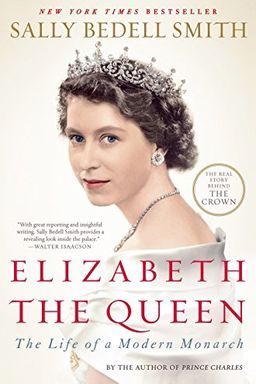
Elizabeth the Queen cover

Elizabeth the Queen

by Sally Bedell Smith

Elizabeth the Queen offers a captivating look into the life of Queen Elizabeth II, exploring her journey as a monarch navigating the complexities of tradition, family, and politics. Through compelling stories and insights, this biography reveals her enduring influence and remarkable ability to adapt, making it essential reading for anyone interested in leadership and resilience.

Duty and Adaptation: The Making of a Modern Sovereign

How do you sustain a monarchy in a democratic age? The life and reign of Elizabeth II show that the secret lies in a disciplined apprenticeship, emotional self-control, and an agile balance between tradition and modern adaptation. From the moment she became heiress presumptive in 1936, her education, relationships, and public performances were methodically calibrated to forge a sovereign who ruled not by decree but by example. What emerges is a portrait of continuity reimagined—an institution that survived by appearing stable while constantly modernizing beneath the surface.

Apprenticeship and formation

You begin with Elizabeth’s rigorous training: Marion “Crawfie” Crawford encouraging curiosity through literature and current affairs; Henry Marten at Eton teaching constitutional law; nannies like “Allah” Knight creating habits of precision and restraint; and wartime exposure through her service in the Auxiliary Territorial Service, where she learned to repair engines and drive trucks. Each discipline taught mastery of self and system—the notion that monarchy survives not through command but through consistency. (In Walter Bagehot’s words, power resides partly in the mystery of restraint.)

Marriage as institution

The relationship between Elizabeth and Philip Mountbatten exemplifies how private life can serve constitutional ends. Their union was both devotion and duty: Philip brought vitality, impatience, and pragmatic modernity; Elizabeth offered steadiness and ritual mastery. The balance between these two poles—her reflective composure and his restless enterprise—spurred the monarchy’s modernization, producing projects like the Duke of Edinburgh’s Award and a new domestic model of partnership within hierarchy.

Coronation, neutrality, and symbolism

Her 1953 coronation fused medieval consecration with mass-media spectacle. The compromise to televise the ceremony without filming the sacred anointing represents her lifelong pattern: reveal enough to sustain relevance, retain enough to preserve mystique. This dual mastery—public access balanced by ritual privacy—also defined her constitutional approach. The Queen’s weekly audiences with prime ministers demonstrated the art of influence without interference, turning the unwritten British Constitution into an exercise in moral persuasion rather than assertive rule.

Public figure and private stabilizer

In her daily life the Queen became an administrator and performer. Red boxes, investitures, formal audiences, and codified gestures—the handbag, the walk, the smile—were instruments of authority. Yet private rituals of routine humanized her: corgis, horses, diaries, and simple pleasures like a gin and Dubonnet before lunch. To modern eyes this might seem eccentric, but each habit reinforced stability and self-possession in an age of rapid change.

Global identity and soft power

Beyond Britain, Elizabeth defined herself through the Commonwealth—an evolving post-imperial network she treated as family. Her global tours after the coronation, her presence in Ghana and Lusaka, and her diplomatic empathy turned ceremonial appearances into instruments of continuity. She used what Joseph Nye calls “soft power”: symbolic presence, attentiveness, and grace. Horses and the yacht Britannia became extensions of this diplomacy—personal passions converted into bridges across nations.

Modern crises and reinvention

The Queen’s resilience shines in moments of turbulence: family scandals, the Windsor Castle fire, Diana’s death, and media invasions all threatened legitimacy. Yet her instinct for calm adaptation—tax reforms, televised statements, and strategic modernization of palace management—demonstrates institutional intelligence. By the Golden Jubilee of 2002, she had become not only Queen but matriarch of national emotional life, capable of reflecting public grief and orchestrating collective healing through ritual.

Continuity through generational renewal

Her later years reveal a monarchy repositioned for the digital age. The wedding of William and Catherine, the creation of the Sovereign Grant, and online engagement through digital channels show how the system balances young accessibility and venerable restraint. The Queen’s transformation from distant sovereign to relatable elder symbolizes an institution that endures because it learns, listens, and evolves slowly enough to appear timeless.

Central insight

Elizabeth II’s reign teaches that stability is not the opposite of change—it is the disciplined management of change. Her monarchy, as apprenticeship of duty and adaptation, proves that tradition need not resist modernity; it can transmute it into renewed trust.


Learning to Rule: From Childhood to Crown

You watch Elizabeth’s development from shy princess to prepared sovereign through a unique curriculum that mixed intellectual study, ritual training, and wartime experience. Marion Crawford fostered reading and empathy; Henry Marten taught constitutional ambiguity—the idea that the monarch’s role is moral and consultative, not executive. During World War II, Elizabeth learned to repair engines, drive military trucks, and mix with ordinary soldiers. That practical education grounded the monarchy in shared experience rather than privilege.

Habit and discipline

Her domestic training, often dismissed as aristocratic etiquette, built the skills of calm and restraint required for public exposure. Nannies and tutors instilled rituals of control—from table manners to diary-keeping. You realize that this domestic microstructure becomes constitutional preparation: respect, routine, and meticulous decorum are moral codes turned into governance behavior.

Wartime and empathy

The wartime years shaped her empathy. Living under bombardment at Windsor Castle and serving in the Auxiliary Territorial Service gave her a rare connection to ordinary citizens. When she inspected troops or learned mechanics, she acquired credibility that later translated into respect among veterans and engineers alike. The monarch who “has done her bit” earns moral capital impossible to fake.

Artistic and cultural education

Portrait sittings, music, French lessons, and cultural exposure rounded out the apprenticeship. Sitting for sculptors since age seven taught patience and presence. Reading historical novels and maintaining a daily diary helped her track emotional and national continuity—the craft of self-documentation that underpinned her later constitutional memory.

Key takeaway

Effective kingship in a democracy demands preparation in empathy, restraint, and history. Elizabeth’s formation shows that leadership grounded in disciplined habits can convert inherited privilege into earned respect.


Private Partnership and Public Office

The marriage between Elizabeth and Prince Philip was both intimate and constitutional. Their courtship—from Dartmouth cadet visits in 1939 to the 1947 Westminster Abbey wedding—defined a postwar monarchy’s private heart. Philip’s forthright temperament challenged court protocol; Elizabeth’s calm absorbed that energy. Together they produced a partnership that blended love with institutional compromise.

Balancing roles

Philip sacrificed a navy career and endured humiliation when the royal house name remained “Windsor.” His frustration—captured in his “bloody amoeba” remark—illustrates how marriage to the Crown demands self-effacement. Yet he shaped youth programs, Commonwealth initiatives, and estate management, helping modernize royal operation without challenging Elizabeth’s constitutional reserve.

Emotional equilibrium

Privately, they shared humor, frankness, and mutual respect. Philip’s teasing offset the Queen’s solitude; her steadiness grounded his impatience. This emotional choreography provided resilience for decades of public scrutiny and family disruption. In a monarchy of formality, theirs was a rare equality sustained by wit and tolerance.

Insight

The royal marriage reveals that even rigid institutions depend on private trust. Personal familiarity can sustain public performance when ritual alone would not.


Crises, Reform, and the Media Age

Modern visibility changed monarchy forever. From the televised coronation to the 1969 documentary Royal Family, Elizabeth II engaged broadcasting to humanize the institution. Yet media access proved double-edged: the Annenberg editing controversy and later Diana’s televised confessions illustrated how exposure could erode mystique. You watch the Queen adjusting—permitting formal broadcasts but restricting private access—crafting controlled openness.

The 'Annus Horribilis'

Family meltdown in 1992—divorces, Windsor fire, scandal—triggered fiscal and symbolic reform. The Queen agreed to pay taxes and open palace rooms to visitors. Grief over Diana’s death in 1997 required new emotional tone: at first criticized for silence, she pivoted with a televised speech that transformed national mourning into unity. That adaptation marked a watershed where monarchy met the emotional expectations of media democracy.

The Palace and press management

Episodes like the Sophie Wessex sting, the Burrell trial, and the Mirror footman infiltration prompted creation of a professional communications office. Figures like Simon Walker, Samantha Cohen, and Ailsa Anderson modernized press relations, integrating legal responses, rapid briefings, and digital balance. The Palace learned that reputation management is part of constitutional survival.

Core idea

Institutions endure online scrutiny only when they internalize communication ethics—combining transparency with respect for mystery. The Queen’s careful media evolution made the monarchy both visible and protected.


Reform and Responsibility

Institutional survival required financial and managerial transformation. The Peat Report (1,393 pages, 188 recommendations) modernized administration, while the 2010 shift to the Sovereign Grant restructured finance. These reforms linked royal funding to Crown Estate profits and invited external auditing—unprecedented transparency for a historically opaque system.

Fiscal adaptation

Facing public scrutiny and political austerity, the Queen accepted cuts and oversight. Buckingham Palace repairs, canceled events, and recycled wardrobe became gestures of solidarity. This visible modesty communicated accountability—a crucial symbolic act for legitimacy.

Organizational renewal

Under Airlie and Peat, the court began to resemble a modern public institution with HR departments, collection management, and operational audits. Confidential culture—the “ring of silence”—remained, but structural professionalism replaced aristocratic informality. Transparency became not a threat but a strategy for resilience.

Key lesson

An institution preserves dignity not by refusing change, but by controlling its pace. Elizabeth’s fiscal modernization shows that slow accountability beats sudden revolution.


Generational Renewal and Cultural Diplomacy

As the twenty-first century unfolded, the monarchy’s renewal required both cultural reach and generational transition. The Queen’s passions—horses and seafaring—became diplomatic connectors, while William and Catherine’s marriage reenergized youth appeal worldwide.

Soft power through affinity

Racing triumphs like Dunfermline’s wins and engagements with Monty Roberts’ humane horsemanship illustrate how tradition embraced innovation. The yacht Britannia served as mobile diplomacy—hosting leaders and symbolizing continuity. (She wept at its decommissioning, a reminder that symbols carry emotional infrastructure.)

Passing the torch

William and Catherine’s wedding in 2011 was a deliberately modern act: social-media announcements, charitable donations, and open accessibility combined with Westminster grandeur. Their global travels improved royal favorability and recast monarchy as approachable, multicultural, and emotionally intelligent. By enabling their freedom within structure, the Queen secured the monarchy’s long-term audience.

Enduring insight

Continuity demands succession and cultural empathy. The Queen’s mix of personal diplomacy and intergenerational empowerment created a monarchy that adapts across eras without losing identity.

Dig Deeper

Get personalized prompts to apply these lessons to your life and deepen your understanding.

Go Deeper

Get the Full Experience

Download Insight Books for AI-powered reflections, quizzes, and more.