
Idea 1
Rethinking Life’s Third Act: What Elderhood Really Means
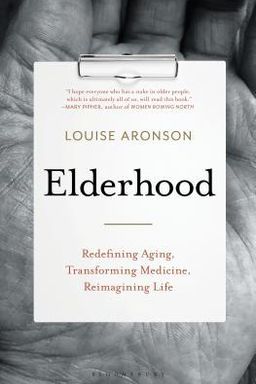
What happens after adulthood? Louise Aronson’s Elderhood urges you to see old age not as a slow collapse but as the third act of a long, complex human drama. She reframes later life—often decades long—as a distinct developmental stage with its own aims, identity, and moral imperatives. In doing so, she asks medicine, society, and you to rethink what it means to live well and age with purpose.
From childhood to elderhood: reframing the story
Aronson invites you to picture life as a three‑act play: Act I (childhood), Act II (adulthood), and Act III (elderhood). The cultural mistake is assuming that Act III is just a drawn‑out ending. In reality, because human longevity has doubled in recent centuries, this final stage is now long enough to contain its own sub‑acts: vitality and discovery, adaptation and loss, resolution and reflection. How you name this stage—old age versus elderhood—shapes what you expect from it, how clinicians treat it, and whether policymakers see it as an opportunity or a cost.
Language, stereotypes, and moral blindness
In a classroom experiment by Guy Micco that Aronson recounts, students wrote words like “wrinkled, slow” for “old” but “wise, respected” for “elder.” The exercise proves how language cleaves experience into prejudice and aspiration. You can be both vulnerable and wise; culture flattens that duality. Language matters because ageism—like racism or sexism—translates easily into structural harm: fewer resources, lower expectations, and institutional neglect.
Third age versus fourth age
Building on thinkers like Peter Laslett, Aronson distinguishes the “Third Age” (active, post‑work life full of choice) from the “Fourth Age” (frailty and dependence). But unlike those who romanticize one and fear the other, she insists that elderhood encompasses both. Justice demands care and dignity for every phase. Otherwise, as scholars Gilleard and Higgs warn, society risks exalting the “young‑old” while making the frail effectively invisible.
The price of medical and cultural blindness
Medicine magnifies cultural bias. Doctors are trained to fix organs rather than guide people through life stages. The standard model—grounded in the 70‑kg male “Norm”—neglects the physiology, social needs, and aspirations of the old. When Aronson calls geriatrics “necessary but not sufficient,” she admits her own early bias and challenges readers to recognize how structural values make the final third of life less humane than it could be. A health system that treats longevity as pathology instead of achievement makes suffering inevitable.
What elderhood asks of you
If you recognize Act III as a real stage, you plan for it with intention—not denial. That means preparing your finances, housing, and social circles as deliberately as you once prepared for work and family. It means asking clinicians not only for survival but for sustained function: “Will this help me walk to the library or talk with my grandchildren?” It means naming the identity—using “elder,” not “senior”—and claiming the dignity that follows.
“You can have good medical science without care, but you cannot have good medical care without science.” —Aronson’s summary of the balance she hopes society will reach.
In essence, Aronson’s message is both philosophical and practical: you live longer than previous generations, but the meaning of those decades depends on how you and your culture conceive them. Naming elderhood as a full chapter—an age of agency, adaptation, and worth—is the first step toward shaping humane policies, resilient medicine, and lives that feel whole from first act to last.