
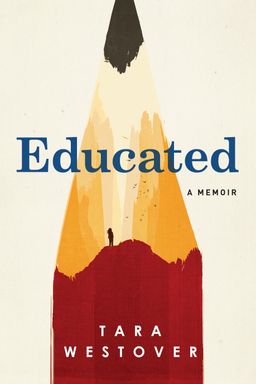
Educated cover

Educated

by Tara Westover

Educated is Tara Westover''s riveting memoir of self-discovery and triumph over her unconventional upbringing in rural Idaho. Despite being born to survivalist parents and lacking formal education, Tara''s journey from isolation to earning a PhD at Cambridge is a powerful narrative of resilience and the transformative power of education.

Becoming Educated: From Isolation to Self-Invention

How do you reassemble identity when the knowledge you inherit denies the world you enter? In Educated, Tara Westover traces how a girl raised in rural Idaho without formal schooling, state records, or medical care transforms herself into a Cambridge PhD. The book is less a linear autobiography than a study of consciousness: how radical isolation, ideology, and trauma shape what you believe is true—and what it costs to unlearn it.

The mountain as home and prison

Westover’s childhood on Buck’s Peak is framed by her father’s survivalist worldview: the government is corrupt, doctors are agents of sin, schools brainwash faith, and the end times are near. Her family’s life revolves around preparation—stockpiling peaches, burying fuel tanks, hiding rifles—and the ideology of self-reliance that borders on paranoia. “Next time, it could be us,” her father says after hearing about a federal siege. That conviction forms the air she breathes; distrust becomes identity.

Life off the grid offers both freedom and distortion. Without birth certificates or school attendance, Tara literally does not exist to the state. That invisibility becomes metaphorical—a sign of erasure and an excuse for control. Her father, Gene, preaches that obedience equals salvation. To him, medical care shows greed, schooling invites sin, and the government tracks bodies the way false prophets track souls.

The practical face of ideology

Isolation is never only spiritual. The Westover home is a junkyard quarry of danger and devotion: cutting scrap metal, melting engines, handling explosives. Accidents pile up—burns, concussions, falls—but are treated with herbal salves and prayer. Trauma becomes routine, sanctified as proof of divine protection. Violence also migrates indoors. Tara’s brother Shawn—alternately protective and brutal—embodies the family’s tension: tenderness twisted by fear and power. To survive, Tara internalizes toughness and silence, learning that pain earns respect.

Education as crisis and deliverance

When Tara follows her brother Tyler to college, education functions as both escape and initiation. At Brigham Young University, she discovers her ignorance—she misreads the syllabus, confuses world wars, and fails Western Civ—but also learns to study. A classmate’s blunt advice, “Read the textbook,” becomes revelation. Slowly, she teaches herself academic discipline: flashcards, study groups, and the humility of ignorance. Knowledge no longer equals rebellion; it becomes tool and shelter.

That awakening deepens when she encounters public history. A lecture on civil rights reframes her brother’s racial slurs as participation in systemic violence rather than crude provocation. She begins to recognize how words, once treated as family jokes, tie local cruelty to global injustices. Education doesn’t just add facts—it changes hearing, rewriting the scripts that shaped her shame. (Note: Readers of memoirs like Jeannette Walls’ The Glass Castle will recognize a similar interplay of trauma, independence, and self-education.)

Mother’s rise and internal power shifts

Tara’s mother, Faye, grows from timid assistant to commanding midwife and herbalist. Her midwifery practice grants both economic agency and community respect. The irony is sharp: the family’s anti-establishment stance depends on the money and medical authority of the very woman that doctrine subordinates. When her husband nearly dies in an explosion, Faye’s healing salve saves his life and becomes a lucrative brand. Through care, commerce, and belief, she attains power—but always inside the frame her husband built.

Memory, evidence, and reconstruction

Part of what makes Westover’s story radical is its commitment to uncertainty. She acknowledges that even within her family, memories of the same events diverge. In footnotes, she admits, “I don’t know which account to believe.” That humility reframes the memoir not as a sealed record but as inquiry: how can anyone testify truthfully about a past that fractured them? Education, then, is both epistemological and emotional—it teaches not only how to know but how to doubt.

Becoming through contradiction

The arc—from mountain to Harvard—reads like myth, but Westover insists that emancipation has costs. Each credential widens the distance from her family, who read her success as betrayal. When her father refuses medical treatment or calls her studies satanic, she must decide whether truth is loyalty or freedom. In the end, she chooses self-definition, echoing Emerson’s self-reliance transposed into female voice. “You can love someone and still choose to say no,” her journey teaches. Education does not erase the mountain; it teaches her how to stand on it with open eyes.


Faith, Fear, and the Architecture of Control

The Westover family’s faith is not a communal religion but a bespoke architecture of control. Gene’s reading of scripture grants him prophetic authority. He weaponizes verses to prohibit schooling, medicine, and even store-bought milk. His sermons produce rules as law: butter is sin, government aid is corruption, and loyalty is salvation. The home becomes both temple and bunker.

The performance of righteousness

Gene enacts belief theatrically. He stages revelations at breakfast, demands “end-time rehearsals,” and defines family virtue through resistance. Every household task becomes a moral test. Grandma-down-the-hill’s purchase of milk becomes rebellion; Tyler’s textbooks, heresy. The religion is experiential—the Bible meets the junkyard. In this system, obedience replaces reflection. To question the patriarch is to challenge God.

The cost of obedience

Such control extracts loyalty through fear. Family members internalize risk as virtue: pain becomes evidence of faith. After car crashes and machinery injuries, Gene forbids hospitals, forcing the family to treat gangrene and burns with home remedies. Survival validates his prophecy—every healed wound becomes proof that God rewards defiance of worldly systems. In this loop, suffering becomes self-renewing belief. (Note: This structure echoes anthropological patterns of closed charismatic movements.)

Women and silent resistance

Yet beneath submission, women improvise agency. Faye negotiates with institutions—registering births, installing a phone—when practicality demands it. She earns money, bends rules, and subtly redefines her space. Tara learns from watching her: power can be exercised through competence, not confrontation. Their small acts—signing papers, attending theater, buying jeans—chip away at a total system without detonating it.

Freedom begins as detail

What breaks authoritarian cultures is rarely revolution; it’s the cumulative friction of small pragmatic defiance.

Control, as Westover shows, relies on fusing theology to everyday life. It thrives when dissent feels like sin and obedience feels like love. Breaking from it requires new categories of thought—and the courage to distrust inherited certainty.


Work, Violence, and the Cult of Toughness

Growing up in the Westover junkyard means equating danger with virtue. Physical risk becomes moral proof: the more pain you endure, the purer your faith. This ethos, designed as survivalism, develops into a cult of toughness that blurs accident and abuse. To live within it, you must normalize injury until it disappears as category.

Accidents as ritual

The family’s work landscape—industrial machines, sharp metals, explosive torches—produces maiming as rhythm. Crashes and fires are met not with outrage but endurance. After the car accident that leaves her mother with a brain injury, there is no doctor, only herbs and guesswork. After Luke’s burns or Shawn’s concussions, treatment becomes improvisation. Pain is instruction, not emergency.

Shawn’s escalating violence mirrors this environment. His assaults on Tara—twisting her wrists, shoving her head into toilets—embody the house’s logic: discipline equals care, dominance equals protection. Each apology resets the system. Family members collude through silence, partly from love, partly from fear. Violence becomes a language of belonging; to protest it seems like betrayal.

When toughness becomes identity

Tara learns to see herself as indestructible. Blood, bruises, and burns are badges of loyalty. This self-perception delays her recognition of abuse; it also undergirds her later resilience. The same endurance that kept her alive under her father’s rule becomes the muscle that powers her education. But unlearning toughness is its own labor—you must admit injury to heal it.

Strength that erases self

Accepting pain as proof of worth turns survival into submission; bravery without boundaries becomes bondage.

In this world, every scar doubles as scripture. Westover doesn’t romanticize toughness—she exposes its double-edge. Real growth, she shows, begins when you redefine strength as the capacity to doubt, not just the ability to endure.


Learning to Learn

Tara’s earliest act of rebellion is educational, but it begins with ignorance. At BYU she fails her first exams not because she lacks intelligence but because she lacks translation—the tacit rules of schooling. When a classmate instructs her, “Read the textbook,” the simplicity feels radical. From that moment, she converts curiosity into method.

From chaos to structure

She adopts small disciplines: flashcards for art names, late-night study sessions, and conversations with professors. Institutional scaffolding—syllabi, grading curves, dropped exams—grants her room for recovery. Over time, failure becomes diagnostic rather than damning. That process redefines intelligence as persistence and pattern recognition rather than innate gift.

Education here is portrayed as craft, not revelation. Each exercise—memorizing names, rewriting notes, seeking feedback—embodies humility. The world expands through procedure. For the reader, it’s a tutorial in self-invention: replace inherited faith in destiny with practiced faith in iteration.

Cultural translation

Academic norms also teach social languages—how to ask questions, dress appropriately, hold a conversation. Those lessons expose decades of silence. In classrooms and cafeterias, Tara negotiates shame at ignorance and guilt at success. Each new competence signals distance from home. The more fluent she becomes in institutional culture, the more estranged she feels from family dialect.

Discipline as translation

Learning how to study means more than absorbing facts—it means learning how systems codify value and how to navigate them without losing your origins.

By mastering academic forms, Tara earns access to worlds her father feared. What began as a single directive—“read the textbook”—becomes the principle of her life: knowledge is earned through sustained attention, and that attention remakes who you are permitted to be.


Crossing Worlds: From BYU to Cambridge

When Tara earns scholarships to Cambridge and later Harvard, she’s no longer fleeing the mountain; she’s constructing a parallel one—built of books and mentors instead of junk steel. Her professors, Dr. Kerry and Professor Steinberg, become midwives of intellect. They demand rigor and offer belief in equal measure.

Mentorship and validation

Steinberg’s exclamation that her essay is “one of the best” destabilizes her. Praise, unfamiliar and dangerous, triggers panic rather than pride. Self-doubt, long trained by paternal criticism, whispers fraudulence. Dr. Kerry’s gentle correction—“You are gold”—becomes a counterspell. Mentorship here functions as reparenting, offering external mirrors that help shape an internal self she can finally trust.

Intellectual identity and loss

Academic triumphs come with emotional dislocation. Each fellowship widens distance from the family’s world. When she speaks at commencements or receives the Gates award, her parents’ absence wounds more than strangers’ applause can heal. Education grants autonomy but severs belonging. Success, she learns, carries exile as its shadow.

Yet the new world also provides ethics. Historical study teaches her to test sources and scrutinize evidence—skills she then turns on her own past. Doubt, once punished, becomes discipline. In Cambridge libraries, she learns to write what she could not say at home: that memory is fallible but truth-seeking honorable.

Education as mirror

Institutions do not simply confer knowledge; they reflect possibility back at you until you decide which reflection to inhabit.

By the time Tara completes her doctorate, she is fluent in both skepticism and sympathy. She acknowledges that self-creation exacts loss but insists that it does not require hatred. “I am not trying to prove my father wrong,” she writes; “I am trying to see him.” The final education, then, is learning that freedom and compassion can coexist.


Rewriting Self and Truth

The memoir’s last movement returns to epistemology: how do you trust a memory shaped by fear? Westover stages her own unreliability through footnotes—conflicting recollections of injuries, burnings, arguments. Rather than correcting them, she preserves variation. In doing so, she treats testimony as mosaic rather than monolith.

Memory as moral practice

Acknowledging uncertainty becomes ethical. It resists the absolutist logic of her father’s world. Where he demanded single truth, she permits coexistence of partial ones. This humility is not weakness—it’s the intellectual honesty education aimed to teach. (Note: This echoes Joan Didion’s assertion that memory is both creation and defense.)

Integration over escape

By the end, the question is not whether she has escaped but whether she can integrate the selves she’s lived. The mountain child, the BYU student, the Cambridge scholar—each holds fragmentary truth. She no longer disavows her origins; she contextualizes them. Her father’s survivalism, her mother’s healing, and her own scholarship coexist in tension but not annihilation.

Education as act of seeing

To be educated, Westover proposes, is not merely to accumulate facts but to develop the ability to witness your own story without submitting entirely to it.

In the end, she measures progress not in degrees but in perspective: the capacity to ask questions once forbidden and to hold love and truth in the same breath. The mountain remains—immovable, mythic—but now it stands in her mind as both error and origin, the foundation of the education she spent her life constructing.

Dig Deeper

Get personalized prompts to apply these lessons to your life and deepen your understanding.

Go Deeper

Get the Full Experience

Download Insight Books for AI-powered reflections, quizzes, and more.