
Idea 1
Reforming Democracy to Save Global Growth
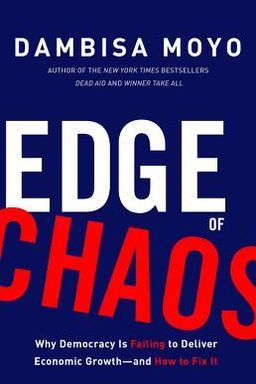
What happens when the very system designed to bring prosperity begins to undermine it? Economist Dambisa Moyo poses this question in Edge of Chaos, arguing that modern democracies—once engines of economic and social progress—are now shackled by short-term political thinking that stifles growth and destabilizes societies. She contends that to restore prosperity and stability, democracies must undergo radical structural reform to realign incentives, constrain short-termism, and enable long-term decision-making. The book merges economic analysis with political critique to reveal why today’s global system teeters on the edge of collapse and what can be done to pull it back.
Moyo’s central claim is that political myopia—the dominance of short-term interests in democratic governance—is the root cause of sluggish economic growth. Politicians want to be re-elected, so they cater to immediate voter desires rather than pursuing policies that may yield benefits only years or decades later. According to her, this tendency has produced crippling debt, massive income inequality, decaying infrastructure, and poorly educated workforces. Only by reengineering the way democratic systems function can nations regain sustainable growth and avoid social and political collapse.
Why Economic Growth Matters
Moyo begins with a simple premise: growth is not a luxury—it’s a necessity. Economic growth underpins everything we associate with progress—longer life expectancy, better healthcare, higher education, and political stability. Without growth, societies fracture, producing unemployment, poverty, populism, and unrest. She uses historical examples like post-apartheid South Africa, the French Revolution, and Greece’s debt crisis to show that when growth stalls, social cohesion breaks down. For individuals, stagnation means frustration and diminished opportunity; for whole nations, it can mean revolution.
Growth, Moyo reminds us, is driven by three essential inputs—capital, labor, and productivity. When these pillars weaken, the economy falters. She charts how postwar America thrived by harnessing all three—funding vast infrastructure projects, expanding education through the G.I. Bill, and boosting productivity through innovation. But now, each pillar faces peril: debt constrains investment (capital), aging populations and poor education weaken the workforce (labor), and technology, instead of creating new jobs, eliminates them (productivity). The convergence of these headwinds, she warns, is unlike anything humanity has faced before.
The New Headwinds of the 21st Century
In the chapter aptly titled “Hurricane Headwinds,” Moyo identifies seven major global drags on growth: spiraling debt, natural resource scarcity, demographic decline, educational failure, automation, income inequality, and falling productivity. These forces, individually daunting, together form an unprecedented storm. She details how global debt has ballooned to unsustainable levels—over 300% of global GDP—and how nations from Greece to the U.S. face the same trap: short-term borrowing for political convenience that limits future investment.
Meanwhile, resource scarcity—particularly in water, minerals, and farmland—raises the specter of future conflict. The same technological advances that once powered growth now displace workers at scale, creating a jobless underclass (an idea echoed by economists like Carl Benedikt Frey and Michael Osborne). Aging populations in developed nations strain pensions and healthcare budgets, while youth bulges in emerging markets fuel unrest when jobs are scarce. And even where recent innovations abound, Moyo notes, the measurement of “true” productivity gains is murky—many digital advances yield convenience, not broad-based growth.
The Political Root of the Economic Crisis
For Moyo, these economic challenges are symptoms of a deeper political disease. Liberal democracy, she argues, has become the victim of its own success. Politicians, constrained by short electoral cycles and beholden to the demands of voters, special interests, and lobbyists, prioritize short-term wins—tax cuts, subsidies, and consumption—over long-term investments in education, infrastructure, and innovation. Gridlock, partisanship, and populism further paralyze governance. The political design that once fostered liberty and accountability now incentivizes myopia.
Democracy, Moyo insists, is worth saving—but only through reinvention. She contrasts democratic capitalism, which historically spurred prosperity through free markets and transparency, with state capitalism (as practiced in China), which delivers fast growth but sacrifices freedom. In many developing nations, China’s model now appears more efficient. Unless democracies adapt—making policy less vulnerable to voter whims and more aligned with long-term interest—they risk losing global influence to authoritarian capitalism.
The Blueprint for Renewal
Moyo’s prescription is bold: reform democracy itself. She proposes a ten-point blueprint to reduce myopia and improve the quality of citizens and leaders. Her ideas include extending political terms to match economic cycles, implementing term limits to prevent entrenchment, tying politicians’ pay to performance, restricting campaign finance, mandating civic education, and even weighting votes according to voter knowledge. These measures, though controversial, aim to cultivate leaders and citizens capable of long-term thinking. They are not anti-democratic, she claims—they are pro-survival.
In essence, Edge of Chaos is a call to rebuild democracy as a system fit for twenty-first-century challenges. Moyo’s argument is stark but hopeful: we cannot rely on economic fixes alone, because our political architecture is broken. Only by redesigning democratic institutions—rewarding foresight over populism—can we harness capitalism’s creative power, rebuild trust, and restore the steady growth that keeps societies from plunging into chaos.