
Idea 1
Economics and the Pursuit of the Common Good
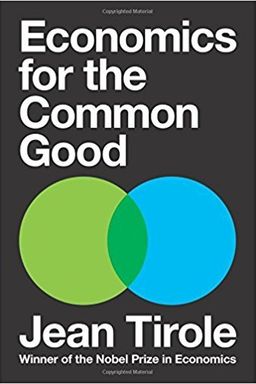
How can societies reconcile private incentives with collective welfare? In Economics for the Common Good, Nobel laureate Jean Tirole argues that economics is not a discipline of cold abstraction but a pragmatic science designed to align self-interest with the social interest. He invites you to think behind the veil of ignorance (borrowing from John Rawls and John Harsanyi): imagine choosing social rules without knowing your status, wealth, or talents. From that impartial vantage point, you would likely endorse institutions—insurance, education, rights—that protect everyone, especially the most vulnerable.
Tirole’s central claim is that economics provides the tools to achieve this balancing act. Markets are powerful information systems but not sacrosanct; left alone, they produce externalities, inequality, and monopolies. The state’s role is to establish the rules—taxes, regulations, and property rights—that realign incentives toward the common good.
Institutions as Instruments of Collective Design
Institutions are not moral abstractions; they are engineering devices that channel human behavior. A public insurance system is society’s way of pooling risk. Competition policy curbs abuses of market power. Spectrum auctions, which have raised tens of billions for governments since the 1990s, show how well-designed market instruments can harness scarcity efficiently. Likewise, carbon taxes or tradable permits make firms internalize the costs of environmental damage. For Tirole, good policies stem from precise diagnosis: identify whether a problem arises from information gaps, externalities, or missing markets, then design mechanisms accordingly.
Why Economics Often Feels Counterintuitive
Economic reasoning can offend intuition because your brain favors vivid stories over statistics. Tirole draws on behavioral research by Daniel Kahneman and Amos Tversky to show how heuristics drive public opinion. You see the identifiable victim but miss structural victims; you applaud rent controls yet ignore the shortages and queues they create. Genuine understanding requires following indirect effects—asking, after this, what next? When activists destroy confiscated ivory, for instance, the moral gesture may unintentionally raise prices and spur more poaching. Economics’ counterintuitive lens often safeguards you against well-meant but harmful actions.
Moral Limits, Market Design, and Institutional Creativity
Some resist markets on moral grounds—the feeling that “the world is not for sale.” Tirole agrees that certain goods lose their meaning when priced: friendship, honor, or university admissions cannot be bought without eroding trust and signaling value. But, he insists, indignation should start analysis, not end it. Problems like pollution or organ shortages often reduce to market failures—externalities, asymmetric information, or internal self-harm. Smart institutional design can restore efficiency without violating dignity. Alvin Roth’s kidney exchange, which matches donors across chains without money changing hands, exemplifies moral and economic creativity working together.
Economics as a Public Endeavor
Finally, Tirole asks what economists owe society. Expertise matters but must remain independent of political pressure, corporate funding, or populist backlash. His model economist speaks cautiously, admits uncertainty, and helps citizens reason about trade-offs instead of peddling slogans. Democracy and expertise complement each other: politics defines collective goals, economics clarifies feasible means. In that balance—between values and analysis—lies the true spirit of economics for the common good.
Key Idea
Economics equipped with moral humility and analytical rigor becomes a toolbox for collective intelligence—a guide for designing markets, institutions, and policies that protect fairness while embracing efficiency.