
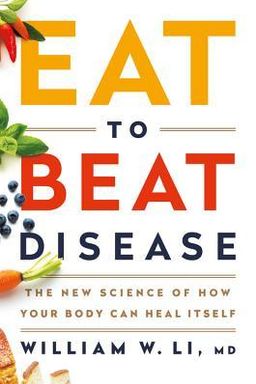
Eat to Beat Disease cover

Eat to Beat Disease

by William W Li

Eat to Beat Disease unveils the remarkable power of food to heal and protect the body. William W. Li explores how specific dietary choices can enhance your body''s defense systems against diseases like cancer, heart disease, and more. With scientific insights and practical advice, this book is a guide to harnessing the healing potential of food.

Your Body’s Hidden Defense Systems

What if health isn’t just the absence of disease but a dynamic system constantly repairing, regenerating, and defending itself? In Eat to Beat Disease, physician-scientist William W. Li reframes health as an active state maintained by five powerful biological defense systems built into your body: angiogenesis (the regulation of blood vessels), regeneration (stem cells), the microbiome (your internal ecosystem), DNA protection, and immunity. Li’s central claim is both optimistic and radical: by feeding these defense systems correctly, you can lower risk across a whole spectrum of illnesses—from cancer and heart disease to diabetes, dementia, and autoimmune disorders.

Health as an active fortress

Li invites you to imagine your body as a medieval fortress. The obvious stone walls are your skin and organs, but the real strength lies in hidden defenses—murder holes, moats, and gates that respond when invaders approach. The five defense systems are those hidden layers: internal


Mastering Angiogenesis Balance

Angiogenesis—the controlled growth and pruning of blood vessels—is one of your body’s most finely tuned systems. Dr. Li shows how this “plumbing of life” delivers oxygen and nutrients to tissues through sixty thousand miles of vessels, yet too much or too little vessel growth can tip the body toward disease.

The Goldilocks principle of blood vessel growth

When angiogenesis is out of balance, pathology follows. Excessive vessel growth feeds tumors, diabetic eye disease, obesity, and psoriasis; insufficient growth underlies chronic wounds, heart ischemia, neuropathy, and poor recovery from injury. Achieving vascular balance keeps microscopic cancers dormant—autopsy studies reveal that many healthy people carry tiny tumors that never become dangerous because they fail to recruit a blood supply.

Harnessing diet to modulate angiogenesis

Antiangiogenic foods—soy (genistein), tomatoes (lycopene), green tea (EGCG), and berries (ellagic acid)—have demonstrated measurable inhibition of new blood vessel formation in lab and clinical contexts. Conversely, certain foods can stimulate healthy vessel growth when needed: barley beta‑glucan or apple peel’s ursolic acid support post‑injury repair. The core insight is not to block angiogenesis entirely but to restore its equilibrium through food choices.

Key message

Angiogenesis is a precision system. Eating for vessel balance—favoring foods that prune excess growth while supporting repair—protects you simultaneously from cancer, vision loss, and cardiovascular disease.


Regeneration and the Power of Stem Cells

Your stem cells are the body’s “special forces of repair.” Dr. Li explains how these unsung units patrol, mobilize, and replace damaged cells daily, enabling recovery from wounds and preserving youthful tissue renewal. Without functional stem cells, organs degrade swiftly—blood, immune cells, and even neurons depend on their regenerative power.

How regeneration protects your body

Stimulated by signals such as VEGF and SDF‑1, stem cells leave their niches to home in on injury, rebuilding tissues or guiding repair with messenger molecules and exosomes. Clinical triumphs like bone marrow transplantation, autologous heart repair injections, and the use of induced pluripotent stem cells show the principle’s medical potency. Yet everyday life—smoking, pollution, excess sugar, and alcohol—damages stem cell functionality much earlier than disease does.

Foods that revive regenerative capacity

Cocoa flavanols, omega‑3‑rich fish oil, turmeric’s curcumin, and rice bran ferulic acid all enhance stem cell mobilization and protect against oxidative depletion. Li highlights studies such as a UCSF trial in which high‑flavanol cocoa doubled circulating endothelial progenitor cells and improved vascular health. Conversely, high‑fat or high‑sugar diets blunt this effect. Even certain plant pigments—like those in purple potatoes and walnuts—target cancer stem cells without harming normal regeneration, offering a “smart” dietary precision therapy.

Regenerative takeaway

What you eat determines how strongly your body renews itself. Foods that support stem cells strengthen resilience after injury, surgery, and even aging, while poor diets silently drain this hidden repair account.


The Microbiome Connection

Dr. Li likens the microbiome—some thirty‑nine trillion bacteria living in your gut—to a living rainforest that co‑manages your health. Diversity and balance in this ecosystem determine how you metabolize nutrients, regulate immunity, control inflammation, and even perceive mood through brain–gut signaling.

Microbial metabolites as healing molecules

Beneficial microbes ferment dietary fiber into short‑chain fatty acids (SCFAs) like butyrate and propionate—compounds that nourish colon cells, lower inflammation, and influence both angiogenesis and stem cell activity. Key species such as Akkermansia muciniphila maintain the gut barrier and are now linked to better cancer immunotherapy response.

Food as microbial habitat design

Fermented foods (kimchi, sauerkraut, yogurt, aged cheeses) inoculate your microbiome with beneficial bacteria. Prebiotic fibers from beans, whole grains, vegetables, and nuts feed them, ensuring microbial biodiversity. Westernized diets high in fat, sugar, and low fiber erode this diversity—Stanford mouse studies showed bacterial extinction across generations. Conversely, Mediterranean and polyphenol‑rich eating patterns restore beneficial strains.

Microbiome insight

Feed your microbes, and they will feed you. By shaping microbiota through fiber, fermented foods, and polyphenols, you amplify every other defense system inside you.


Protecting DNA and Epigenetic Health

Each cell in your body experiences thousands of DNA hits daily from UV rays, pollution, and metabolic stress. Dr. Li argues that health depends not just on avoiding damage but on orchestrating a multilayered defense—through repair enzymes, epigenetic control, and telomere maintenance—that food significantly influences.

Repair and resilience

Whole‑food antioxidants such as berries, citrus, and cruciferous vegetables have demonstrated DNA repair enhancement in comet assays. Kiwifruit and orange juice, for example, accelerated repair enzyme activity in human studies. Beyond antioxidants, compounds like sulforaphane, genistein, and EGCG activate tumor‑suppressor genes through epigenetic reprogramming—turning beneficial genes “on” and harmful ones “off.”

Telomeres and biological aging

Telomeres, the chromosome caps critical to aging, erode with stress and poor lifestyle. Li references Ornish and Blackburn’s GEMINAL research showing that a plant‑rich diet with exercise and stress management can lengthen telomeres. Coffee and green tea, often maligned for caffeine, in cohort studies correlate with longer telomeres and improved epigenetic profiles.

Genome defense summary

Your genetic destiny is not fixed. Through DNA‑protective foods—berries, crucifers, soy, tea—and lifestyle synergy, you can slow cellular wear and preempt disease mutations.


Building a Smarter Immune System

Your immune system is both intelligent and trainable. Dr. Li reframes immunity not as an on/off switch but as a precise regulator you can strengthen or calm through diet. He distinguishes two arms: innate (fast and broad) and adaptive (targeted and memory‑based). Both depend on nutrition, sleep, and the microbiome for optimal performance.

Feeding your immune defenses

Clinical studies in the book show measurable immune boosts from everyday foods. Broccoli sprouts raised natural killer (NK) T cells twenty‑two‑fold in a short trial. White button mushrooms increased salivary antibodies by 55%. Aged garlic improved NK cell activity by 30% and cut colds by 20%. Cranberry juice and blueberries enhanced T cell signaling and reduced infection rates. These results illustrate how food bioactives, not just supplements, can tune immunity in days.

Calming autoimmunity

Equilibrium also matters: an overaggressive immune response leads to lupus, rheumatoid arthritis, or multiple sclerosis. Li cites trials where green tea’s EGCG and vitamin C raised regulatory T cells (Tregs) and lowered autoimmune flare activity. Diets emphasizing vegetables and fermented foods, such as the autoimmune protocol and high‑vegetable, low‑protein plans, achieved remission rates above 70% in small IBD trials. The message: don’t suppress immunity, balance it.

Immune insight

Your immune system is malleable. Foods that modulate T cells, nurture gut bacteria, and supply anti‑inflammatory polyphenols create an immune response that’s “just right”—powerful but not self‑destructive.


From Nutrients to Food Doses

One of Li’s central innovations is the idea of food dosing—translating clinical results into usable quantities of food. Instead of abstract nutrient counts, he gives concrete servings that yield measurable biological effects.

Evidence‑based portions

Examples: one to two apples daily improved DNA repair in multiple studies; half a cup of cranberry juice before bed cut urinary infection recurrence by 40%; 100 grams of mushrooms per day increased antibody output. Aged garlic taken for ninety days raised T cells and reduced sick days by half. These human trials illustrate that specific doses make food behave like medicine.

The principle of balance

More isn’t always better. Li reminds readers via Paracelsus’s adage—“the dose makes the poison.” Modest, regular intake of diverse plant foods outperforms megadoses of any single one. Variety ensures coverage across multiple defense systems without nutrient imbalance or receptor fatigue.

Practical takeaway

Think in servings, not supplements. Determine how much and how often a food should be eaten to achieve real-world health effects—and combine them for synergy across systems.


Patterns That Sustain Longevity

Beyond individual foods, Dr. Li shows that dietary patterns—the overall way you eat—most powerfully shape your body’s defenses. The Mediterranean diet, rich in olive oil, legumes, seafood, fruit, and vegetables, boosts stem cells five‑fold, extends telomeres, supports microbiome diversity, and reduces chronic inflammation.

Fasting and metabolic reset

Intermittent fasting or time‑restricted eating activates regenerative signaling (SDF‑1/CXCR4) and rejuvenates hematopoietic stem cell production. Studies at USC showed fasting cycles could regenerate immune systems in animals, supporting the concept that strategic eating pauses strengthen defenses rather than deplete them.

Avoiding what undermines defenses

Processed meats, high saturated fat, added sugar, and artificial sweeteners damage microbiota and DNA, shorten telomeres, and blunt stem cells. The book’s rules are simple: eat diverse plants, include fermented foods, choose fish and nuts, limit processed items, and emphasize variety over restriction. Small improvements, consistently applied, compound into biological armor over years.

Behavioral insight

Health defenses are built daily, not instantly. Consistency and pattern—not perfection—determine whether your systems flourish or decay.


The 5×5×5 Framework in Action

Dr. Li’s 5×5×5 framework makes the science actionable. It aligns the five defense systems with five daily food picks and five eating occasions, turning evidence into a simple habit structure you can live by.

How the system works

Step one: identify your preferred health‑boosting foods categorized by which defense system they support. Step two: choose five each day (each covering at least one defense). Step three: spread them across meals or snacks—flexibility is key. This yields 35 healthy choices per week and over 1,800 per year without complex tracking. The focus is additive—adding powerful foods rather than removing pleasures.

Examples and archetypes

A day’s plan might feature nectarines for angiogenesis, dark chocolate for regeneration, broccoli stems for the microbiome, salmon for DNA protection, and tomatoes for immunity. Li designs archetypal strategies—batch cooking for busy parents, portable foods for travelers—to ensure anyone can adhere. Templates and photographed Preferred Food Lists keep it tangible.

Framework essence

By committing to five meaningful food choices per day, you harness your body’s five natural defense systems continuously—a micro‑habit that compounds into major health dividends.


From Kitchen to Table

The final section grounds Li’s philosophy in cooking, tools, and environment—showing that how you store and prepare food determines its effectiveness. A well‑set kitchen becomes your lab of longevity.

Cooking for bioactive preservation

Steaming conserves nutrients; simmering tomatoes releases absorbable lycopene; gentle roasting increases certain antioxidants. Deep‑frying and overheated oils create oxidized fats that impair DNA defenses. Even marinating meats with olive oil and turmeric reduces carcinogen formation on the grill. Li’s approach celebrates the art of cooking while honoring the chemistry beneath it.

Stocking the defensive pantry

He recommends extra‑virgin olive oil (monovarietal Picual or Koroneiki), nuts, whole grains, teas, dark chocolate, canned fish, and fermented condiments like miso. Removing old non‑stick pans and storing foods in glass prevents contamination that undermines nutrients. Example recipes such as walnut pesto, broccoli stem soup, or healthy chocolate mousse translate data into delicious meals.

Everyday insight

Your kitchen setup determines whether intent becomes action. Equip it wisely, cook simply, and your meals will naturally reinforce every defense system you’ve learned about.

Dig Deeper

Get personalized prompts to apply these lessons to your life and deepen your understanding.

Go Deeper

Get the Full Experience

Download Insight Books for AI-powered reflections, quizzes, and more.