
Idea 1
Bring Joy Back to Work by Fighting Stress and Rebuilding Connection
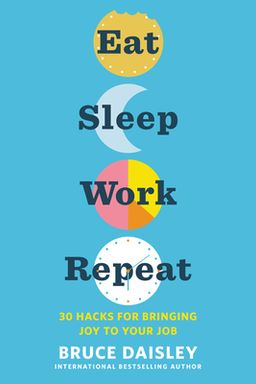
Do you ever wonder whether work really has to feel this stressful—or if there’s a way to rediscover excitement and satisfaction in what you do? In Eat Sleep Work Repeat, Bruce Daisley, former European Vice President of Twitter, argues that the modern workplace is exhausting us not because work itself is inherently bad, but because we’ve designed it badly. Constant connectivity, meaningless meetings, and hyperactive busyness have replaced focus, trust, and joy. His book is a manifesto for transforming this daily grind into a sense of purpose and community that helps people truly thrive.
Daisley believes that today’s work culture systematically diminishes creativity, collaboration, and psychological safety—the feelings that make us productive and fulfilled. Drawing on decades of research in organizational psychology, neuroscience, and real-world examples, he identifies the forces at work: long hours that hurt performance, tech-driven distractions, and outdated management ideas like stack ranking or presenteeism. The good news? He also finds clear, evidence-based solutions: small shifts in how we rest, relate, and reflect can radically enhance happiness and output.
Three Elements of Happier Work
The book’s structure revolves around three pillars for healthier, more human work. The first—Recharge—focuses on what we can do individually to restore energy and attention. The second—Sync—examines how to build trust and connection within teams. The third—Buzz—shows how teams can reach a creative, energized state that turns good work into great work. Each part contains simple, science-backed actions you can try immediately, from redefining your lunch break to designing social rituals that spark collaboration.
Why Work Feels Broken
Daisley starts by examining two “megatrends” that have reshaped work for the worse: constant connectivity and artificial intelligence. Smartphones have chained us to our jobs, erasing the line between work and home, while AI-driven automation raises anxiety about the relevance of human contributions. The stress of keeping up has reached epidemic proportions—83 percent of Americans report feeling stressed by their jobs. The problem isn’t just overwork; it’s the resulting loss of creativity. Drawing on the story of musician Julian Casablancas and The Strokes, Daisley illustrates how pressure kills originality. Under relentless scrutiny, we repeat the old instead of creating the new.
To survive in an AI-powered world, Daisley argues, human creativity and empathy become our real competitive advantage. But those capacities depend on rest, trust, and safety—exactly the things that modern corporate life undermines. So fixing work requires redesigning habits, not overhauling people. Work doesn’t need another motivational talk about passion or purpose; it needs environments that allow people to “love what they do” without burning out.
The Science of Psychological Safety and Positive Affect
A recurring theme in the book is the concept of psychological safety, pioneered by Harvard’s Amy Edmondson, and positive affect, a state of upbeat energy described by psychologist Alice Isen. When people feel emotionally safe to speak up, admit mistakes, and ask questions, teams learn and improve faster. When they experience positive affect—a genuine but subtle sense of good mood—they think more creatively, solve problems better, and cooperate. Together, these two ingredients create what Daisley calls a state of Buzz: the ultimate synergy of trust and enthusiasm in a team.
He illustrates this with examples like Pixar’s “Braintrust” meetings, where candid feedback is shared without undermining the creator’s authority, and with the story of hospital surgical teams who learned that admitting uncertainty saved more lives than maintaining hierarchy. Similarly, laughter in teams, as researcher Robin Dunbar shows, builds trust through endorphins; it’s not frivolous—it’s biological teamwork fuel.
A Blueprint for Reclaiming Joy
Throughout the book, Daisley weaves a hopeful, practical message: changing work starts with micro-experiments, not massive reforms. Try a “Monk Mode Morning” for deep focus. Host a social coffee break to rebuild sync. Ban phones from meetings to nurture authentic dialogue. Replace slides with short memos to encourage real thinking. And above all, he urges leaders to relinquish the outdated “mill owner” mentality—the idea that productivity comes from visibility and control. As Dan Kieran admits, even creative founders must wrestle their inner mill owner who demands bums on seats.
If overwork and burnout have become the new status symbols, Eat Sleep Work Repeat is a necessary antidote. Daisley isn’t promising a utopia; he’s offering a toolkit for realistic renewal. The book’s central question—What if you could fix work by making it more human?—becomes both a challenge and an invitation. By restoring time to think, space to laugh, and permission to rest, you can rediscover not only engagement but pride in what you do. The joy of work, Daisley shows, isn’t gone; it just needs better conditions to grow again.