
Idea 1
Small Daily Choices Create a Long, Healthy Life
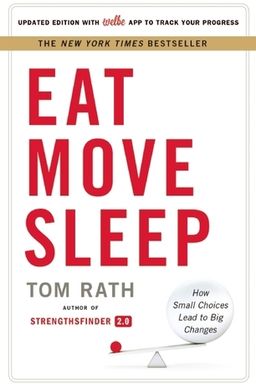
Have you ever wondered why some people seem to age gracefully while others struggle with preventable diseases? Tom Rath’s Eat Move Sleep makes a bold claim: your everyday choices — the food you eat, the movement you make, and the sleep you get — shape not only how long you live but how well you live. Rath argues that health is not built by grand transformations but by a series of small, daily decisions that compound over time. In a world obsessed with quick fixes and fad diets, his message is simple and profound: treat eating, moving, and sleeping as interconnected behaviors that influence each other continuously.
Rath’s urgency stems from personal experience. Diagnosed at sixteen with Von Hippel-Lindau disease, a rare genetic disorder that leads to recurring tumors, he’s had to live with the knowledge that his body is prone to cancer. Instead of succumbing to fatalism, he transformed his diagnosis into a lifelong experiment in health optimization. Over decades of study — as both a patient and researcher — he discovered that science offers a clear pattern: deliberate choices about diet, exercise, and sleep can literally rewrite how your genes express themselves, slowing disease and prolonging life.
A New Health Trifecta
Modern culture pushes people to focus on only one domain — dieting, exercising, or catching up on lost sleep. Rath dismantles this siloed thinking. He shows that the three pillars are not interchangeable but deeply intertwined. Eating the right foods gives you energy to move more; moving more helps you sleep better; sleeping better makes it easier to eat wisely the next day. When all three are aligned, they create what he calls an “upward spiral.” But if one pillar falters — say, you’re sleep-deprived — cravings intensify, activity drops, and poor nutrition follows, forming a “downward spiral.”
This holistic view echoes scientific consensus. Studies from Harvard, Stanford, and Mayo Clinic reveal that combinations of balanced eating, movement, and rest not only extend life expectancy but prevent the majority of heart disease, diabetes, and cancers. Rath’s innovation lies in translating this science into behavioral nudges anyone can apply today — from swapping your soda for water, to standing more often, to turning off your phone an hour before bed.
The Power of Preventive Living
Rath’s central metaphor compares life to a long statistics experiment. “You can’t control your genetics,” he insists, “but you can improve your odds.” Many people view health through crisis management — reacting after a diagnosis. Eat Move Sleep flips the paradigm: act early and act daily. Each bite, step, and hour of rest tips the scales between wellness and disease.
He reinforces this point through striking comparisons. Inactivity has become as deadly as smoking. Sugary drinks claim roughly 180,000 lives each year. Sleep deprivation impairs judgment as much as alcohol intoxication. But Rath doesn’t moralize; he empowers. You don’t have to fix everything at once — just the next decision. He writes, “Every bite and drink counts.” In essence, every act of eating can heal or harm; every workout, however short, protects your brain and heart; every night of sound sleep fortifies resilience.
From Research to Routine
To make this philosophy practical, Rath structures his book around thirty short chapters, each presenting three tips you can apply immediately. It’s a month-long roadmap designed to form automatic habits. Chapters on food tackle myths (“butter is healthier than the bread”) and marketing deception (“fruit chews” are candy by another name). Movement sections show how short activity bursts — even two minutes every twenty — offset hours of sitting. Sleep lessons include cooling your bedroom, blocking out light, and rethinking the snooze button.
Underlying every section is a simple behavioral insight: preparation beats willpower. Rath suggests you “buy willpower at the store” by only bringing home healthy foods. Similarly, putting workout gear next to your bed increases follow-through, as does maintaining consistent bedtime rituals. Each nudge shifts the default environment so good choices become effortless.
Why It Matters Now
In an age when preventable diseases dominate global mortality, Rath’s framework feels both accessible and urgent. He reminds us that the world has engineered physical activity out of daily life — cars replace walking, screens replace sleep, and processed foods crowd out nutrition. The solution isn’t discipline but design: redesign your life to make healthy behavior convenient and automatic.
By linking human stories, research findings, and practical strategies, Eat Move Sleep delivers more than health advice — it’s a manifesto for reclaiming agency in a world designed for sedentary convenience. Whether you’re battling a diagnosis or simply fatigued by modern living, Rath’s credo stands clear: small daily acts, done consistently, turn the odds of health in your favor. The goal isn’t perfection; it’s compounding improvement — one meal, one move, one night at a time.