
Idea 1
You Can't Screw This Up: The Long Game of Fitness Success
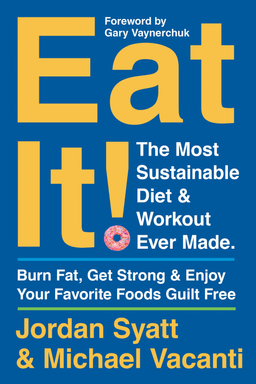
Have you ever felt like one bad meal or missed workout ruined all your progress? That single moment of guilt, frustration, or hopelessness can derail months of effort. In Eat It!, trainers Jordan Syatt and Michael Vacanti argue that this destructive mindset is the real obstacle—not the food, not the workout, not your metabolism. Their core claim is simple but revolutionary: you cannot screw this up as long as you keep going. Progress doesn’t hinge on being perfect. It depends on staying consistent, forgiving yourself, and playing the long game.
The authors dismantle the all-or-nothing mentality that dominates diet culture. They show why chasing perfection, rapid transformations, or miracle plans never lasts. Fitness isn’t about temporary restriction or punishment; it’s about building patterns that last for life. Syatt and Vacanti teach readers to throw away guilt, ignore fleeting motivation, and start with action—any action, even as small as walking around the block or drinking a glass of water.
The Mental Foundation of Success
At its core, Eat It! is a book about mindset more than macros. The hardest part of fitness is believing you can succeed. Most people convince themselves they’ll fail before they even start. That’s why the authors open with stories like a 49-year-old woman who thought she was “hopeless” because she couldn’t even do knee push-ups. Syatt’s response was simple: walk. Walking is progress. Every small step is proof of self-belief, and those steps compound over time. This echoes psychologist Albert Bandura’s concept of self-efficacy—the belief that you can achieve a goal, which research consistently shows predicts success better than any diet or workout routine.
For Syatt and Vacanti, mindset is the foundation that supports every other piece of fitness: nutrition, training, and consistency. You’ll make mistakes, eat too much, skip workouts—but none of that is failure. The only way to fail is by quitting entirely. This mirrors Gary Vaynerchuk’s foreword, where he writes about how Syatt and Vacanti taught him to stop viewing lapses as moral failings. Their philosophy combines compassion and tough love—a system where progress survives imperfection.
The Philosophy of Consistency over Perfection
The authors argue that sustainable fitness comes from building habits that stick. Fat loss, they say, isn’t easy or glamorous. It’s repetitive, frustrating, and often boring—but boredom is part of mastery. You need to be “ruthlessly consistent,” not dramatically perfect. Syatt and Vacanti encourage readers to track consistency with red X’s and black O’s on a physical calendar: hit your nutrition, weigh yourself, complete your workout, and mark it daily. Even 80% consistency produces results better than chasing 100% perfection (because 100% perfection is prison).
This principle mirrors concepts from James Clear’s Atomic Habits and Carol Dweck’s work on growth mindset. Every small, repeatable behavior builds momentum. Action drives motivation, not the other way around. Do something—even a five-minute walk—and motivation follows naturally.
Fitness as a Forever Game
Unlike “30-day transformations” or crash diets, Syatt and Vacanti assert that fitness is forever. There’s no finish line. This mindset flips frustration into patience. Progress will be slower than you want, and that’s fine because it’s permanent. Every lapse—every pizza, beer, or missed workout—is just one step in a lifelong process. They remind you: “You’re never more than one bite away from getting back on track.” This reframes food from punishment and morality into neutrality. Food isn’t good or bad; it’s fuel and enjoyment.
This long-game philosophy also dismantles perfectionism. Holidays are holidays. Vacations are vacations. Stop obsessing over macros while celebrating with loved ones. What matters isn’t how you eat from Thanksgiving to New Year’s, but how you eat from New Year’s to Thanksgiving. Wellness isn’t won through restriction—it’s sustained through mental flexibility.
Why This Matters
Syatt and Vacanti’s message lands precisely because they combine science with empathy. They’re not asking readers to be bodybuilders or psychologists; they’re teaching real people how to stop quitting. This approach rehumanizes fitness. It acknowledges life’s messiness—kids, stress, travel, cravings—and teaches you how to pivot without guilt.
The result is a compassionate blueprint for anyone tired of yo-yo diets and burnout. You’ll learn that perfection fails, flexibility wins, and you—yes, you—can’t screw this up. As long as you keep moving forward, even imperfectly, success isn’t a question of “if.” It’s just a matter of “when.”