
Idea 1
Crypto’s Grand Illusion
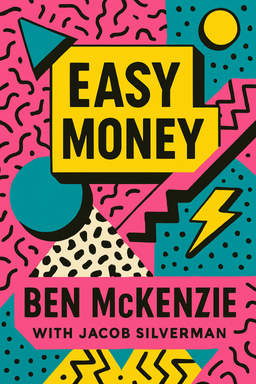
How can you build a financial revolution on software alone? In Easy Money, Ben McKenzie argues that the crypto boom of the 2010s and 2020s wasn't a technological breakthrough but a moral and economic mirage—casino capitalism reborn for the digital age. McKenzie, bolstered by journalist Jacob Silverman and data-driven sleuths, contends that crypto promised liberation from central banks and bureaucrats but delivered unregulated gambling, hidden leverage, and systemic harm. The so‑called trustless future turned out to rely on opaque institutions, celebrity hype, and political capture.
This book connects the dots between monetary policy, psychology, and fraud. It begins with the 2008 financial crisis and the flood of liquidity that followed—conditions that nourished speculative assets from meme stocks to Bitcoin. It then explores how narratives such as “digital gold” spread like financial viruses, infecting culture and investors through social media, influencers, and elite endorsements. Finally, McKenzie examines the collapse: Tether’s questionable stability, FTX’s misuse of customer funds, Terra’s implosion, and the contagion that exposed the entire ecosystem’s fragility.
From Easy Money to Easy Belief
When central banks expanded the money supply—around $900 billion on the Fed’s balance sheet in 2008 to over $8 trillion by 2022—speculative markets thrived. Low interest rates and abundant capital convinced millions that riskier bets like crypto might outperform traditional investments. McKenzie argues this was an easy-belief era: optimism replaced scrutiny. Bitcoin’s 2008 white paper appeared as a prophetic alternative, promising decentralized freedom at a moment of rage against bailouts and banks. What most missed was that a system free from institutions doesn’t erase human greed—it isolates it behind new screens.
Casino Capitalism Repackaged
Crypto’s structure mirrors gambling more than production. McKenzie compares tokens to casino chips—circulating in self-referential systems with no real-world output. You buy a token hoping others will buy it at a higher price. Exchanges, miners, and creators take their cut via fees and spreads, ensuring the house always wins. Robert Shiller’s concept of “economic narratives” explains how phrases like “digital gold” or “financial freedom” transformed an unproductive codebase into a viral investment theology. Crypto replaced work with story—a new myth of salvation by speculation.
The Myth of Trustlessness
The crypto gospel insists code can replace trust. McKenzie dismantles this premise by reminding you that money itself is a social contract—a shared act of belief reinforced by regulation and insurance. Historical episodes like 19th‑century free banking produced chaos and bank runs, just as “decentralized” finance did again in 2022. The FDIC’s record contrasts sharply with crypto’s lack of safety nets: in 90 years, insured depositors haven’t lost a cent. In crypto, there are no such guarantees. Algorithms enforce rigidity, not rescue.
Narratives, Victims, and Investigators
The book moves from macro to micro: from liquidity waves to individual stories. McKenzie profiles retail traders lured by celebrity ads, retirees ruined by scams, and victims like Reverend David Henson’s father—whose despair over fraudulent “investment clubs” became fatal. These tales expose crypto’s emotional machinery: constant trading, dopamine rewards, and MLM-style “community” culture. Yet McKenzie also celebrates resistance—the on‑chain sleuths like James Block and the reporters who pierced the illusion with data.
Collapse and Reckoning
Finally, the illusion collapsed. From Terra’s death spiral to FTX’s bankruptcy, dominoes fell as leverage met illiquidity. Politicians who once accepted donations from crypto billionaires distanced themselves, while regulators scrambled for jurisdiction. McKenzie ends by calling for honesty—a return to systems grounded in verifiable production and social responsibility. The promise of crypto wasn’t only financial; it was moral. Its failure reveals that “trustless” technologies still depend on human integrity—and that integrity must come first.
(Parenthetical note: Like Michael Lewis in The Big Short or John Lanchester in Whoops!, McKenzie fuses personal curiosity with social critique. The result is both exposé and cautionary tale: a reminder that innovation without accountability is not progress but a new form of illusion.)