
Idea 1
Why Work is Destroying Our Health and Lives
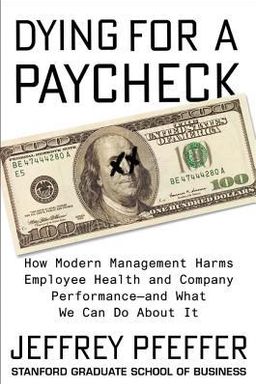
Have you ever felt that your job was making you sick—literally? In Dying for a Paycheck, Stanford business professor Jeffrey Pfeffer poses this unsettling question and delivers a sobering answer: our workplaces are killing us. Through a mix of research, real-world stories, and organizational analysis, Pfeffer argues that modern management practices inflict physical and mental harm on employees while failing to help companies perform better. It’s a lose-lose equation, and one society has largely ignored.
Pfeffer contends that the very people who should be advancing health—employers, policymakers, and management experts—have normalized stress and sickness as inevitable features of modern work. Yet, the same research that proves the dangers also shows a path forward: companies can increase productivity and profitability by prioritizing human sustainability—workplaces that allow people to thrive physically, psychologically, and socially.
The Invention of a New Workplace Hazard
Physical hazards at work—chemicals, machines, and unsafe conditions—are now mostly regulated. But the new danger comes from stress, insecurity, and toxic culture. Pfeffer shows that work stress is as harmful as secondhand smoke, but no one measures it. Employees face immense demands, shrinking control, and deteriorating job security, and many self-medicate with alcohol or drugs just to keep up. He calls this “social pollution”—a human version of environmental pollution—that flows from bad management decisions.
He begins with chilling stories: an Uber engineer who took his life after relentless pressure; employees at France Telecom and Foxconn driven to suicide by extreme workloads; and others who developed ulcers, heart disease, or addiction to cope with impossible expectations. Data show that workplace stress costs the U.S. economy $300 billion annually and causes up to 120,000 excess deaths each year—making toxic workplaces the fifth leading cause of death in America.
The Core Argument: Workplaces That Kill
At the heart of Dying for a Paycheck is a provocative thesis: humans are dying for a paycheck, and the tragedy is preventable. Pfeffer draws an evidence-based map of how job conditions—long hours, layoffs, low wages, lack of control, and economic insecurity—systematically erode health. These stressors elevate blood pressure, worsen sleep, encourage overeating, and weaken immune systems. They lead people to self-destruct, drink excessively, or fall into depression, all while their employers become less effective and more short-term in focus.
Every chapter reveals how what’s mainstream in corporate life—“always on” communication, mass layoffs, 70-hour workweeks, performance ranking, and economic precarity—conspires against human well-being. Pfeffer emphasizes that these outcomes are not accidents; they are management decisions driven by false assumptions that longer hours mean higher productivity, or that layoffs help profitability.
Health, Work, and Evidence
Drawing on epidemiological studies, Pfeffer demonstrates that workplace stressors rival smoking in their health impact. He collaborated with scholars Joel Goh and Stefanos Zenios to quantify the damage: lack of insurance, long work hours, job insecurity, and low job control each exact thousands of lives per year and billions in health-care costs. More than 60% of U.S. workers report high work stress, and research shows they are twice as likely to experience depression and chronic disease. Strikingly, these practices also hurt employers—raising turnover, absenteeism, and medical costs while lowering productivity and innovation.
Across the book, Pfeffer insists that managers and societies can and must design work differently. He identifies real-world exemplars—from Southwest Airlines to SAS Institute and Barry-Wehmiller—that show respect for employees, avoid layoffs, emphasize autonomy, and outperform competitors. These “healthy workplaces” prove that productivity and compassion are not incompatible.
The Broader Context: From Environmental to Human Sustainability
Pfeffer makes a powerful analogy: decades ago, companies polluted the earth until society forced them to clean up. Today, we need the same awakening for the human environment. “We measure CO₂ emissions, but not burnout,” he writes. Workplaces report recycling rates, not the number of employees who break down. Without measurement or accountability, companies keep externalizing the human costs of management—layoffs, overwork, and stress—onto hospitals, families, and communities.
Ultimately, Dying for a Paycheck is a moral and economic wake-up call. It argues that creating healthier workplaces isn’t just altruism—it’s smart business and sound policy. Pfeffer urges employees to consider well-being as seriously as pay when choosing jobs, leaders to practice compassion backed by data, and societies to regulate corporate behaviors that destroy lives. This book reframes work as a public health issue and persuades you to ask not just, “Am I succeeding at work?” but “Is my work helping me live?”