
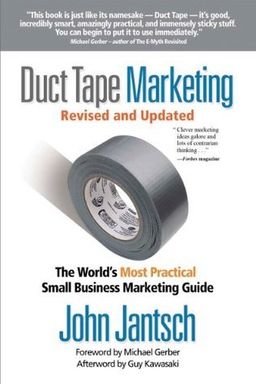
Duct Tape Marketing Revised and Updated cover

Duct Tape Marketing Revised and Updated

by John Jantsch

Duct Tape Marketing is the ultimate guide for small business owners seeking practical marketing strategies. Learn how to attract, retain, and engage customers with effective campaigns that build loyalty and drive word-of-mouth referrals. Discover how to craft compelling messages, optimize your online presence, and leverage both traditional and digital marketing techniques to achieve your business goals.

Marketing as a System, Not a Mystery

How can you build a marketing engine that consistently brings in customers—without feeling like you’re throwing money into the wind? In Duct Tape Marketing: The World’s Most Practical Small Business Marketing Guide, author John Jantsch argues that marketing isn’t an art form reserved for big corporations. Instead, it’s a simple, repeatable system that small businesses can master to generate steady growth, loyal customers, and genuine trust.

Jantsch, a veteran marketing coach, draws from over two decades of experience working with small businesses. He contends that the chaos most businesses feel around marketing—random ad buys, sporadic promotions, or desperate bursts of social media activity—comes from the absence of a system. The Duct Tape Marketing method is his antidote: a structured, DIY approach that any small business can use to craft strategy, attract ideal clients, and turn those clients into evangelists. The title itself is a metaphor—duct tape is cheap, flexible, effective, and universally useful. Good marketing, he insists, should be exactly the same.

The Philosophy Behind Duct Tape Marketing

At its core, Jantsch’s philosophy rejects flashy, short-lived tactics in favor of a disciplined process. His mantra, repeated throughout the book, is that “strategy before tactics” must guide every marketing decision. No single tool—neither social media, ads, nor SEO—will work until you know who you’re trying to reach and why your business matters to them. This is what he calls your marketing strategy foundation.

From that foundation, every tactic—whether it’s an ad campaign, referral program, or blog—becomes part of an interconnected system. It’s this systematic approach that turns marketing into a flywheel instead of a guessing game. Once the system is built, it “sticks” (hence the duct tape metaphor), and each part amplifies the next.

The “Know, Like, Trust, Try, Buy, Repeat, Refer” Hourglass

One of Jantsch’s key contributions to marketing thinking is his reimagining of the classic sales funnel. Traditional marketing ends with the sale; in contrast, his marketing hourglass flips the funnel by extending it past the purchase stage. The journey begins with helping people know, like, and trust you, but it doesn’t end there. You must design experiences that make them try your product, then buy, repeat, and ultimately refer new customers to you.

That last step—referrals—is critical. According to Jantsch, a true small business marketing system should produce not just clients, but champions. You create champions by delivering such reliable value that your customers can’t help but promote you to others. This approach connects emotional loyalty with strategic design. It’s not about gimmicks; it’s about intention at every stage of the relationship.

From Foundation to Execution

The book’s structure mirrors this logic. Part I (“The Foundation”) covers strategic essentials: how to identify your ideal client, craft your core message, and align your visual identity. Jantsch argues that every brand needs a consistent message that tells people exactly what makes it different—what he calls a talking logo. For example, instead of saying “I’m a contractor,” you might say, “I make homeowners love their space again.” It’s memorable, emotional, and sets expectations instantly.

Part II (“The Lead Generation Machine”) transitions from theory to practice—moving from strategy to doing. Here, he introduces his system for running ads that get results, crafting direct mail that converts, generating PR attention, and (most importantly) building a referral engine. He strongly believes that small-business success lives or dies on the strength of referrals. Finally, Part III focuses on measuring what works, planning a marketing calendar, and sticking to the habits that make the system sustainable.

Why It Matters in the Digital Age

When Jantsch first launched Duct Tape Marketing in the early 2000s, small businesses were still struggling to adopt the internet. In today’s digital ecosystem—where online noise is overwhelming and every business competes for attention—the principles of a simple, clear system matter even more. Whether you’re promoting on Facebook, optimizing your website for local search, or sending postcards through the mail, consistency and clarity win.

The book teaches you how to stop chasing shiny marketing trends and focus instead on timeless truths: understand your audience, speak directly to their pain points, and show them proof of your difference. In many ways, Jantsch’s work echoes books like Seth Godin’s Purple Cow or Michael Gerber’s The E-Myth Revisited—but it’s far more tactical. Where Godin inspires, Jantsch instructs. He gives you checklists, templates, and action steps to follow immediately.

The Promise of “Sticky” Marketing

Ultimately, Jantsch’s goal is to transform marketing from something slippery and unpredictable into something that “sticks.” Sticky marketing captures attention, builds long-term trust, and holds your business together no matter what tools or trends come and go. By the end of the book, you realize that “duct tape” isn’t just a metaphor—it’s a mindset. It’s about using simple, durable tools to build a marketing machine that works even when you’re not watching.


Start with Strategy, Not Tactics

For Jantsch, the first and biggest mistake small businesses make is confusing activity with strategy. They rush into tactics—Facebook ads, billboards, networking events—without first understanding who they’re trying to reach or why someone should care. His famous line sums it up: “Strategy without tactics is the slowest route to victory, but tactics without strategy is the noise before defeat.”

Identify Who Matters Most

Everything begins by identifying your ideal client—the type of person who truly values what you offer and makes your work rewarding. Jantsch walks you through analyzing your most profitable and happiest clients to create an “ideal client biographical sketch.” This sketch defines not only demographics (age, location, income) but also psychological traits: frustrations, buying triggers, and decision-making habits. To him, if you try to sell to everyone, you end up resonating with no one.

He even advises you to think of marketing like dating—it’s about fostering mutual fit, not desperate persuasion. Refuse to work with “bad clients,” he says. When you target the right ones, everything else—from pricing to referrals—becomes easier.

Be Different, or Compete on Price

After identifying your audience, the next step is differentiation. In most industries, customers can’t see meaningful differences between competitors. So they default to price comparisons. Jantsch urges you to find a meaningful, customer-centered difference and make it the centerpiece of your strategy. Maybe it’s your guarantee (“On time or it’s free”), your unique process (“Technicians You Can Trust with Your House Keys”), or your niche expertise (dog-friendly remodeling, eco-lawns, vegan catering). This isn’t about clever slogans; it’s about making your difference tangible and provable.

Connect the Dots Online and Offline

Finally, Jantsch introduces an idea that feels prophetic even today: fuse online and offline strategies. Your customers no longer separate them—so neither should you. Whether someone finds you through Google Maps or a local event, the experience must feel seamless. That means your SEO, website, content, and local engagement should all reinforce the same story. Offline trust must flow online, and vice versa.

“Don’t think about making a sale online; think about making an impression.”

To sum up, strategy isn’t a mission statement. It’s the practical foundation—built around who you serve, how you stand out, and how you connect—that determines whether any marketing tactics will work at all.


Craft a Core Message That Sticks

Once you know your audience and your difference, you must learn to say it—clearly and repeatedly. Jantsch calls this your core marketing message. It’s how you tell the market who you are, what you do, and why that matters. Without it, you sound like everyone else. His process starts with defining your business’s purpose, followed by creating a talking logo—a memorable, benefit-driven way to answer the inevitable question: “So, what do you do?”

From Boring Titles to Emotional Impact

Most professionals respond with their job title: “I’m an accountant.” Jantsch pushes you to turn that into something that sparks curiosity, like “I help business owners sleep better at night.” A talking logo is short enough for an elevator ride but intriguing enough to start a relationship-building conversation. It reframes your mission around your customer’s benefit rather than your service list. (Simon Sinek’s well-known mantra “Start With Why” echoes this idea—people don’t buy what you do; they buy why you do it.)

Turn Purpose into Story

Jantsch also encourages you to cast your brand as a story with an “enemy.” Your enemy might not be another company—it could be confusion, complexity, waste, or anxiety. Apple fought conformity; a remodeling company might fight sloppy contractors. When your purpose aligns against a clear enemy, customers are more likely to rally behind you. This narrative orientation makes marketing personal and emotional rather than mechanical.

Let the Message Drive Every Touchpoint

Finally, he shows how your core message should cascade through every part of your brand—your website copy, advertisements, and even invoices. Consistency builds trust. If your sales team, receptionist, and social media posts all echo the same story, customers start to feel that your business “just gets it.” In other words, it’s not about cleverness—it’s about coherence.


Build Trust with Education

In the digital era, customers don’t want to be sold to—they want to learn. Jantsch flips traditional marketing on its head by insisting that your best sales strategy is education. “People love to buy,” he writes, “but they hate to be sold.” The solution? Become their teacher instead of their pursuer.

Turn Content into Currency

This idea popularized the modern concept of content marketing long before it became mainstream. Jantsch urges every small business to act like a publishing company. Create blog posts, e-books, workshops, webinars, and newsletters that educate customers about their problems and your perspective. The more valuable your information, the more authority you earn. He outlines exact tools to use—from white papers to podcasts to video blogs—and shows how each builds trust step by step.

One standout tool is the marketing kit—a physical or digital portfolio that includes your case studies, testimonials, FAQs, articles, and checklists. Instead of a traditional brochure, it becomes a teaching instrument that guides prospects through understanding your value.

Create Once, Repurpose Everywhere

Jantsch emphasizes efficiency: create one piece of content, then repurpose it across platforms. A blog post can become a newsletter, a workshop script, a podcast transcript, and an e-book chapter. He also shows how entrepreneurs can outsource writing to journalists or freelancers to keep content flowing regularly.

“Don’t sell your stuff; advertise your content.”

Ultimately, education transforms how customers perceive you—from vendor to trusted expert. And once you become the teacher, the sale takes care of itself.


Create a Web Presence That Works 24/7

A small business website is no longer optional—it’s your storefront, ambassador, and educator. Jantsch devotes several chapters to showing how your website should act as a hub that integrates everything else you do. It’s not about looking pretty; it’s about performing a job. “An ugly website with the right message will always beat a beautiful one that says nothing,” he warns.

Simple Beats Fancy

Jantsch preaches simplicity: clear navigation, compelling headlines, and easy contact access on every page. He provides a technical checklist—use Cascading Style Sheets (CSS) for faster loading, create keyword-rich titles, and keep design elements search-engine friendly. The ultimate goal is usability: help people find what they need effortlessly and guide them toward taking the next step.

Content as a Lead Magnet

Your website should act as a lead capture machine. Instead of just listing your services, give away “valuable bait”—like free guides, webinars, or checklists—in exchange for contact info. This automates the trust-building process. Jantsch even includes step-by-step action plans for tracking site performance using Google Analytics and for converting visitors into subscribers.

Fuse SEO and Social Media

He introduces the idea of a total web presence, long before it became industry jargon. That means maintaining coherent messaging across your website, blog, LinkedIn, Facebook, and local search listings. Each piece—like spokes on a wheel—drives attention back to your central hub. Local businesses, in particular, must master search visibility on platforms like Google Maps and Yelp to compete effectively.

In short, your website shouldn’t sit there; it should work day and night as an educator, trust builder, and customer gateway.


Advertising and Direct Mail That Actually Work

Why does most small-business advertising fail? Because it’s focused on selling instead of starting a relationship. Jantsch reframes advertising as “salesmanship in print.” Its only goal is to start a conversation—not close a deal. The best way to accomplish that is through what he calls two-step direct response advertising.

Step One: Offer Value First

A two-step ad asks prospects to take a low-risk action, like ordering a free report, attending a workshop, or downloading a checklist. For instance, one small business offered a free guide titled “Ten Things You Must Know Before You Lease a Car,” generating hundreds of qualified leads. Prospects supplying their contact info demonstrate interest—giving you permission to follow up.

Step Two: Follow Up Fanatically

Once someone responds, send them your educational materials and continue nurturing the relationship through mailings, calls, or emails. The beauty is scalability—you can automate large parts of the process and track every response. Over time, you refine your messages, test headlines, and double down on what works.

“Advertising that works isn’t about being clever—it’s about being clear.”

Jantsch’s motto applies equally to direct mail. He redefines old-fashioned letter campaigns into personalized, trackable lead generators. Handwritten notes, small postcards, and even creative “lumpy mail” (like including an actual object with metaphorical meaning) make your message impossible to ignore. These examples show that traditional media, done right, still beats random online noise.


Turning Referrals into a Predictable System

If one principle defines the Duct Tape Marketing approach, it’s this: referrals shouldn’t be left to chance. Most small businesses get new customers through word of mouth, but they treat it as luck. Jantsch transforms referrals into a deliberate, trackable process—one that’s built into your daily operations.

Make Referrals an Expectation

Jantsch recommends setting the stage from day one. Tell new clients that part of your business model relies on mutual referrals. For example: “We know you’ll love our service, and in 90 days we’ll ask you to help identify three others who could benefit from it.” This creates positive accountability and builds anticipation.

Design a Referral Education Tool

Next, he creates specific referral tools—a one-page guide that teaches clients who makes a good referral, how to introduce you, and what they can say. This removes uncertainty and makes referring easy, even enjoyable. He shares case studies of companies creating “100% refund programs” that reward clients with cash back after multiple successful referrals, or partnerships where different businesses exchange exposure to each other’s audiences.

Build Strategic Partner Networks

Jantsch also urges business owners to form alliances with complementary providers—like a roofer partnering with a plumber or a realtor with a moving company. When these alliances share leads and co-host workshops, the network grows exponentially stronger. In short, he turns random goodwill into a structured system that multiplies itself over time.


Turn Prospects into Partners

The final part of Jantsch’s system addresses conversion—the delicate stage when a lead becomes a paying (and hopefully lifelong) client. He insists that successful selling is 90% education and only 10% closing. If you’ve followed his earlier system, by the time you talk to prospects, they should already be sold. Your job is to help them feel confident about moving forward.

The “Internal Seminar” Method

Instead of a high-pressure pitch, Jantsch proposes an internal seminar—a structured, conversational presentation that walks prospects through your story, process, and results. Think of it as a one-on-one workshop. By leading with education, not persuasion, you position yourself as a guide rather than a vendor. When done right, most “sales” conversations become natural agreements rather than negotiations.

Surprise and Delight Customers

After the sale, Jantsch advises creating a “new customer kit”—a welcome package with orientation materials, next steps, and even a small “thank-you” surprise. This small but powerful gesture shortens the trust gap and sets the tone for long-term loyalty. (He cites examples like service providers including movie passes or partner discounts with first-time orders.)

Make Every Customer a Collaborator

The ultimate goal of conversion is partnership. Jantsch encourages business owners to view customers as collaborators. Collect feedback through surveys, host client-only roundtables, and build community among your users. When people feel ownership in your success, they refer more, stay longer, and spend more. “Marketing doesn’t end with the sale,” he writes. “That’s where it begins.”


Commit to the Habit of Marketing

Even the best marketing plan fails without consistency. Jantsch ends his book by introducing the concept of a marketing calendar—a visual system for turning actions into habits. You must plan your campaigns, themes, and outreach as intentionally as payroll or inventory management. Marketing is not an event, he reminds us; it’s a routine.

Plan by the Calendar, Not by Chance

He suggests dedicating one daily “marketing appointment” to keep the momentum alive: write five thank-you notes on Monday, follow up with past clients on Tuesday, post educational content on Wednesday, and so on. Over time, these small, consistent acts produce exponential results.

Measure What Matters

To stay accountable, Jantsch recommends tracking three key metrics: number of leads, conversion rate, and client retention. He also introduces the concept of a client contribution factor—how much each client is worth to you over several years. Knowing this number helps you invest confidently in marketing instead of guessing budgets.

In the end, the book’s message is clear: marketing success isn’t about luck or talent. It’s about system, repetition, and discipline. Or, as Jantsch puts it, it’s about “taping your marketing together so it never falls apart again.”

Dig Deeper

Get personalized prompts to apply these lessons to your life and deepen your understanding.

Go Deeper

Get the Full Experience

Download Insight Books for AI-powered reflections, quizzes, and more.