
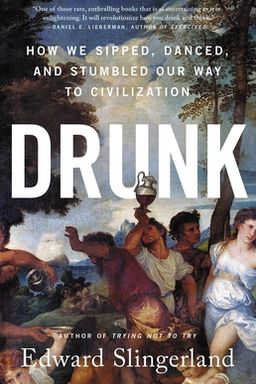
Drunk cover

Drunk

by Edward Slingerland

Drunk explores the evolutionary and cultural significance of alcohol, uncovering how it has been pivotal in shaping human creativity, community, and civilization. This insightful book questions alcohol''s place in modern society, balancing its historical benefits with the need for mindful consumption.

The Evolutionary Logic of Intoxication

Why do humans everywhere risk health, reputation, and genes to get intoxicated? Daniel Slingerland’s core argument is that alcohol is not merely a social indulgence or evolutionary glitch. It operates as a cultural technology — an adaptive tool that dampens rigid cognitive control, fosters creativity, trust, and social cohesion, and even helped catalyze civilization itself. Across anthropology, neuroscience, genetics, and history, Slingerland asks you to rethink intoxication as something evolution preserved because, despite its costs, it solved key problems of cooperation and innovation.

An evolutionary puzzle

Alcohol use is universal, ancient, and costly. Archaeological traces—from Jiahu’s fermented rice-fruit brews to the wine-stained clay in Mesopotamia and Georgia—show that humans have brewed, shared, and ritualized alcohol for at least 9,000 years. Biologically, ethanol impairs reproduction and survival, yet our species retains metabolic adaptations for it. If alcohol were purely maladaptive, natural selection should have erased it, but genetic markers like ADH and ALDH variation suggest deep coexistence. That survival implies functionality.

Hijack versus hangover theories

Traditional explanations split between two camps. Hijack theories (Randolph Nesse and evolutionary psychiatrists) claim alcohol tricks reward circuits built for food and sex—an evolutionary mismatch. Hangover theories (Robert Dudley’s “drunken monkey” hypothesis) propose alcohol was once adaptive by signaling ripe, calorie-rich fruit. Yet neither fully explain why drinking persists through millennia and global prohibitions. Humans metabolize ethanol too smoothly for it to be a pure hijacker; and its uses—ritual, creativity, bonding—reach beyond fruit foraging.

Beyond error: cultural persistence

Across civilizations, bans failed repeatedly: Islamic injunctions, Buddhist monastic codes, U.S. Prohibition, and modern temperance movements all collapsed under renewed conviviality. From Viking mead halls and Vedic Soma rituals to modern Czech beer culture, societies preserve alcohol because it performs functions other mechanisms can’t: bonding strangers, inspiring art, easing tension, and producing collective trust. These behaviors point toward adaptive value embedded in biology and culture.

Alcohol as cognitive and social technology

Slingerland connects intoxication to neural architecture — the prefrontal cortex (PFC), seat of inhibition and executive control. Alcohol suppresses PFC activity and heightens dopamine and endorphin release, producing sociability, creativity, and stress relief. Temporarily loosening that control lets you access associative thinking and emotional expression otherwise constrained by Apollonian order. Moderate intoxication engenders a “virtual youth” — playful neoteny paired with adult faculties, an optimal balance for innovation and bonding.

From beer to civilization

This adaptive framing reaches its peak in the “beer before bread” hypothesis. Evidence from Göbekli Tepe, Jiahu, and early Neolithic feasting sites suggests large-scale brewing preceded agriculture. Shared intoxication allowed scattered hunter-gatherers to coordinate, celebrate, and bind into stable groups. The pleasure of alcohol helped drive cereal cultivation for fermentation—a feedback loop from convivial ritual to organized society. Fermented drink thus stands among humanity’s earliest social inventions, not just a byproduct of farming.

Trust, truth, and cooperation

Ritual drinking operates as a credible commitment device. When drunk, your deliberate self-monitoring falters; emotion overrides calculation. This makes sincerity legible and cooperation trustworthy. Whether in Greek symposiums, Chinese toasts, or peace-pipe ceremonies, the logic is universal: mutual vulnerability signals honesty. Intoxication levels social hierarchies, converts strangers into allies, and weaves the emotional fabrics that hold polities together.

Modern relevance and trade-offs

Laboratory studies confirm moderate intoxication triggers creative insight (Jarosz’s Remote Associates study) and relaxes social tension (balanced-placebo designs). Workplaces and universities mimic ancient rituals through informal “happy hours” or conference drinks—modern forms of Dionysian release. Yet Slingerland tempers this with realism: distillation and solitary drinking create evolutionary mismatches. Spirits concentrate ethanol dangerously; isolation removes cultural regulation. The result is addiction, violence, and disease—problems solvable not by prohibition but by intelligent design of communal drinking and ritual substitution.

The synthesis: taming Dionysus

The book’s message is not indulgence but understanding. Alcohol and other intoxicants reflect humanity’s quest for ecstasy, unity, and creativity. These tools served our ancestors and still serve us, provided we manage their risks wisely—through mindful drinking, alternative rituals, equitable institutions, and cultural guardrails that keep pleasure functional. Dionysus belongs at the table, but under Apollo’s supervision.


Creativity and the Childlike Mind

Slingerland draws on neuroscience to show that intoxicants loosen the adult brain’s grip, restoring the flexibility of youth. The prefrontal cortex, which matures late, grants focus and control but suppresses associative freedom. When alcohol mildly shuts this gate, your mind becomes more exploratory—a feature essential for innovation and empathy.

Apollo vs. Dionysus

He uses two mythic figures—Apollo (order) and Dionysus (ecstasy)—to represent competing neural modes. Adults live under Apollo’s reign, constantly filtering and predicting. Dionysus is the counterbalance that enables creativity and collective joy. Moments of Dionysian release, whether a drink or a dance, restore access to flexible cognition and emotional warmth.

Evidence from the lab

Transcranial magnetic stimulation (TMS) of the PFC increases lateral thinking; jazz improvisers and freestyle rappers exhibit similar downregulation during flow. Jarosz’s 2012 “Uncorking the Muse” found that people slightly drunk performed better on creative association tasks. The neural signature—alpha-wave dominance and relaxed error monitoring—mimics meditation or hypnosis. Alcohol simply achieves it quickly and reversibly.

Virtual youth as cultural technology

Human neoteny—the retention of juvenile flexibility—makes us “Labradors of primates.” Intoxication safely reactivates this mode while keeping adult experience intact. It turns serious, efficient adults back into social innovators. Used wisely, it unlocks play, imagination, and bonding that strict sobriety rarely furnishes.


Alcohol as Social Glue

You can think of alcohol as a technology for connection. Its chemistry (dopamine, endorphin release; lowered inhibition) physically opens conversation and laughter, but its rituals—pubs, dinners, toasts—give that chemistry a repeating structure. Together they turn transient pleasure into durable social trust.

Evidence for bonding

Robin Dunbar’s pub studies confirm that regular patrons have more friends, higher trust, and greater wellbeing. The British ethnography The Pub and the People (1943) showed that pubs organize civic life—darts, betting, trade, and even politics. Alcohol’s mild disinhibition and shared space foster repeated, ritualized interaction, building “social capital.”

Designing connection

Structured conviviality—banquets, post-work drinks, dinner clubs—acts as a transition between professional and private selves. These habits maintain networks and morale. When they vanish, social coordination falters. Knowing this lets you design cities, workplaces, and communities around regular, low-risk social rituals, alcoholic or not.

Core idea

Alcohol functions as cultural glue not because it makes you careless, but because it synchronizes perception and emotion—temporary vulnerability that opens enduring ties.


Trust and Truth in Intoxication

Shared drinking does more than ease talk—it signals sincerity. When you drink in company, you voluntarily lower cognitive defenses, making deceit costly. Cultures harness this phenomenon to build trust, seal alliances, and verify emotional authenticity.

Neuroscience and game theory

Alcohol disables strategic self-monitoring by suppressing the PFC. That makes emotions transparent—smiles, blushes, spontaneous gestures. Because genuine feelings are hard to fake, intoxication acts as an honest signal. In game-theoretic language, it’s a costly commitment device: you handicap yourself to prove loyalty. Odysseus tying himself to the mast symbolizes this surrender of control as proof of good faith.

Cultural rituals

From Greek symposium oaths to Chinese banquet toasts, Viking mead halls, and Native American peace-pipe rituals, societies ritualize mutual intoxication as truth testing. The logic extends to modern diplomacy and team-building meals—the “trust through vulnerability” model repeated for millennia.

Takeaway

Intoxication’s social function lies not in deception but in its capacity to make hypocrisy impossible, enabling cooperation through openness.


Ecstasy and Collective Effervescence

Humans seek experiences that dissolve individuality—festivals, rituals, concerts. Alcohol and other intoxicants act as triggers for this “collective effervescence,” a term borrowed from Durkheim, indicating synchronized emotional intensity that binds large groups.

Ancient and modern forms

Dionysian festivals combined dance, music, and wine to create ecstatic community. Today Burning Man and rave culture echo this pattern: rhythmic movement and shared excess transform participants into cohesive identity groups. Military and organizational bonding rituals occasionally use excess similarly (Richard Marcinko’s SEAL team initiations).

Chemical and non-chemical routes

Ecstasy can arise via chemicals (ethanol, MDMA, psychedelics) or behaviors (chanting, drumming, synchronized dance). Neuroimaging shows all routes reduce prefrontal control and elevate endorphins. Pentecostal glossolalia and Sufi whirling achieve similar neural outcomes. Alcohol persists because it produces that result quickly and socially.

Collective ecstasy keeps groups coherent and cooperative. The challenge for modern societies is not to abolish it but to manage it safely—through curated festivals, sober alternatives, and shared creative events that satisfy our need for transcendence without excess harm.


The Double-Edged Role in Intimacy

Intoxication reshapes interpersonal boundaries, making strangers friends and lovers—but also creating danger. Alcohol’s chemistry stimulates desire while impairing judgment, shaping one of humanity’s oldest paradoxes: it provokes intimacy and risk at once.

Desire and perception

Ethanol boosts mood and dopamine, increasing sexual motivation, yet physiologically it slows arousal. Around 0.08% BAC, attraction judgments rise—the “beer goggles” effect. Both expectancy and pharmacology play roles; people appear and feel more attractive. Marcos Alberti’s photographic series The Wine Project visualizes this progressive relaxation and confidence.

Disclosure and danger

Lowered inhibition encourages honest talk and affection but also misreading. Studies show intoxicated men focus more on bodies than faces and misinterpret friendliness as sexual interest—fuel for assault and regret. Sexual aggression correlates strongly with heavy drinking contexts, especially among young adults.

Guidance

Moderate, mutual, meal-based drinking can enhance tenderness and truth. Excess transforms connection into hazard. The same neurochemistry that allows vulnerability also demands vigilance.


Distillation and Modern Mismatch

The rise of distilled spirits and solitary consumption created a new evolutionary mismatch. Ancient beer and wine, low in ethanol and embedded in ritual, were manageable. Distillation concentrated ethanol, and industrial modernity dissolved the group guardrails that kept drinking social and safe.

Distillation’s transformation

Before 1500 CE, 2–16% ABV was typical. The invention and mass adoption of distillation elevated content to 40% and more, condensing entire feasts into a flask. British gin in the 18th century and post-Soviet vodka epidemics illustrate catastrophic social consequences—addiction, crime, and population decline.

Isolation’s danger

Historically, drinking was supervised—by symposiarchs, hosts, or peers. Today home and retail drinking escape that monitoring. Without pacing and social feedback, genetics predisposed to addiction amplify harm. Community rituals buffered selective costs; atomized lifestyles expose them.

Slingerland’s prescription: focus policy on spirits and social isolation. Restrict pure ethanol availability, rebuild convivial spaces, and recover cultural checks that evolved to make intoxication functional rather than fatal.


Pleasure, Utility, and Cultural Design

You can understand alcohol through two lenses: instrument and joy. Slingerland argues that it is rational to treat intoxication as deliberate mind-hacking—not moral failure. Humans use substances to relax, bond, or think creatively, and pleasure itself is a legitimate end, not just a side effect.

Instrumental use

Müller and Schumann’s concept of drug instrumentalization reframes casual drinking as purposeful. Introverts drink to become sociable; creators to think laterally. Silicon Valley’s retreats and “group flow” experiments echo ancient Dionysian rites: controlled delirium for productive bonding.

The defense of pleasure

Writers like Stuart Walton and Baudelaire remind you that pleasure itself warrants respect. Even health debates (like the Lancet’s “no safe level” claim) require moral honesty: human life values meaning as much as longevity. Pleasure, when bounded, sustains identity and community.

Designing for balance

Smart societies integrate intoxicants ethically—structuring rituals, pacing, and inclusivity so joy enriches rather than harms. Public institutions can mirror ancient symposia with modern safeguards: supervision, alternative drinks, and clearer boundaries, keeping Dionysus productive and pleasures humane.


Inequality and Inclusion

Alcohol binds many but excludes others. Slingerland highlights how drinking cultures can reinforce gender and social inequality when access itself becomes a form of power.

Gatekeeping rituals

In East Asian business banquets or Japanese after-work drinking, men often consolidate influence while women and abstainers are marginalized. Similar patterns recur in Western academia and tech, where late-night bar talk builds informal networks unavailable to caregivers or sober employees.

Inclusive design

Kara Sowles’ guidelines offer fixes: equal-quality non-alcoholic options, clear signage, and social events independent of drinking. As younger generations turn toward sobriety, inclusivity grows both ethical and strategic.

Lesson

The same rituals that unite groups can exclude outsiders; designing equitable conviviality keeps cooperation universal.


Alternatives and Harm Reduction

Slingerland closes with pragmatic optimism: you can preserve ecstasy without destruction. Harm reduction combines cultural redesign, personal mindfulness, and creative substitute rituals to maintain humanity’s need for connection while curbing its risks.

Sober spaces and expectancy

The rise of sober bars shows that atmosphere and ritual matter as much as chemistry. Placebos and context trigger relaxation even without ethanol. Social cues, music, and long-term routines keep community alive while lowering addiction risk.

Mindful practices

Simple behavioral shifts—smaller glasses, alternating with water, eating while drinking—mirror the ancient Greek moderation principle. Policy can help: higher taxes on spirits, paid safety incentives for bars, limited open access.

Non-chemical alternatives

Group dance, drumming, or breathwork can replicate the neurochemical signature of intoxication—endorphins, lowered PFC activity—through effort rather than ingestion. The goal is to design rituals that sustain communal joy responsibly, proving that Dionysus can be domesticated by culture rather than outlawed.

Dig Deeper

Get personalized prompts to apply these lessons to your life and deepen your understanding.

Go Deeper

Get the Full Experience

Download Insight Books for AI-powered reflections, quizzes, and more.