
Idea 1
Liberation Through Dropping the Ball
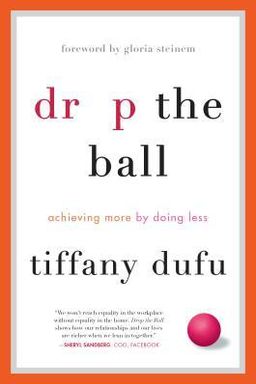
How can you be ambitious, love your family, and still rest? In Drop the Ball, Tiffany Dufu proposes that peace and purpose arrive when you stop trying to do everything yourself. Her core argument: modern women are crushed not by a lack of ambition but by an excess of expectation. She reframes the idea of “dropping the ball” from failure into strategy—a conscious decision to let go of tasks and perfectionism so you can focus on what truly advances your legacy, career, relationships, and joy.
The book is both manifesto and manual. Through her own chaotic stories—from hand-expressing breast milk into a toilet stall to discovering a mail pile three months deep—Dufu reveals how you can re-engineer expectations, delegate with intention, and design partnership systems that sustain both your home and ambition. The journey unfolds through four intertwined arcs: recognizing the cultural scripts that shape overdoing; clarifying what matters most; learning to delegate with joy; and designing communities and systems that make freedom sustainable.
Why You Try to Do It All
Dufu names the invisible pressure “Home Control Disease” (HCD)—a learned impulse to control every domestic detail. From toys that train girls to nurture to cultural images of flawless household managers, the message is that your worth is tied to home perfection. For Dufu, this began in childhood when she effectively became “woman of the house” after her parents’ divorce. HCD isn't neurosis; it’s training. Yet it consumes attention and crowds out professional ambition.
At work, that conditioning meets the myth of “having it all.” You chase career excellence and home perfection simultaneously. Returning to the office after maternity leave, Tiffany plans it all—and collapses under impossible logistics. The revelation arrives painfully: her problem isn’t ambition; it’s believing she must execute every task herself. That’s the moment “Drop the Ball” begins.
Redefining Responsibility
Dropping the ball sounds reckless, but Dufu redefines it as emotional intelligence: let go of doing so you can lead. Instead of frantically keeping every sphere spinning, you prioritize what only you can do. Tiffany’s mantra—“your highest and best use”—acts as your guiding filter. When she stopped marinating chicken from Costco and let Kojo decide how to handle it, she learned patience and discovered that ownership only transfers when you stop rescuing other people from their turn.
She borrows from economics: use comparative advantage at home. Specialize in tasks aligned with your gifts, values, and impact, and delegate or outsource the rest. Her test—“Does this task advance my legacy, or express my unique gifts?”—exposes how much labor can move off your plate. Dropping the ball becomes a rational policy of impact allocation rather than guilt‑soothing perfectionism.
Turning Resentment into Partnership
Most women, Tiffany notes, don’t delegate; they imagine delegation. They assume partners should intuit their needs. She calls this “imaginary delegation.” It breeds resentment—the stealth submarine that sinks intimacy. Her early emails vented frustration without action; the result was stalemate. Only when she explicitly asked—and gave Kojo full authority—did the system shift. He arranged dry‑cleaning delivery and organized sitters via mass text, freeing her time for the work that mattered. Communication, not clairvoyance, builds equality.
“Delegating with Joy” is her antidote: frame requests around shared purpose. Instead of saying “Can you pick up the kids?” you say, “If you handle pick‑up, I can finish my proposal advocating for women’s advancement—our family mission.” People respond to meaning, not chores. Studies on best‑self activation confirm this—tasks tied to identity produce motivation, not friction.
Tools for Shared Responsibility
To operationalize partnership, Dufu and Kojo create the Management Excel List (MEL)—a spreadsheet mapping every task across the household. Each person chooses roles, and there’s even a “No One” column to allow some balls to drop. This turns invisible labor into visible data and prevents misunderstanding. Weekly meetings and gratitude rituals turn the MEL from a ledger into a living framework. Over time, the household becomes an all‑in partnership, guided by comparative advantage and sustained by communication processes rather than guilt or gender.
Redefining Perfection and Recruiting Help
A central awakening is that equality doesn’t mean sameness. Kojo might hire babysitters differently or fix the faucet with a less elegant fixture—but done is better than perfect. “Done,” she writes, “is another person’s perfect.” Releasing control builds capacity. And freedom expands once you recruit a village—friends, family, neighbors, babysitters, and specialists who co-sustain your life. Asking for help turns goodwill into structure; patience lets others step up. When Tiffany was snowbound at an airport, her village kept life seamless because she had built those bridges long before emergencies.
All of this rests on clarity. Through reflective exercises—visualizing your funeral, gathering stories of your “Reflected Best Self”—you identify what truly matters most. For Tiffany, it’s advancing women, raising conscious citizens, and loving Kojo. When she filtered chores through that lens, delegation became not release but alignment. Every decision became a test of legacy versus noise.
Toward Sustainable Freedom
The book closes with the concept of Motherhood Freedom: rejecting the myth of perfect parenting. You model resilience for your children not by doing it all but by choosing what matters. They learn agency when you trust them—and others—to pitch in. Freedom, Dufu concludes, is not autonomy but interdependence.
Core Truth
Dropping the ball is a deliberate act of leadership. It means granting others the chance to contribute while you focus on work and love that create meaning. It’s how you transform overwhelm into shared momentum—and how you lead a life, not just a schedule.