
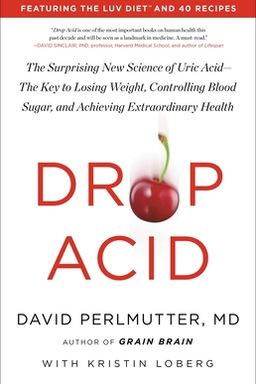
Drop Acid cover

Drop Acid

by David Perlmutter

Drop Acid reveals the overlooked impact of uric acid on modern health challenges like obesity and diabetes. Through scientific insights and a three-week LUV diet plan, readers can learn to manage uric acid levels, improving overall health and preventing disease.

Uric Acid and the Hidden Metabolic Switch

Why do people gain weight, develop diabetes, high blood pressure, or brain fog even when their lab tests look “normal”? In Drop Acid, neurologist David Perlmutter argues that the answer may lie in a largely ignored substance: uric acid, long thought to be relevant only to gout. He frames it as a hidden metabolic conductor—a small molecule that activates fat storage, insulin resistance, and inflammation across multiple systems, much like a cellular stress alarm that never turns off in the modern world.

From waste product to warning signal

Traditionally, medicine viewed uric acid simply as the end product of purine metabolism. But research from Dr. Richard Johnson and others established that uric acid interacts directly with oxidative stress and nitric oxide signaling, damaging endothelial cells and promoting insulin resistance. Perlmutter synthesizes this evidence to show how chronically elevated uric acid can undermine health long before gout ever appears. Large cohort studies like the Japanese half‑million‑person analysis and Framingham follow‑ups link higher uric acid—even within so‑called normal ranges—to increased cardiovascular risk and all‑cause mortality.

Evolutionary design and modern mismatch

To understand why this “acid” matters, Perlmutter takes you back millions of years. Humans, unlike most mammals, lost the enzyme uricase that once broke down uric acid. That mutation helped our ancestors store fat efficiently and maintain blood pressure during famine or dehydration—a trait that ensured survival. In today’s calorie‑dense environment, however, that ancient metabolic adaptation has turned against us: the “fat switch” stays stuck in the on position, prompting continuous fat storage and metabolic chaos.

Fructose acts as the modern trigger of this ancient switch. When you consume fructose, whether via high‑fructose corn syrup, sodas, or juices, your liver breaks it down using ATP, produces AMP, and then converts it into uric acid. Elevated uric acid then amplifies fat production and blocks satiety hormones like leptin—fueling overeating and obesity. Perlmutter distinguishes between fructose in whole fruit (buffered by fiber and nutrients) and isolated industrial fructose, which drives disease with stealth precision.

Invisible hyperuricemia and brain decline

Approximately one in five Americans have elevated uric acid without gout. This “asymptomatic hyperuricemia” silently predicts insulin resistance, fatty liver, and cognitive decline. Neurologically, high uric acid harms blood‑brain flow and accelerates aging; even high‑normal levels correlate with white‑matter lesions and dementia risk. Perlmutter shows evidence from Japanese and Johns Hopkins cohorts linking uric acid specifically to brain structural damage. The takeaway: uric acid belongs in routine metabolic screening alongside glucose and lipids.

From knowledge to prevention

In the face of disappointing pharmaceutical outcomes—such as Alzheimer’s drug controversies—Perlmutter sees uric acid control as a practical prevention path grounded in lifestyle. He identifies a personal lab target (~≤5.5 mg/dL) and emphasizes morning, fasted testing when uric acid peaks. Historical figures like Alexander Haig recognized this connection in the 1800s and lowered their uric acid through diet with striking results; modern science finally validates those forgotten insights.

Core message

Uric acid is not an inert waste product—it’s a metabolic signal evolved for survival but hijacked by modern diets. Lowering it can recalibrate how your body uses fuel, manages weight, and preserves brain function. Understanding and controlling this molecule could rewrite preventive medicine’s playbook.

Across its chapters, Drop Acid weaves biology, history, and neuroscience into a new framework: one where lowering uric acid becomes a catalyst for metabolic renewal, emotional steadiness, and long‑term vitality.


Fructose and the Fat Storage Trigger

Fructose is portrayed as the biochemical villain that most effectively flips the body’s ancient fat‑storage switch. Perlmutter argues that our fructose exposure today dwarfs evolutionary norms and overwhelms detox pathways. Industrial fructose—from corn syrup and fruit juices—spawns uric acid spikes far greater than those induced by whole fruits, setting off hormonal and inflammatory cascades.

How fructose rewires metabolism

Fructose uniquely bypasses the body's main metabolic checkpoints. It doesn’t trigger insulin or leptin, leaving you unsatisfied and craving more. Inside liver cells, it burns cellular energy rapidly (ATP depletion), creates AMP, and produces uric acid. Elevated uric acid then feeds backward into enzymes like fructokinase—exponentially driving fat creation and insulin resistance while reducing nitric oxide, leading to hypertension.

This hidden loop—fructose to uric acid to more fat and hunger—reinforces chronic overeating. The book cites trials where subjects drinking fructose‑sweetened beverages developed higher visceral fat and triglycerides compared with those drinking glucose‑sweetened versions. Perlmutter references Dr. Robert Lustig’s description of fructose as “alcohol without the buzz,” because both molecules bypass satiety pathways and inflame the liver.

Industry confusion and personal correction

Perlmutter dissects decades of sugar industry lobbying—from the Corn Refiners Association’s campaign to rebrand HFCS to funding of misleading safety studies by Dr. James Rippe. These battles blurred distinctions between natural and industrial fructose. The scientific bottom line, however, is clear: only whole fruit—with fiber, potassium, and polyphenols—provides protection against metabolic havoc.

Practical application

Eliminate sodas, bottled juices, commercial sweeteners, sauces, and cereals containing HFCS or high fructose. Replace them with whole fruits and vegetables. This single swap rapidly curbs uric acid production and ends a damaging biochemical cycle.

Fructose is the stealth fuel that hijacks survival chemistry. When you stop feeding that circuit, uric acid stabilizes, fat metabolism recalibrates, and appetite signals normalize—a biochemical turning point for reclaiming metabolic health.


Everyday Lifestyle Triggers

Beyond fructose and purines, Perlmutter exposes everyday behaviors that quietly raise uric acid—sleep loss, excess salt, certain medications, alcohol, and physical inactivity. These factors interact with sugar exposure, amplifying metabolic instability and inflammation.

Sleep and circadian rhythm

Poor or irregular sleep enhances oxidative stress and inflammation, which correlate with higher uric acid. Studies cited (Van Cauter et al., 2013) show that a week of bad sleep alters hundreds of genes related to immune modulation. Obstructive sleep apnea adds further strain with nightly hypoxia, raising both uric acid and cardiovascular risk. The fix: consistent sleep-wake times, blue-light reduction, and morning sunlight to reset biological clocks.

Salt, drugs, and alcohol

High salt intake, apart from its blood‑pressure effects, can trigger endogenous fructose production via aldose reductase—essentially manufacturing fructose inside your body. Common medications such as diuretics, beta‑blockers, and low‑dose aspirin impede uric acid clearance, while alcohol adds substrate (purines and acetaldehyde) to produce more. Beer is worst, wine acceptable in moderation.

Purines, processed foods, and sitting

Organ meats and certain seafoods elevate uric acid; yet vegetable purines do not have the same effect thanks to accompanying phytonutrients. MSG‑laden processed foods increase appetite and insulin resistance. And sedentary time deepens all these effects—a simple reminder that movement is medicine.

Bottom line

Sleep better, moderate salt, review medications, and reduce processed food. Each lifestyle lever meaningfully lowers uric acid and synergizes with dietary correction.

Once you understand these triggers, you can transform daily routines—from bedtime to grocery habits—into tools for healing. Metabolic repair isn’t just what you eat; it’s how you live each day.


Gut Microbiome and Acid Balance

Your gut is a uric acid gateway. Perlmutter highlights emerging science showing that intestinal pathways excrete a substantial portion of uric acid—but chronic elevation disrupts gut integrity and microbial balance, creating inflammatory feedback loops that affect metabolism and even brain function.

Uric acid and dysbiosis

High uric acid reshapes the microbiome, favoring bacteria that drive inflammation and leaky gut. Elevated intestinal inflammation allows endotoxin (LPS) to enter the bloodstream, triggering systemic immune reactions. Scientists have identified “gout‑associated bacteria,” a microbial fingerprint capable of predicting gout diagnosis with over 90% accuracy. Inversely, correcting microbial imbalance helps normalize uric acid levels.

Restoring microbial diversity

Fecal microbiota transplant (FMT) trials in gout patients show reduced uric acid and inflammation—proof that changing gut ecology changes uric handling. Yet simpler methods, like eating fiber‑rich plant foods, fermented products, and avoiding disruptive drugs (like chronic proton‑pump inhibitors), achieve similar effects.

Takeaway

Feed your microbiome with prebiotic fiber (onions, leeks, artichokes), probiotics (unsweetened yogurt, kimchi), and polyphenols. The gut acts as both excretory and regulatory organ; nourishing it directly lowers systemic inflammation and uric acid burden.

When you learn that microbiome health controls uric acid excretion, digestive wellness becomes a metabolic therapy. A healthy gut equals a balanced acid system.


Circadian Eating and Fasting

Meal timing is a metabolic regulator as powerful as calorie count. Drawing on research by Dr. Satchin Panda, Perlmutter advocates time‑restricted eating (TRE)—limiting caloric intake to an 8–12‑hour daily window—to align nourishment with our circadian rhythms. This synchronization enhances insulin sensitivity, reduces inflammation, and supports fat loss even without changing total calories.

Biological timing

The body’s master clock in the brain (SCN) coordinates liver, kidney, and muscle clocks. Eating late distorts these rhythms; eating within daylight hours promotes balanced glucose and uric acid control. Panda’s human trials show early TRE (8 a.m.–2 p.m.) improves fat metabolism and lowers inflammatory markers compared to eating from 8 a.m.–8 p.m.

Autophagy and cellular renewal

During extended fasting intervals, AMPK activation triggers autophagy—your body’s cleanup mechanism for damaged proteins and mitochondria. While short fasts (12–16 hours) raise uric acid slightly, they initiate deeper cellular repair and long‑term lowering through reduced fat and insulin levels. Longer fasts (24–72 hours) can amplify these effects but demand medical supervision.

Recommended rhythm

Start with a 12‑hour window and gradually narrow to 10 or 8 hours. Pair fasting with adequate hydration, morning light exposure, and evening meal cessation to build metabolic stability.

In Perlmutter’s framework, TRE becomes the simplest, most elegant way to harness circadian biology. It’s not just about skipping meals—it's about restoring the clock that governs metabolism itself.


The LUV Program and Daily Practice

The heart of the book is the LUV Plan—Lower Uric Values—a structured, three‑week lifestyle transformation built around test‑track‑adjust principles. It combines diet reform, supplements, sleep optimization, movement, and time in nature. You measure progress with uric acid and glucose tracking while embedding new habits week by week.

Week‑by‑week evolution

Week 1 establishes the dietary overhaul (reduce fructose, gluten, and processed triggers) and adds five targeted supplements: quercetin, luteolin, DHA, vitamin C, and chlorella. Week 2 expands into sleep hygiene, regular exercise, and daily outdoor exposure. Week 3 consolidates all routines and introduces TRE as a lasting rhythm. The plan’s measurable markers—uric acid ≤5.5 mg/dL, fasting glucose <95 mg/dL, CRP <1 mg/L—define success objectively.

Measurement and empowerment

Perlmutter insists that data drives motivation. Home uric acid kits like UASure or CGM sensors (Levels) provide immediate feedback and reveal hidden patterns. Seeing numbers improve helps personalize adjustments—carb ratio, sleep duration, fasting window—until physiology stabilizes.

Sleep, movement, and nature synergy

Sustainable repair depends on rest and daily motion. Sleep (7–8 hours) decreases uric acid and stress hormones; aerobic exercise improves insulin sensitivity and long‑term acid balance even if uric rises temporarily post‑workout. Nature contact, studied through Shinrin‑yoku research, further reduces stress and systemic inflammation, amplifying all metabolic benefits.

Integration principle

Combine measurement with habit stacking—small consistent behaviors accumulating big physiological gains. The LUV program transforms wellness into an experiment you can monitor and refine.

By the end of three weeks, physical and mental clarity often improve notably. The program reframes prevention as a living process shaped by data, awareness, and the symphony of choices you make each day.


Food as Medicine and Public Health

The book’s final message expands from personal biology to public systems: uric acid is both an early warning and an opportunity to redefine healthcare through nutrition. Just as smoking was once dismissed until linked to lung disease, elevated uric acid is now recognized as an upstream signal for metabolic decline. Acting early through dietary reform is both preventive medicine and social policy.

Foods that heal

Certain foods behave like pharmaceuticals. Broccoli sprouts activate the Nrf2 antioxidant pathway via sulforaphane, neutralizing uric‑induced oxidative stress. Tart cherries rich in anthocyanins and quercetin inhibit xanthine oxidase; clinical trials document fewer gout flares with regular consumption. Coffee and green tea polyphenols correlate with lower uric acid and systemic inflammation. Together, these ingredients position food squarely within therapeutic practice.

Policy and access

Perlmutter envisions a medical model where produce prescriptions become standard care. Programs subsidizing fruits and vegetables already show millions fewer cardiovascular events and billions in savings when scaled nationally. This merges individual LUV choices with systemic change—food as medicine not metaphor but mechanism.

Personal and collective action

You can start by testing uric acid and implementing the LUV pillars: whole‑food diet, sleep regularity, circadian eating, activity, and nature exposure. At scale, communities can advocate for healthier food environments and better metabolic screening. Every person who “drops acid” contributes to both personal health and a collective shift toward metabolic fairness.

Final reflection

Uric acid is a smoke signal before metabolic fire. Seeing it as an actionable marker transforms both medicine and self‑care. The path to dropping acid starts at your plate but expands to reshape public health itself.

Perlmutter closes with optimism: managing uric acid through intelligent lifestyle changes can prevent disease more effectively than chasing cures after damage occurs—a paradigm shift toward proactive biology.

Dig Deeper

Get personalized prompts to apply these lessons to your life and deepen your understanding.

Go Deeper

Get the Full Experience

Download Insight Books for AI-powered reflections, quizzes, and more.