
Idea 1
Working Together Without Falling Apart
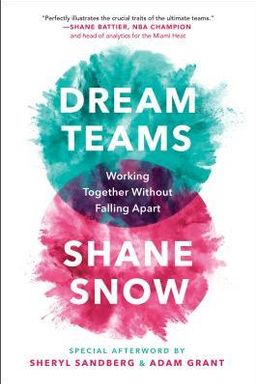
When has teamwork lifted you higher—and when has it dragged you down? In Dream Teams, journalist Shane Snow explores that paradox. He argues that although human beings are built for collaboration, our efforts to work together often fail because tension, difference, and conflict come with the package. Yet, when that friction is channeled productively, it becomes the energy that propels groups to greatness. Snow’s central claim is provocative: the teams that make breakthrough progress aren’t those that avoid disagreement or celebrate harmony, but those that learn to stay ‘in The Zone’—the sweet spot between peace and destruction where creative tension fuels innovation and trust keeps people from snapping apart.
To show how teams evolve from dysfunction to brilliance, Snow draws from a range of stories—from the Soviet Red Army hockey dynasty to the Wu-Tang Clan, from Argentinian soccer to Facebook boardrooms. Each story illuminates a dimension of what makes a ‘dream team’: cognitive diversity (different ways of seeing and solving problems), constructive friction (channeling conflict into insight), psychological safety (the trust that lets people speak up), and shared respect (the glue that holds difference together).
The Core Paradox of Collaboration
Humans can’t accomplish big things alone—cities, companies, revolutions, and scientific breakthroughs all depend on people linking up. Yet, the same instincts that evolved to help us cooperate also make us wary of outsiders and allergic to disagreement. As Snow shows in his opening story, the Cold War’s superpowers desperately needed cooperation to survive, from the Red Army’s virtuosic hockey teamwork to the scientists who built nuclear energy through international joint efforts. Still, in most teams, as complexity rises, collaboration collapses. Psychologists and organizational researchers have confirmed what anyone who has sat through a bad meeting knows: groups tend to produce fewer and worse ideas than their individual members.
The reason lies in our ancient wiring. Our brains tell us to stick close to our tribe, avoid conflict, and prefer harmony. But breakthroughs happen when thinkers challenge, combine, and collide. Dream teams, Snow argues, emerge when we transform that psychological friction into forward motion—what he calls “The Zone.”
The Zone and Cognitive Friction
Using a striking metaphor, Snow likens a group’s potential energy to a stretched rubber band. When people pull from different directions—by bringing distinct perspectives and heuristics—they create tension that can launch them farther. But pull too little, and nothing moves; pull too hard, and the band snaps. The challenge isn’t avoiding tension but controlling its intensity. Too much friction leads to explosions like DaimlerChrysler’s failed corporate marriage; too little results in silence and stagnation. The art lies in managing difference so it generates creative power without breaking trust.
This idea recurs across the book’s stories. Wu-Tang Clan’s early fights nearly killed the band—but those lyrical battles sharpened their art. The Wright brothers’ heated arguments, balanced by a rule of switching sides mid-debate, made them invent flight. Meanwhile, Daimler and Chrysler’s polite restraint destroyed their merger because leaders feared conflict and stopped talking entirely. The Zone thrives where diversity meets dialogue.
Why These Ideas Matter
In a world of increasing complexity—where global problems, digital transformations, and cultural divides require cross-boundary collaboration—knowing how to stay in The Zone is crucial. Diversity brings smarter decisions (as McKinsey and Catalyst have shown in studies correlating it with higher profits), but only when teams turn difference into dialogue. Without this skill, “diversity” becomes a recipe for dysfunction, tokenism, and silence. Snow insists that the future belongs to those who can unlock the productive power of friction: learning to argue well, to play together like the jazz musicians or athletes who improvise within trust and respect.
Across its chapters, Dream Teams maps that journey. It begins with the cognitive science of difference in “Buddy Cops and Mountaintops,” showing how diverse mental toolkits outperform groups of geniuses. “Trouble in Shaolin” contrasts the disastrous DaimlerChrysler merger with the creative chaos of Wu-Tang Clan to illustrate the paradox of diversity and conflict. “The Magic Circle” reveals how play defuses fear and helps teams bond across divides. “Angelic Troublemakers” explores provocation and dissent as engines of progress, while “The Black Square” redeems crazy ideas as seeds of genius. Then, through stories like Andrew Jackson’s ragtag army, Malcolm X’s transformation, and George Takei’s activism, Snow demonstrates how empathy, respect, and storytelling turn fragmented groups into united teams capable of lasting change.
Ultimately, Snow’s argument is both scientific and hopeful: Dream Teams aren’t born; they’re made through deliberate design. They thrive on diversity of thought, respectful tension, shared humanity, and the courage to keep talking. If you can learn to manage difference instead of fearing it—to stretch together instead of snapping apart—you can change what’s possible for your team, your company, or even your world.