
Idea 1
Seeing the World Through Doubles
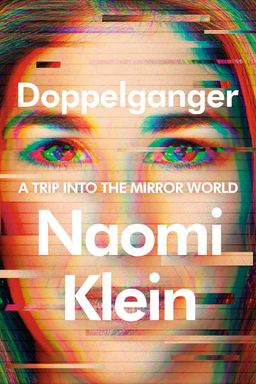
What happens when reality seems to split into copies of itself? In Doppelganger, Naomi Klein explores how the age of algorithms, pandemics, and conspiracy culture has produced a world of doubles—individuals, institutions, and narratives that mimic familiar forms but invert their meanings. Klein’s confusion with fellow author Naomi Wolf becomes more than a comic case of mistaken identity; it’s a metaphor for how identity, truth, and politics fracture under digital capitalism’s reflective surfaces.
The double as warning
Klein begins with the uncanny feeling of being mistaken for Wolf, whose pivot from feminist critic to conspiracist mirrors the broader cultural disorientation of the pandemic years. When the public confuses one Naomi for another, Klein realizes she’s living inside a metaphor: the digital arena collapses distinctions between genuine analysis and viral speculation. A doppelganger isn’t just a look‑alike—it’s a system that turns identity into a commodity, where likeness can be bought, sold, or algorithmically misattributed.
This collapse produces psychic and social vertigo. You become legible only through thumbnails and tags. Klein expands her anecdote into a universal condition: you now inhabit an information environment that produces doubles of everything—from celebrity avatars to AI renderings—while hollowing the social meanings that used to anchor reality. (In Freud’s terms, the uncanny recalls the once‑known but estranged; in Emilio Uranga’s zozobra, it’s a wobble between absurdity and dread.)
Shock and isolation
Klein connects her own confusion to the larger dynamics of global shocks—events that tear open gaps between reality and narrative. Covid’s combination of fear and isolation widened these gaps. When people lost shared forums of meaning, they filled the vacuum with screen‑mediated fantasy. That’s why millions, trapped at home, became susceptible to demagogues promising clarity and belonging. Klein’s pandemic years on a remote island exemplified this isolation‑induced vulnerability: loneliness turned into online immersion, doomscrolling into a mirror of the self.
Shocks reveal the fragility of democratic storytelling. Disaster capitalists exploit disorientation, but conspiracists exploit it emotionally. When community disintegrates, people cling to simplified stories that divide heroes from villains. Klein retools her Shock Doctrine analysis for a psychological age—the narrative vacuum itself becomes the market product, sold to you in livestreams and viral videos.
The digital mirror
In the book’s middle chapters, Klein examines how platforms automate confusion. Autocomplete errors, content algorithms, and generative AI create mechanical doppelgangers. Twitter users confuse one Naomi for another because the platform has learned to ignore nuance in favor of repetition. This technical flattening isn’t neutral—it commodifies ambiguity. Platforms enclose your speech like landlords enclosing land, extracting behavioral data and selling imitations of your identity. (Think of ads, avatars, and AI art trained on your images.)
Doubles extend beyond individuals to politics. Klein’s concept of the Mirror World describes a distorted reflection of reality where grievances are mirrored and weaponized. Covid conspiracies, anti‑vax propaganda, and New Age wellness communities form diagonal alliances—social movements that claim to transcend left and right but usually tilt toward authoritarianism. Steve Bannon’s “MAGA Plus” strategy epitomizes this: he recruits figures like Wolf and wellness influencers to fuse liberal vocabulary with far‑right mythology. The result is a movement that feels inclusive but serves exclusionary ends.
Truth, appropriation, and memory
Klein also documents how these mirror narratives appropriate symbols of justice. Anti‑mandate protests mimic civil‑rights imagery—Rosa Parks, lunch counters, “I can’t breathe”—while erasing the histories they borrow. This rhetorical theft reflects the book’s moral concern: when truth and empathy are replaced by spectacle, the mirror world consumes genuine solidarity. Klein contrasts this mimicry with real reckonings like the uncovering of residential school graves in Canada, which demand honest confrontation with historical violence. Only truth-telling, not mimicry, enables social repair.
From doubles to care
The final chapters move from diagnosis to prescription. The antidote to doubling is what Klein calls “unselfing”—a deliberate retreat from personal branding toward collective care. You must learn to act through institutions that endure beyond individual personalities: unions, mutual‑aid networks, public media. Klein invokes coral‑reef scientist Charlie Veron’s wish to feel like coral as a spiritual‑political metaphor: empathy that crosses species and systems. Being “soft on people, hard on structures” (john a. powell) demands re‑centering compassion while attacking the frameworks that produce shadow selves—extractive capitalism, privatized platforms, and social atomization.
Core argument
When reality starts doubling—whether through media, technology, or politics—it is not merely strange; it is diagnostic. It signals what has been ignored, repressed, or commodified. Klein’s message is clear: to live sanely in a hall of mirrors, you must rebuild collective meaning and refuse the seduction of the simulacrum.
Doppelgangers are everywhere—personal, political, institutional. Klein teaches you to see them not as curiosities but as warnings. Each false reflection marks a moral and structural gap to be repaired through truth, care, and shared reality.