
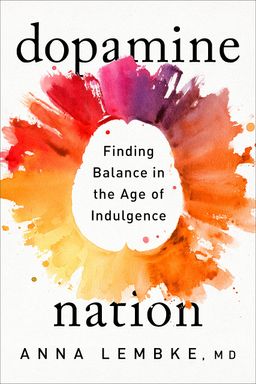
Dopamine Nation cover

Dopamine Nation

by Anna Lembke

In ''Dopamine Nation'', Anna Lembke explores the paradox of modern life, where abundant pleasure leads to unexpected pain. Through clinical insights and patient stories, she offers a roadmap to balance in a dopamine-driven world, promoting recovery and resilience.

Finding Balance in a Dopamine-Driven World

How can you live well in a world that seems engineered to overstimulate you? In Dopamine Nation: Finding Balance in the Age of Indulgence, psychiatrist Dr. Anna Lembke asks this very question, showing how our pursuit of pleasure has tipped the scales of modern life toward deep, chronic pain. Whether it’s Netflix binges, endless scrolling, online shopping, gaming, or drugs, our world is built to give us instant gratification—and, paradoxically, to leave us emptier than before.

Lembke argues that the key to thriving in this dopamine-saturated ecosystem is understanding how the brain’s reward system works. Pleasure and pain are two sides of the same neural balance, continually trying to achieve homeostasis. When we chase pleasure relentlessly, the brain compensates by tilting harder toward pain—creating a cycle of craving, withdrawal, and emotional flatness that resembles addiction. Over time, even ordinary experiences lose their ability to please us. According to Lembke, the science of dopamine not only explains addiction but also reveals why ordinary modern life often feels overwhelming and unsatisfying.

The Pleasure-Pain Equation

At the heart of Lembke’s argument is a simple but profound model: the pleasure-pain balance. Every pleasurable stimulus—be it chocolate, sex, cannabis, or social media—causes a surge of dopamine. Our brains then react by readjusting toward equilibrium. This opponent process, long studied by psychologists Richard Solomon and John Corbit, means that what goes up must come down. The more pleasure we seek, the deeper our subsequent pain. Eventually, our baseline shifts toward discomfort, requiring ever more stimulation to feel anything at all. Lembke calls this the essence of neuroadaptation: tolerance and withdrawal are simply the brain’s way of restoring balance.

When dopamine floods our brains repeatedly, we end up in a state of deficit—unable to feel joy from simple things like conversation, food, or nature. This paradoxical pain of abundance explains why, as Lembke notes, wealthier countries report more anxiety and depression than poorer ones. Our brains are ancient hardware designed for scarcity, now hijacked by abundance.

The Modern Epidemic of Excess

Lembke places this neurobiological dynamic within the cultural context of the 21st century. The smartphone, she says, is the modern hypodermic needle—delivering digital dopamine at the tap of a finger. Over the last century, industrial and technological innovations have multiplied the potency and accessibility of addictive rewards. Cigarettes became vape pens; heroin was repackaged as OxyContin; cannabis turned into ultra-potent concentrates and edibles. Even nonchemical highs—gambling, pornography, shopping, or gaming—exploit the same brain circuits.

She illustrates this through her patients’ stories. Jacob, a sixty-year-old engineer, constructs an elaborate electrical masturbation machine and becomes trapped by its engineered intensity. Delilah, a teenager hooked on high-concentration cannabis, discovers that her anxiety isn't cured by weed—it’s caused by it. These examples reveal what Lembke calls a universal condition: everyone today risks being a dopamine addict. The “Masturbation Machine” is both Jacob’s literal device and a metaphor for the world we all live in—one that caters to our desire for pleasure at ever-accelerating speeds.

Turning Toward Pain as the Cure

The book’s central prescription is counterintuitive. The solution to dopamine overload isn’t more comfort—it’s intentional discomfort. Lembke advocates for practices like dopamine fasting, temporary abstinence from pleasurable stimuli long enough for the brain to reset its balance. She expands this idea with concepts like self-binding (creating barriers between oneself and temptation), pressing on the pain side (seeking mild pain to trigger healthy dopamine rebound), and radical honesty (restoring emotional equilibrium by telling the truth). These methods are drawn not just from neuroscience but from the lived wisdom of addicts, whom she regards as prophets of our age.

Hence, Dopamine Nation is more than a science book—it’s a manifesto for moral and psychological resilience in a world of excess. Its lessons merge medical insight with philosophical depth: pleasure and pain are inseparable; abstinence restores joy; and self-restraint is the path to freedom. While it draws heavily on neuroscience, the book’s emotional core lies in its personal case studies—stories of relapse, recovery, and rediscovered meaning. Through them, Lembke transforms addiction from pathology into metaphor, showing that what breaks an addict’s life also distorts ours.

Why This Matters

Lembke’s message matters because it reveals the hidden cost of modern comfort. The “deaths of despair” among middle-aged Americans, she notes, stem not only from opioids and alcohol but from a culture addicted to relief. Whether you’re checking your phone compulsively or numbing stress with Netflix, the mechanism is the same. Understanding it lets you reclaim agency over your brain’s reward system—and ultimately over your life.

By the end, Lembke invites you to face what you’re addicted to and to rediscover balance not by escaping pain but by embracing it. Pleasure, she shows, becomes sustainable only when we stop running from discomfort. To live well in the dopamine nation, you must learn to walk toward pain rather than flee from it.


The Pleasure-Pain Balance

Dr. Lembke’s foundation is the neuroscience of pleasure and pain. Inside your brain, dopamine acts as both a motivator and a messenger. When you eat chocolate, see a like on Instagram, or take a drug, dopamine floods the nucleus accumbens—the brain’s reward center—signaling “this feels good; do it again.” But this same mechanism drives pain when overused. The brain always seeks equilibrium, balancing the scales through a process called homeostasis.

How Pleasure Turns into Pain

Every time you indulge in something pleasurable, the brain tips toward reward. Immediately afterward, it deploys its internal regulators—“gremlins,” as Lembke humorously puts it—to restore balance by generating temporary discomfort. This momentary pain may feel like boredom, irritability, or guilt. Over time, these gremlins multiply. The more pleasure you pursue, the stronger the pain-rebound becomes, resulting in tolerance and withdrawal. That’s why what thrilled you yesterday—another Netflix episode, a drink, a purchase—barely registers today.

Overexposure to dopamine-rich experiences rewires the brain’s baseline: reward circuits go dormant while threat circuits become hyperactive. Neuroscientist Nora Volkow’s imaging studies of addicts show that their dopamine receptors are depleted even weeks after detox. In such states, ordinary joys seem lifeless. As Lembke puts it, “the players on Team Dopamine take their balls and their mitts and go home.”

Memory, Craving, and Cues

Pleasure leaves a lasting mark. Your brain creates enduring neural imprints of every rewarding experience—like a tattoo in the hippocampus. These memories make future cravings hardwired. When exposed to triggers such as “people, places, and things”—the language of Alcoholics Anonymous—you relapse into the same desire. Pavlov’s dogs salivated at the sound of a bell because their brains associated it with food; humans crave at the sight of notifications for the same reason. The cue itself releases dopamine even before the pleasure arrives—creating the itch to seek, regardless of satisfaction.

Brain Changes and Adaptation

Repeated dopamine spikes produce lasting structural changes. Neurons grow new branches (dendrites) and shape memory pathways around reward. This experience-dependent plasticity explains why addicts relapse easily after years of abstinence—their neurons remember the pleasure. Yet recovery is possible. Lembke cites studies showing that enriched environments and learning new skills can create alternative neural circuits. In essence, healing means teaching the brain to seek balanced, slower rewards.

Emotion and Meaning

Ultimately, Lembke argues that how we interpret pain determines how we experience it. Drawing on Henry Beecher’s World War II observations, she notes that wounded soldiers often felt little pain because their suffering signified survival. Contrast that with a construction worker impaled by a nail who screamed in agony until discovering he wasn’t injured—the terror came from meaning, not damage. Our perception, shaped by narrative, decides whether discomfort becomes torment or transformation.

When you understand the pleasure-pain balance, you begin to see modern life differently. Constant consumption doesn’t make you happier; it just resets the balance toward pain. Lembke’s message echoes Buddhist and Stoic traditions: moderation, awareness, and voluntary discomfort restore equilibrium. If you can pause instead of pressing for the next dopamine hit, your brain can reclaim joy from simple things—a meal, a walk, or a conversation.


Running from Pain

We live in a culture committed to comfort. Modern psychology, medicine, and parenting all teach us to avoid pain at nearly any cost. Lembke’s chapter “Running from Pain” explores how this flight from discomfort fuels anxiety, depression, and addiction. The pursuit of happiness, she says, has become an obsession that confuses relief with fulfillment.

A Culture of Avoidance

In student clinics, workplace wellness brochures, and social media, the modern mantra is “feel good.” Even religious and therapeutic traditions have shifted toward self-pleasing ideologies—what Lembke calls the “God Within” theology, drawing from Ross Douthat’s Bad Religion. The universal call for happiness eradicates meaningful struggle. As she notes, even acts of kindness are now marketed as tools for personal wellbeing rather than empathy.

Pills Instead of Growth

Our medical system reflects this same avoidance. Doctors once believed moderate pain was healing; now, they're judged by their ability to eliminate it. Prescriptions of antidepressants, benzodiazepines, and opioids have skyrocketed, yet mental illness rates remain unchanged. Patients are medicated not to adapt to pain but to escape it. David, a software engineer in one case study, cyclically overused Adderall, Ambien, and Ativan—stimulants and sedatives—to manage anxiety and overwork. He discovered, as many do, that medications meant to relieve distress were causing it. He ended up hospitalized for withdrawal and suicidality.

Parenting Without Frustration

Lembke expands the argument to the home. Many parents, fearing trauma, cushion children from every setback—rewarding them universally, providing “safe spaces,” and sheltering them from frustration. This creates fragile adults like Kevin, her young patient who declares, “I do whatever I want, whenever I want.” By trying to guarantee comfort, we inadvertently breed entitlement and emotional instability.

The Consequence of Comfort

Paradoxically, our escape from suffering has made us more miserable. Global data show that richer countries—those with greater access to antidepressants, entertainment, and food—report higher anxiety and depression. Physical pain is rising despite medical progress. As Lembke summarizes, “The reason we’re all so miserable may be because we’re working so hard to avoid being miserable.” To heal, we must confront discomfort instead of medicating it away.

In this way, “Running from Pain” sets up the book’s turning point: To restore balance, we must stop fleeing pain and learn to face it purposefully. This insight bridges science with spirituality, echoing Buddhist and Stoic wisdom—the path to happiness runs straight through hardship.


Dopamine Fasting

“Dopamine fasting” is one of Lembke’s most practical and transformative frameworks. Borrowed partly from addiction recovery and neuroscience, it means temporarily abstaining from one’s preferred source of pleasure—food, cannabis, social media, romance novels—for at least four weeks. The goal, she writes, is to reset the brain’s reward system and rediscover balance.

The DOPAMINE Method

Lembke organizes the process into eight steps under the acronym DOPAMINE:

  • D – Data: Track what, how much, and how often you consume your pleasure source.
  • O – Objectives: Clarify why you’re using it—whether for fun, escape, or emotions like anxiety or grief.
  • P – Problems: Identify unintended consequences. Pleasure always comes at a cost.
  • A – Abstinence: Commit to a full month of stopping the behavior.
  • M – Mindfulness: Observe withdrawal and emotions without judgment.
  • I – Insight: Reflect on what you learn once cravings subside.
  • N – Next Steps: Decide whether to resume moderately or remain abstinent.
  • E – Experiment: Test your new plan in real life, knowing relapse may occur.

Delilah’s Transformation

Teenaged Delilah exemplifies the method. Convinced cannabis cured her anxiety, she agreed to quit for a month. She suffered withdrawal—vomiting, paranoia, emotional instability—but emerged clear-headed. Her revelation was profound: “My anxiety is gone… I realize weed was causing it, not curing it.” Abstinence gave her the insight no conversation could.

Insight and the Rebalancing Effect

Four weeks, Lembke explains, is typically the time the brain needs to regain equilibrium. Imaging studies by researcher Marc Schuckit found that most depressed alcoholic men no longer met criteria for depression after a month of sobriety—suggesting that mood symptoms were withdrawal, not disease. The same applies to behavioral addictions. By fasting from dopamine, you stop artificially tipping your balance and give your brain time to heal.

Moderation or Abstinence?

Most patients, even after successful fasts, want to resume their drug—but differently. Some manage moderation; others relapse immediately. The brain, however, learns through trial and rhythm. Whether it’s cannabis, caffeine, or smartphones, the experiment teaches your own limits. Even if abstinence feels drastic, conscious pauses restore your ability to take pleasure in ordinary life.

Ultimately, dopamine fasting is less about quitting forever and more about discovering freedom through restraint. As Lembke says, “When I stopped reading erotica, I felt terror first, then connection.” Pain becomes the precondition for renewed joy—a theme at the heart of her whole book.


Self-Binding for Freedom

How do you resist temptation in a world of infinite access? Through self-binding—deliberately creating barriers between you and your addictive behaviors. Inspired by the myth of Odysseus tying himself to his ship’s mast to resist the Sirens, Lembke divides self-binding into three forms: physical, chronological, and categorical.

Physical Self-Binding

Physical self-binding means changing your environment to create friction. Patients unplug televisions, lock cookies in timed safes, or store iPads and alcohol where they are inconvenient to access. One man, Jacob, threw away his sexual “machine” at a remote dumpster so he couldn’t retrieve it. Another locked liquor in a cabinet accessible only to his wife. The point, Lembke explains, isn’t willpower—it’s acknowledging its limits and making relapse physically harder. Modern versions, like naltrexone medication that blocks opioid pleasure receptors, achieve the same effect biologically. Still, none is foolproof; addicts constantly find creative ways to defeat their locks.

Chronological Self-Binding

Chronological binding restricts when consumption happens—like “only on weekends” or “never before 5 p.m.” Studies on rats show that limiting cocaine access to one hour prevents escalation. For humans, timing rules can help moderate behaviors from drinking to gaming. Yet these fail when delay discounting—our tendency to value immediate rewards over future ones—takes over. Muhammad, a PhD student addicted to cannabis, exemplified this spiral: his 'weekend-only' rule collapsed into daily use. Only when he imagined himself ten years into the future still smoking did he regain perspective.

Categorical Self-Binding

Categorical binding involves dividing behaviors into permissible and forbidden categories. Jacob, after relapse, avoided “lust in any form”—not just pornography but provocative news stories or even shaving shirtless. Mitch, a gambling addict, stopped not only betting but also watching sports or reading scores. Others use dietary categories—veganism or gluten-free diets—as restraint, though Lembke warns that industries quickly adapt, turning restriction into new consumption avenues (e.g., thousands of gluten-free snacks). Still, when applied mindfully, categorical binding builds dignity, not repression. As Lembke writes, “Binding ourselves is a way to be free.”

To self-bind today means engineering conditions in which mindfulness and freedom can coexist. It admits we will always be tempted, but we can design worlds—physical, temporal, and moral—that support our better selves.


Pressing on the Pain Side

Once we stop running from discomfort, we can actively seek it. “Pressing on the pain side,” Lembke writes, means intentionally experiencing controlled doses of pain to stimulate the body’s natural reward chemistry. This process, known as hormesis, shows that small stressors strengthen resilience and boost dopamine for longer than pleasure itself.

Cold Showers and Dopamine Surges

One patient, Michael, overcome by cocaine and alcohol addiction, found salvation in ice-cold water immersion. Initially unbearable, the pain soon gave way to calm euphoria. Studies confirm that cold exposure raises dopamine and norepinephrine levels by up to 250–530 percent, sustaining mood for hours. This deliberate shock reminded Michael “that being alive can feel good.” Pain, paradoxically, became his therapy.

The Science of Hormesis

Hormetic stressors—cold, heat, fasting, exercise—trigger adaptive biological responses. Worms briefly exposed to heat lived longer; fruit flies spun in centrifuges aged more slowly; intermittent fasting boosted health markers. Limited pain recalibrates the balance toward pleasure, enhancing vitality. Yet excess pain becomes addiction itself—some runners fracture bones rather than rest.

Exposure Therapy and Fear

Lembke shows that confronting emotional pain works the same way. David, once paralyzed by social anxiety, practiced small talk with strangers. His discomfort gradually transformed into confidence. “I started at 100 on the anxiety scale,” he said, “by the end, I was a 40.” Exposure built tolerance, just as climber Alex Honnold’s years of training dulled fear when scaling El Capitan without ropes. Pain tolerance is learned, not bestowed.

The paradox that defines dopamine healing emerges here: avoidance breeds fragility, while chosen pain fosters strength. You don’t need to become an ascetic or an ultramarathoner—daily small discomforts are enough to build resilience and joy.


Radical Honesty

Truth-telling, Lembke insists, is another form of pain that heals. “Radical honesty” means confessing your actions, even the embarrassing ones, and facing consequences. It activates awareness, intimacy, and accountability—the same circuits that restore dopamine balance.

The Pain of Truth

Most people lie daily, often unconsciously, because truth hurts. Maria, an alcoholic in recovery, learned that hiding even trivial faults (“I opened my brother’s package”) reinstated shame and addiction. When she confessed, she felt free. Lembke explains that honesty stimulates prefrontal cortex activity, enhancing self-control. In essence, truth rewires the brain toward delayed gratification—the very opposite of dopamine-driven impulsivity.

Awareness and Meaning

Honesty forces you to narrate your life accurately. When Lembke admitted her late-night novel reading problem during a teaching exercise, she realized in real-time how compulsive and destructive it was. Naming it transformed it from denial into awareness. As she writes, “The slaying was in the telling.”

Intimacy Through Vulnerability

Surprisingly, revealing our flaws draws people closer. Jacob, after confessing relapse to his wife, feared rejection but received compassion. Oxytocin—the bonding hormone—enhanced his dopamine response, deepening intimacy. Radical honesty thus replaces isolation with connection, a biological antidote to addiction.

Telling the truth may sting, yet it builds authenticity. The false personas we curate on social media only worsen emptiness; honesty makes us real. Lembke concludes: “Anyone can wake up and decide, today I won’t lie about anything—and maybe even change the world.”


Prosocial Shame

In one of the book’s most nuanced insights, Lembke rehabilitates shame—not as destruction but as redemption. “When others respond to our failures with empathy and accountability, shame becomes prosocial,” she writes. This emotion, properly harnessed, binds communities and curbs excess.

Destructive vs. Prosocial Shame

Lembke distinguishes between shame that isolates and shame that heals. Lori, an overweight medical technician addicted to food and pills, confessed her struggles to church elders only to be silenced. Their rejection deepened her addiction—a loop of destructive shame. By contrast, when she joined Alcoholics Anonymous, open confession earned acceptance. Empathy met accountability, breaking the cycle.

The AA Model

AA thrives on prosocial shame through its Twelve Steps. Members admit failures publicly, make amends, and receive support rather than condemnation. The group’s strictness paradoxically fosters freedom, as economist Laurence Iannaccone’s theory of “sacrifice and stigma” explains—costly commitment increases belonging. Todd, a recovering surgeon, illustrates this healthy accountability: daily self-inventories replaced arrogance with compassion, reshaping both his life and his leadership.

Parenting and Social Bonds

Lembke extends these lessons to families. Radical honesty becomes the foundation of prosocial shame at home—like admitting to her children that she’d stolen Easter chocolate, modeling imperfection and accountability. “We reaffirmed,” she writes, “that ours is a family where people make mistakes but are not cast out.” Such microcultures teach that shame isn’t fatal; it’s human.

In the dopamine nation, prosocial shame is a civic medicine. It restores moral gravity in an age of self-indulgence and social media shaming. By facing our flaws collectively, we find both humility and belonging—proof that connection, not pleasure, is the true antidote to pain.


Lessons of the Balance

Lembke closes with a powerful synthesis: every chapter—pleasure, pain, restraint, truth—feeds into the idea of balance. The solution to overindulgence isn’t withdrawal from life but deeper immersion in it. She urges us to “turn toward the world instead of escaping from it.”

Facing Pain and Finding Meaning

For Muhammad, the PhD student who failed at self-binding through cannabis rules, recovery arrived through photography. By zooming his lens on beetles and walking mindfully through nature, he replaced numbing pleasure with focused presence. This act of turning toward reality—not away—restored balance. Lembke’s own healing mirrored his: she stopped compulsive reading and reimmersed herself in meaningful patient care.

The Daily Practice of Balance

Balance, she reminds readers, is not static but dynamic—it requires patience, maintenance, and faith in delayed rewards. Her patient Maria likens recovery to Dumbledore lighting lampposts in Harry Potter: only after walking the dark path and looking back do you see the light of progress. By binding ourselves, telling truth, embracing pain, and fostering prosocial shame, we continually tip the scales toward joy without excess.

Ultimately, Dopamine Nation invites you to practice balance daily. Abstain when overwhelmed, engage when detached, tell the truth even when it hurts, and immerse yourself wholly in life. Pleasure and pain are not enemies—they're partners guiding you back to wholeness.

Dig Deeper

Get personalized prompts to apply these lessons to your life and deepen your understanding.

Go Deeper

Get the Full Experience

Download Insight Books for AI-powered reflections, quizzes, and more.