
Idea 1
The Power of Non-Thinking: Escaping Suffering by Seeing Through Thought
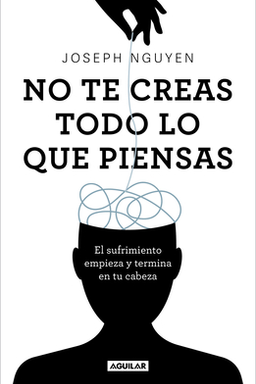
Have you ever wondered why you suffer even when your life seems fine on paper—why you feel anxious, restless, or disconnected despite outward success? In Don't Believe Everything You Think, Joseph Nguyen offers a striking answer: suffering is not caused by life itself but by the thinking
Nguyen contends that the mind’s job is survival, not happiness. We were designed to react to threats, not to thrive. Over millennia, our thinking evolved as a protection mechanism—but this same thinking now sabotages our peace. The author invites you to see that the reality you experience is not reality itself, but a subjective projection created by thought. As he explains, “We live in a world of thought, not reality.” Once you see this, you realize you are just one thought away from freedom.
From Pain to Peace: The Shift in Understanding
Nguyen opens his journey by exploring his own quest to end suffering. Like many seekers, he tried hundreds of spiritual practices, diets, productivity routines, and therapies. They helped somewhat—but never banished his internal torment. True liberation came, he says, when he discovered the Three Principles shared by Sydney Banks: Mind, Consciousness, and Thought. Through these, he saw that life unfolds from the inside out, not outside in. Our feelings come not from events but from our thinking about those events.
This revelation, though simple, shifts everything. It means that happiness isn't earned, won, or found—it’s remembered when thought quiets. Pain, you learn, is inevitable but suffering is optional. The first ‘arrow’ of pain might strike you through loss or disappointment, but it’s the second arrow—your reaction and judgment—that inflicts suffering. When you stop firing the second arrow, life softens into clarity.
Thoughts vs. Thinking: The Engine Behind Experience
A cornerstone of Nguyen’s teaching is the distinction between thoughts and thinking. Thoughts are effortless gifts that arise from the Universe; thinking is the deliberate, effortful engagement with those thoughts through analysis, worry, or judgment. Thoughts are neutral. Thinking makes them heavy. For example, the thought “I want to earn $100,000” might inspire you—but once you start thinking about whether it’s possible, comparing yourself, and fearing failure, the lightness evaporates into anxiety.
This is a pivotal insight: the more you think, the more you suffer. Positive emotions appear naturally when thinking stops. As the author reminds us, babies are born blissful before thought contaminates awareness. The less mental chatter, the more you experience your natural state of joy. It’s not that you must force positivity; you simply return to your essence.
The Three Principles: How Experience Is Born
Nguyen integrates the Three Principles to explain how reality unfolds: Universal Mind (the creative intelligence behind life), Universal Consciousness (which allows awareness of existence), and Universal Thought (the raw material for creation). Through these, you create your personal world. When thought flows freely, inspired by Universal Mind, you feel love and connection. When thought is trapped in overthinking and fear, separation arises—the illusion of ego. Understanding this mechanism is liberating because it reveals how perception shapes feeling, not external circumstance.
Non-Thinking: The Gateway to Flow and Freedom
So what happens when you stop thinking? Nguyen calls this non-thinking—a state of pure presence and flow. It’s what artists feel when time disappears or what athletes experience when they’re ‘in the zone.’ In non-thinking, you aren’t separate from life; you become life itself. Decisions flow effortlessly, creativity surges, and problems dissolve. You realize that peace isn’t something to create—it’s your default setting once mental turbulence subsides.
(This concept echoes Eckhart Tolle’s The Power of Now, which also identifies presence as freedom from mental identification. However, Nguyen’s lens focuses specifically on the mechanics of thought as the creator of suffering.)
Living by Insight, Not Intellect
One of Nguyen’s most practical teachings is “Don’t read this book for information—read it for insight.” True transformation doesn’t happen through memorizing wisdom but through experiencing truth firsthand. When insight dawns, it’s felt—it’s “the most familiar unfamiliar feeling,” like coming home. This experiential approach mirrors Zen traditions, which emphasize awakening through direct realization rather than intellectual understanding.
The Journey Back to Wholeness
Ultimately, Nguyen’s path to peace is not about improving yourself but remembering who you already are. You are part of Universal Mind and inherently whole. When thinking ceases, you connect with the infinite intelligence that guides all life—from the growth of an acorn to the beating of your heart. Your suffering dissolves because the thinker—the ego—is quieted. What remains is love, joy, creativity, and unconditional kindness. As Nguyen puts it, “You are only ever one thought away from peace, love, and joy.”
This book matters because it translates spiritual truth into actionable understanding. It reminds you that enlightenment isn’t reserved for monks or mystics—it’s available in every moment you stop believing everything you think. In a world drowning in analysis and endless striving, this insight may be the most practical miracle of all.