
Idea 1
Institutions Under Pressure: Law, Power, and Truth in the Trump Era
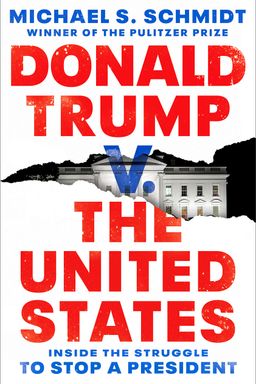
If you want to understand modern American power, you begin with its collision between truth-seeking institutions and a presidency defined by personal loyalty. In Michael S. Schmidt’s investigative chronicle, you follow the FBI, the Justice Department, and the White House lawyers as they wrestle with ethical boundaries, transparency, and the survival of institutional norms under relentless political strain. The book is less about one man than about how the presidency, law enforcement, and the media interact when truth becomes a partisan commodity.
Schmidt argues that the defining feature of the Trump era was not simply corruption or chaos; it was the erosion of the guardrails—norms and professional codes—that normally safeguard democracy from autocratic impulses. You watch individuals like James Comey, Robert Mueller, Don McGahn, and Rod Rosenstein make agonizing decisions about duty and survival in an atmosphere where every act reverberates politically. Their struggles form a larger parable about how American institutions bend, yet sometimes persist, when exposed to the heat of personality-driven governance.
Counterintelligence as the Political Spark
The story opens with Russia’s aggressive interference in the 2016 election—hacking, propaganda, and targeted leaks—and the FBI’s quiet launch of its probe, Crossfire Hurricane. This seemingly routine counterintelligence operation evolves into an existential test: can law enforcement investigate a political campaign without being drawn into partisan battle? You see the bureau use covert tools and human sources while balancing the political risks of appearing to pick sides. The initial decision to act secretly sets the stage for years of controversy that follow as secrecy gives way to suspicion.
Comey’s Calculus and the Price of Transparency
Comey’s decisions in 2016—his July statement about Clinton’s emails and his October letter about new ones—embody the tension between process and perception. Believing that openness would protect institutional credibility, he inadvertently shifts an election’s trajectory and makes the FBI a political lightning rod. His experience reminds you that transparency in polarized environments does not guarantee trust; it can deepen misinterpretation.
From Inquiry to Crisis: Flynn, Loyalty, and Obstruction
After Trump takes office, early scandals—especially Michael Flynn’s deceptive calls with the Russian ambassador—show how intelligence findings morph into legal and political crisis. You see Trump ask Comey for personal loyalty and later press him to drop the Flynn investigation. These exchanges, documented in Comey’s meticulous memos, draw a bright line between appropriate presidential oversight and improper interference. When Trump fires Comey, the act catalyzes the appointment of Special Counsel Robert Mueller and an investigation that redefines the presidency’s relationship with the law.
The White House Legal Battleground: McGahn’s Tightrope
Inside the West Wing, Don McGahn—the White House counsel—embodies the professional tension between personal survival and institutional duty. He not only drives a sweeping judicial nomination strategy (anchor of Trump’s conservative legacy) but also becomes a pivotal witness when the president demands Mueller’s removal. McGahn’s choice to document events, refuse improper orders, and cooperate with investigators turns him into the linchpin of the obstruction inquiry. His handwritten notes and threatened resignations illustrate how a lawyer preserves ethics when surrounded by political volatility.
Legal Strategy, Spin, and the Battle for Narrative Control
You then follow how legal tactics shift from Ty Cobb’s open-door cooperation with Mueller to Emmet Flood’s defensive barricade intended to limit exposure. Their differing philosophies—transparency versus confrontation—mirror earlier dilemmas faced by Comey and McGahn. The battle expands when Attorney General William Barr frames Mueller’s report with a summary favoring the president, showing how narrative control after an investigation can shape public perception of justice more than the facts themselves.
From Mueller to Ukraine: Repetition and Resistance
The later chapters echo familiar patterns. The episode of presidential overrides on Kushner’s and Ivanka’s security clearances, and then the Ukraine phone call that triggers impeachment, reveal recurrence: the use of presidential power for personal ends and the testing of bureaucratic limits. Schmidt connects these crises to the same institutional logic—whenever accountability mechanisms exist, loyalists try to neutralize them; whenever truth surfaces, narrative warfare begins.
Why This Story Matters
In the end, the book is an anatomy of modern power—how loyalty politics corrodes norms, how law and journalism intertwine, and how documentation becomes a lifeline for professionals trapped inside chaos. You emerge recognizing that the integrity of institutions depends less on charisma or rhetoric than on individuals who choose discipline over devotion. Like McGahn’s memos, Comey’s notes, and Mueller’s report, the book is ultimately about the endurance of method—proof, documentation, and record—as the bulwark against misinformation and authoritarian pull.