
Idea 1
The Psychology of Money and Irrational Value
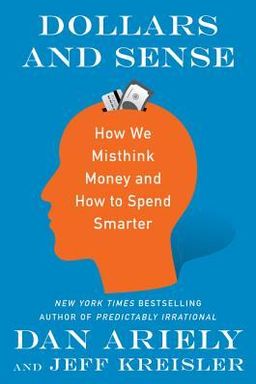
Why do you buy that new coffee maker, tip the barista, or splurge on a vacation—and then feel guilty later? In Dollars and Sense, behavioral economist Dan Ariely and comedian Jeff Kreisler argue that every money decision you make is shaped not by rational calculation, but by deep-seated psychological biases. We all think we understand money, they say, yet we constantly misjudge its value, mismanage it, and let emotional forces twist our perception of what it’s truly worth.
At its heart, this book isn’t about financial literacy in the traditional sense—it’s about why we think about money irrationally. Ariely and Kreisler reveal how mental shortcuts, emotions, and subtle manipulations steer your financial choices. You don’t just spend too much or save too little; you misinterpret what money means and what it can (or cannot) do for you. The result is a world where people believe they are logical shoppers but instead act like gamblers chasing feelings, not numbers.
Money as a Mirror for Human Behavior
Ariely opens by drawing an unforgettable parallel between modern life and “The Money Volcano,” a game show where contestants flailed in a glass box trying to grab airborne bills. It’s thrilling—and utterly chaotic. Likewise, we’re all inside this metaphorical volcano, chasing money, consumed by stress, envy, and illusions of control. The authors ask: What does this frenzy reveal about our nature? They argue that money is the mirror through which human irrationality becomes visible. It magnifies our egos, hopes, fears, and blind spots. We don’t just make poor money decisions; we misunderstand what money really is.
The Nature of Money
To Ariely, money is a psychological invention—a symbol of value, not value itself. It’s general, divisible, fungible, storable, and universal, but these very qualities make it impossible to grasp emotionally. Money can be exchanged for almost anything, which means every choice carries enormous opportunity costs. When you spend $10 on coffee, you’re giving up what that $10 could buy elsewhere, today or years from now. Yet, as he shows, we rarely consider this because money feels abstract. This abstraction makes us blind to trade-offs, and our brains prefer immediate, visible rewards over invisible opportunity costs. (Note: This idea echoes Richard Thaler’s concept of “mental accounting,” where we divide money into irrational categories.)
The World as a Casino
To dramatize our money blindness, the authors tell the story of George Jones, a stressed traveler who gambles away hundreds of dollars at a casino. He parks for free, receives free drinks, and feels that the chips aren’t real money. He loses $200 without hesitation—after spending ten minutes earlier debating whether to save $4 on coffee. This contrast reveals Ariely’s main point: we compartmentalize spending. At the casino, George’s dollars belong to his “entertainment” account; at the café, they’re part of “daily expenses.” He treats identical money differently based on mental context. This tendency—along with illusions like “free,” relativity, and reduced pain of payment—infects every purchase we make, from gambling to grocery shopping.
Why It Matters
This psychological approach matters because modern life constantly exploits it. Every system around us—from retail sales to technology to credit cards—encourages us to spend first and think later. Ariely and Kreisler resist offering simple financial fixes; instead, they propose a new way to understand the emotional architecture of money. When you grasp how biases like anchoring, relativity, and the endowment effect distort your perceptions, you can begin to design your environment to make better choices. Money isn’t the villain—it’s the stage on which our irrationality plays out.
In the chapters ahead, you’ll learn how we separate mental accounts (Jane Martin’s envelope budgeting), misjudge relative prices (Aunt Susan’s JCPenney discounts), avoid the pain of paying (Jeff’s honeymoon), and make emotional decisions about fairness, effort, ownership, language, and self-control. As Ariely puts it, “We should not just manage money better—we should understand what it does to us.” This book invites you to see through the illusions of dollars and sense, to stop chasing the flying bills, and instead learn how money shapes your mind long before you ever open your wallet.